Your Blue Pure 211+ needs another filter, has started making an unfamiliar noise, or no longer seems right for the room. Before ordering its replacement, separate those three problems: routine maintenance, a possible fault, and insufficient capacity.
If your original 211+ still runs properly and suits the space, keeping it is a sensible option. Blueair still lists replacement filters.
If you need a new machine, the 211i Max is the natural same-brand shortlist choice—but a smaller Levoit, a non-connected Coway, or an AirDoctor may fit a particular need better.
This guide starts with the purifier you already own. It compares what changes, what you will spend next, and which features are worth paying for.
Disclosure: IndoorClime may earn a commission from affiliate links. This is a research-based buying guide using U.S. manufacturer specifications and our own calculations, not a hands-on comparison or a personal switching story. Prices checked November 8, 2026, in USD; offers and availability can change.
Quick decision
- Keep your 211+: it works normally, the room has not outgrown it, and the correct filter is available.
- Choose the 211i Max: you want more rated output plus automatic operation and app controls.
- Consider Levoit Vital 200S-P: the room is smaller and lower purchase/filter costs matter more than matching the old Blueair’s output.
- Consider Coway Airmega 400: you prefer onboard automatic controls and washable prefilters without needing Wi-Fi.
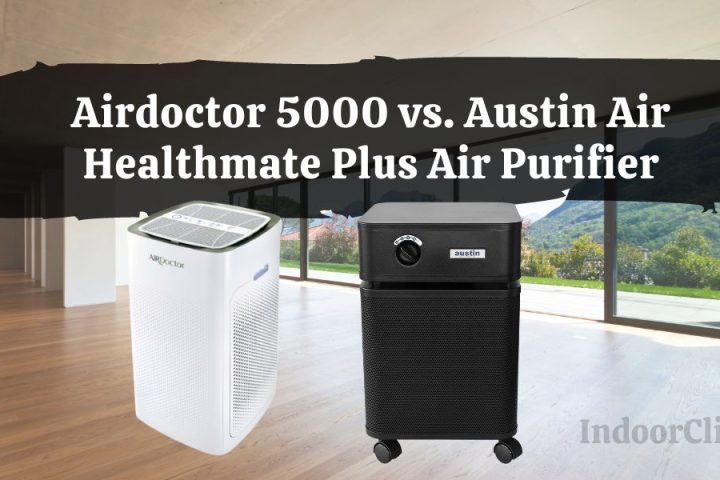
- Consider AirDoctor 3500: you want its separate particle and Carbon/VOC filters and accept their replacement budget.
First, identify your Blueair: 211+, 211+ Auto or 211i Max?
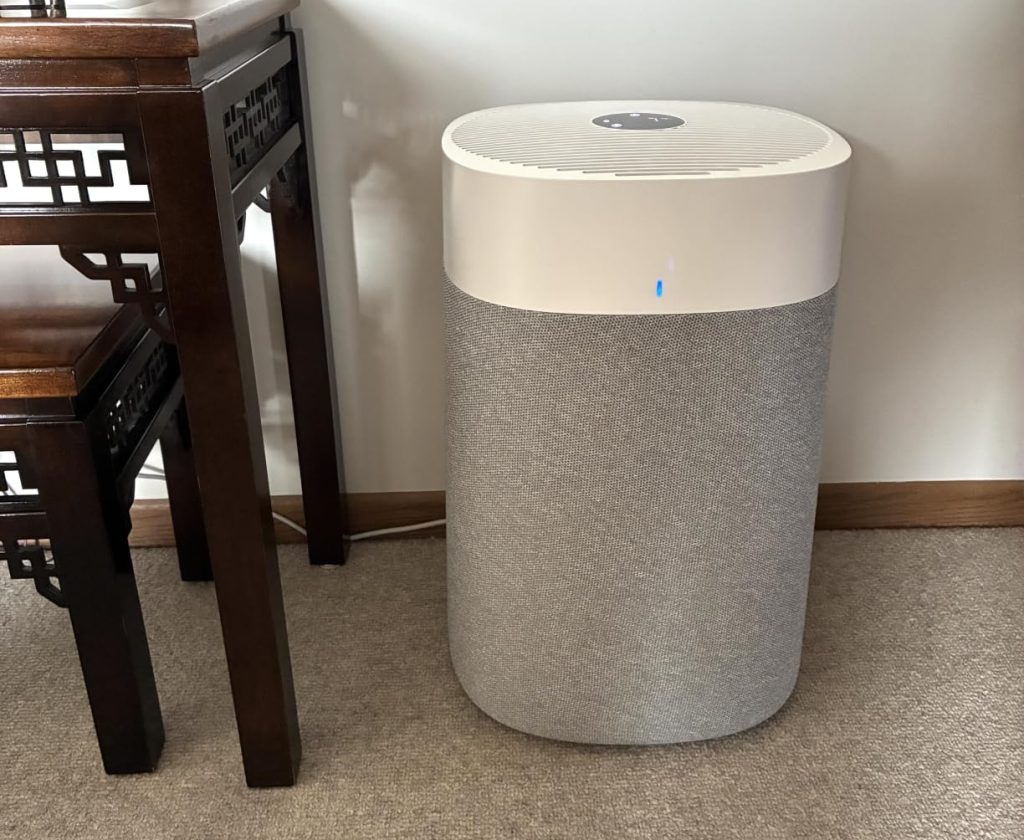
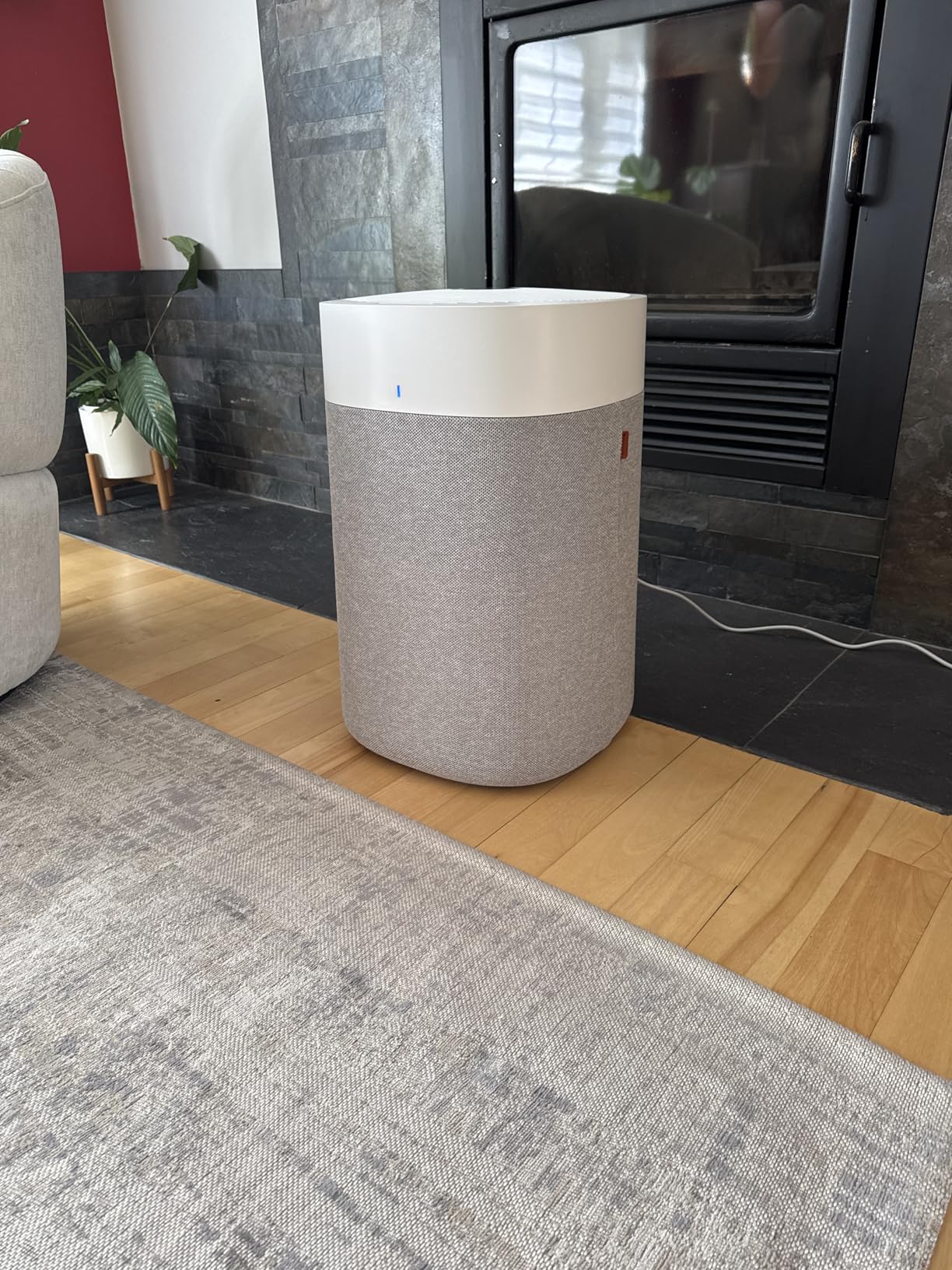
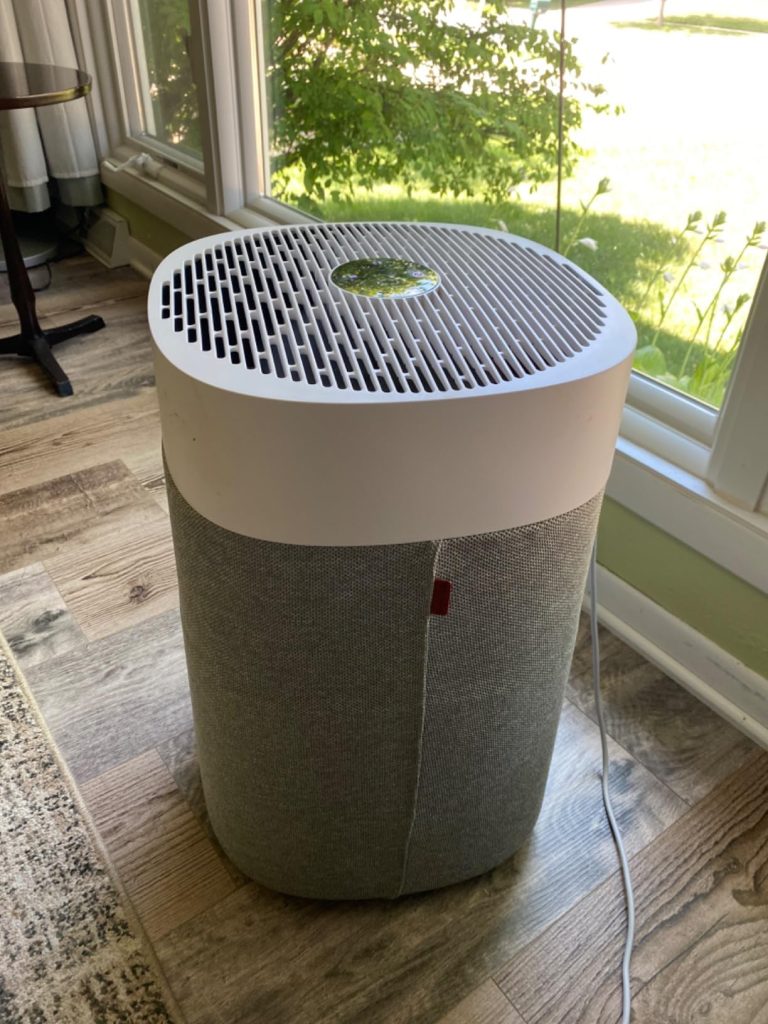
These names are easy to confuse. The original Blue Pure 211+ has a front-mounted control button and manual speed selection. It does not have an air-quality sensor or Auto mode.
A description promising automatic adjustment or phone control is describing a different model.
| Model on the label | Controls | What matters when replacing it |
|---|---|---|
| Blue Pure 211+ (original) | Front button; manual speeds; no Wi-Fi or Auto mode | Discontinued purifier, with replacement filters still listed |
| Blue Pure 211+ Auto | Top controls; particle sensor and Auto mode; no Wi-Fi | A separate discontinued version; check Auto-specific filter compatibility |
| Blue Pure 211i Max | Auto and Night modes, onboard controls and Wi-Fi/app features | Current replacement suggested by Blueair; uses its own Max filter |
Blueair’s model reference distinguishes the two older machines and points owners toward the 211i Max. Discontinued does not mean your working purifier has stopped being useful.
Do you need a purifier or just maintenance?
A filter reminder is a maintenance prompt, not a diagnosis of a failed motor. Start with the least expensive explanation that fits the symptoms.
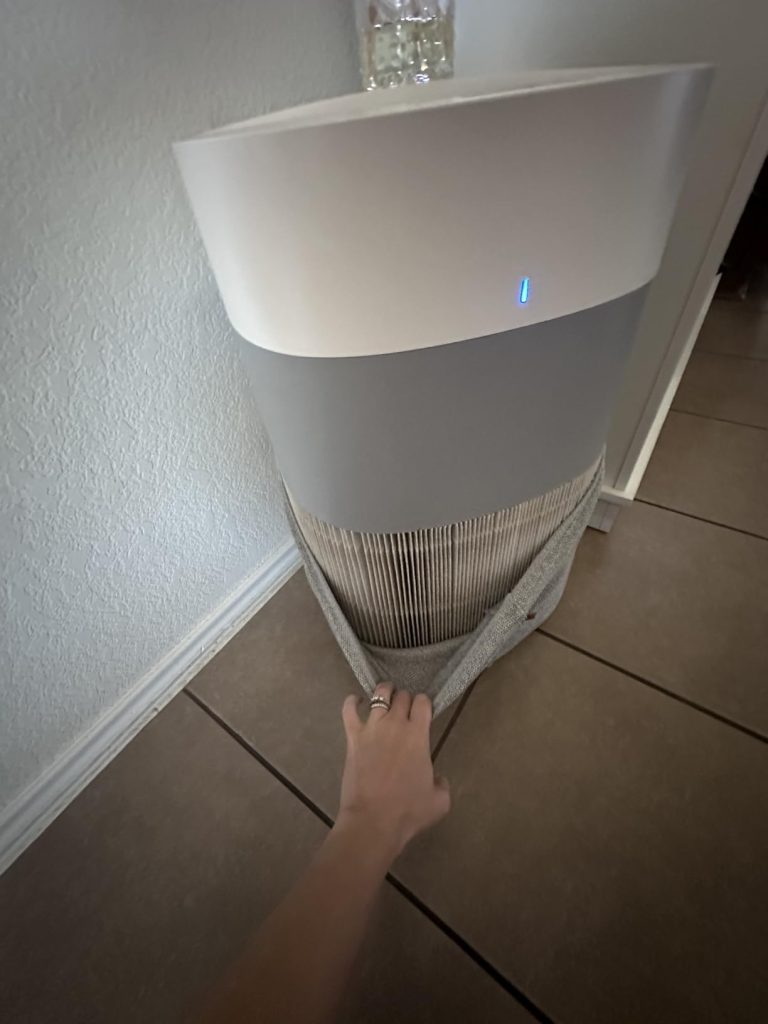
- Dusty fabric sleeve: turn off and unplug the purifier, then clean the prefilter according to its care label. Let a washed sleeve dry completely before refitting it.
- Overdue main filter: replace it with the correct model-specific filter. The washable sleeve does not make the main particle/carbon filter washable.
- Weak airflow: check the speed setting, obstructed intake or outlet, filter seating and any packaging left on a replacement.
- New persistent rattling, grinding or shutdowns: ask Blueair support to diagnose the fault before buying filters for a machine that may need service.
Stop using a unit with a burning smell or visible electrical damage; do not open its motor housing. If the issue is ordinary maintenance, however, a new appliance is an expensive way to obtain a fresh filter.
If your 211+ is already working hard in a room that has become larger or more open, fresh filters cannot turn it into a higher-capacity model. That is a sizing decision.
Compare room suitability on the same basis
A “3,000-square-foot” headline can refer to cleaning the equivalent of that air volume only once per hour. It should not be compared directly with a rating based on roughly five air changes per hour.
For this comparison, we use five equivalent clean-air changes per hour and an eight-foot ceiling. That is a consistent sizing benchmark, not a promise of a particular health outcome or a measurement in your home.
Calculated area = CADR × 60 ÷ (ceiling height × 5). CADR is clean air delivery rate, in cubic feet per minute (CFM).
| Purifier | Published CADR used | Calculated area at 5 equivalent ACH, 8-ft ceiling |
|---|---|---|
| Original Blue Pure 211+ | 350 CFM smoke | 525 sq. ft. |
| Blue Pure 211i Max | 435 CFM smoke | About 653 sq. ft. |
| Levoit Vital 200S-P | 250 CFM manufacturer-listed CADR | 375 sq. ft. |
| Coway Airmega 400 | 328 CFM smoke | 492 sq. ft. |
| AirDoctor 3500 | 340 CFM smoke | 510 sq. ft. |
These are our calculations from published ratings, not official coverage claims or our test results. Levoit’s cited page lists one CADR rather than separate particle categories. The original 211+ figure is the manufacturer-reported rating recorded in the Illinois Institute of Technology report, not that report’s measured test result. Other figures come from the current U.S. product specifications linked below.
At a ten-foot ceiling, each calculated area falls by 20%. Lower fan settings also deliver less clean air than the rated maximum; these numbers do not tell you which unit achieves your target most quietly.
The buying implication: the Vital 200S-P is a capacity reduction from the original 211+, and neither the Airmega 400 nor the AirDoctor 3500 is a clear smoke-CADR upgrade. The 211i Max offers roughly 24% more rated smoke output using the figures above.
Stay with Blueair: when the 211i Max makes sense
The Blue Pure 211i Max is the most direct option here for an owner who likes Blueair and wants more capacity. Its listed price is $349.99 before any checkout promotion.
You gain sensor-based automatic operation, Night mode and app scheduling. You can still use the onboard controls; connecting a phone is useful for remote features, not a prerequisite for basic operation.
Do not assume your old spares transfer. Its standard Particle & Carbon filter is a different replacement, listed at $69.99. Blueair’s U.S. guidance gives roughly six to nine months, depending on use and conditions.
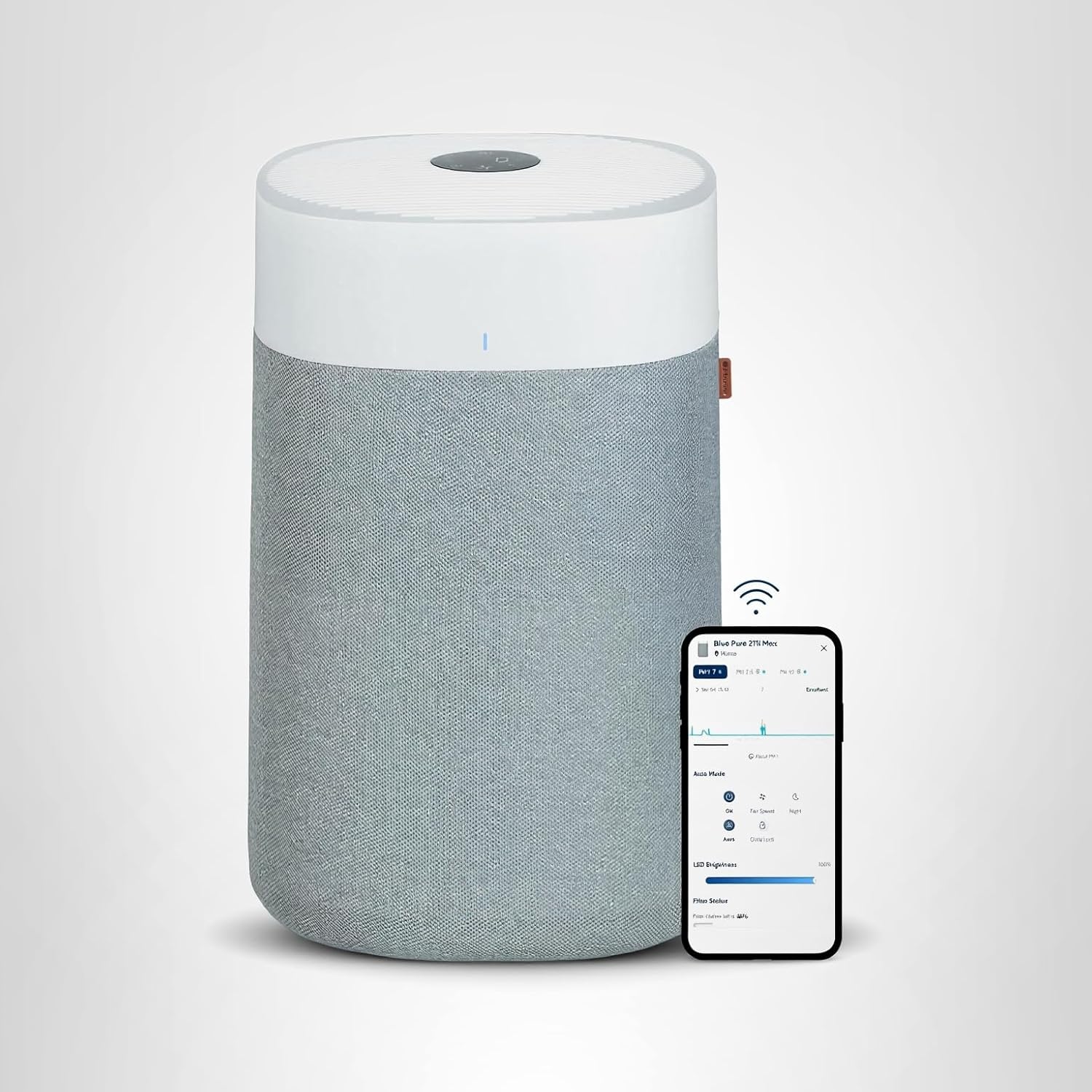
Buy it for a larger usable output range or controls you will actually use. Buying it purely to avoid the old machine’s next $69.99 filter is much harder to justify.
Change brands: three different reasons to switch
Levoit Vital 200S-P: lower costs for a smaller room
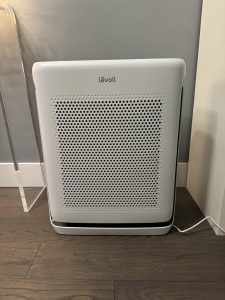
The Vital 200S-P adds Auto mode, VeSync app controls and a washable prefilter. The listed regular price is $189.99; a $169.99 promotion was displayed when checked. We use the regular price in the cost comparison so it does not depend on that sale continuing.
Its standard replacement filter costs $49.99, with a six-to-twelve-month replacement range.
This makes sense if the old Blueair was oversized for a bedroom or office. It is less persuasive as a replacement in the same large living room where you needed the 211+ on high. Lower filter spending is not a bargain if you have also bought too little airflow.
The same tradeoff appears in our guide to upgrading from a Levoit Core 300: decide how much capacity you need before comparing prices.
Coway Airmega 400: automatic controls without an app
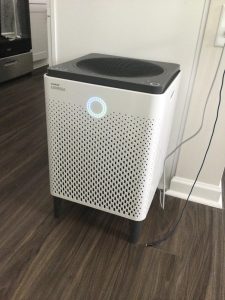
The standard Airmega 400 is the non-Wi-Fi version; the 400S is different. It offers automatic, sleep and eco operation, an air-quality indicator and washable prefilters on both sides. Coway lists it at $649.
The $129 Max2 replacement set includes both main filters—not $129 per side. Coway lists a twelve-month filter expectancy, while its purifier page also gives a six-to-twelve-month range. We show both intervals in the budget.
Choose it because you prefer its controls and filter-access arrangement. At the listed price, it is not the obvious way to cut ownership costs. Leave room around both side intakes rather than squeezing it tightly between furniture.
AirDoctor 3500: a different filter system, not a major capacity jump
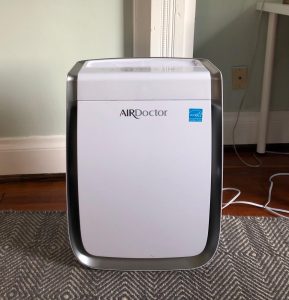
The AirDoctor 3500 Classic has automatic operation and separate UltraHEPA and Carbon/VOC filters. Do not confuse the Classic with the Smart version if app control is important.
The regular price is $659; IndoorClime readers get a special price of $379 through our AirDoctor offer link. Confirm the selected model and final offer at checkout.
Its filter schedule is six months for Carbon/VOC and twelve months for UltraHEPA. Each is currently listed at $63.95 individually in the official filter store. Compatible supplies may still be labeled “3000 Series”; the manufacturer explicitly includes the 3500.
This is a choice about filter design and ownership preferences. The published 340 CFM smoke rating does not support presenting it as a big airflow upgrade over a 350 CFM original 211+. Our AirDoctor filter-versus-purifier guide explains its replacement schedule and bundle economics in more detail.
Check filter compatibility and availability before buying
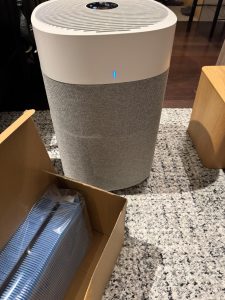
Blueair still lists a 211+ Particle & Carbon filter at $69.99. That is evidence of continued filter support, not a guarantee of permanent stock.
There is a wrinkle worth checking: Blueair’s product pages contain some mixed model wording. The specific original-211+ listing says it is not for the 211+ Auto, while other copy on the page refers to Auto.
Match the appliance label and the exact filter variant; if the seller’s compatibility wording conflicts, ask Blueair to confirm the part before ordering.
- Original 211+: confirm original/non-Auto compatibility; budget around a six-month interval.
- 211+ Auto: check the Auto-specific replacement, not just “211” in a product title.
- 211i Max: use the Max-specific filter; do not carry forward an older 211+ filter subscription.
- Coway, Levoit or AirDoctor: confirm the complete set, correct model and one-time versus subscription price.
For any discontinued appliance, check that a suitable filter is actually orderable when you need it. Neither an out-of-stock notice on one day nor a third-party listing alone proves that all future filter supply has ended.
What will you spend over the next three years?
The original purchase price of your 211+ is already spent. It belongs in neither today’s keep-versus-replace decision nor the cost of keeping the machine for another three years.
For the calculation below, assume your existing 211+ needs a filter today, you have no spares, and the machine has no known fault.
A new purifier includes its initial filters. Count purchases needed before month 36; a replacement due exactly at month 36 belongs to the next period.
| Option | Upfront machine cost | Filters bought during the period | Total before electricity |
|---|---|---|---|
| Keep original 211+ | $0 | 6 × $69.99, including today’s filter | $419.94 |
| New 211i Max | $349.99 | 3–5 × $69.99 at 9–6-month intervals | $559.96–$699.94 |
| New Vital 200S-P | $189.99 regular | 2–5 × $49.99 at 12–6-month intervals | $289.97–$439.94 |
| New Airmega 400 | $649 | 2–5 complete sets × $129 at 12–6-month intervals | $907–$1,294 |
| New AirDoctor 3500 Classic | $379 reader offer ($659 regular) | 5 Carbon/VOC + 2 UltraHEPA, each $63.95 | $826.65 |
These are constant-price budgeting scenarios, not guaranteed filter life or the cheapest possible checkout. Taxes, shipping, repairs, financing, resale value and electricity are excluded. No subscription or temporary discount is assumed, except the stated IndoorClime AirDoctor offer. Blueair uses standard Particle & Carbon filters and Levoit its standard replacement. Follow condition-based replacement guidance even if a filter wears out earlier.
The result is useful precisely because there is no universal winner. At a nine-month filter interval, the new Max still costs $140.02 more than keeping a working 211+ in this scenario. You would be paying for a new machine and added capabilities, not recovering its price through filter savings within three years.
Levoit can cost less, but its result ranges from $129.97 less to $20 more than keeping the 211+, depending on filter life—and it provides less rated output. The current $169.99 sale would reduce its row by another $20 if available at checkout.
AirDoctor bundles can lower its individual-filter total. For example, two $171.99 annual packs plus one $63.95 carbon filter supply the seven replacements counted here, bringing that scenario to $786.93 including the $379 machine. A bundle changes the purchase timing; it does not remove the need for future filters.
Adjust the budget to your situation
If you have just installed a 211+ filter, do not buy another on paper today. Five further six-month replacements before month 36 would cost $349.95 instead. Already-owned spare filters reduce future cash spending too.
Electricity belongs in the final decision, but maximum wattage is not the same as average consumption. Use your actual operating speed and local rate:
Annual electricity cost = average watts ÷ 1,000 × hours per day × 365 × price per kWh.
As an illustration, a consistent 10-watt difference at 24 hours a day and $0.16/kWh changes three-year spending by about $42.05. That is not a measured difference between these models. Compare noise and output at the settings you will tolerate, rather than assuming every purifier runs at maximum all day.
Warranty and filtration preferences can change the choice
For U.S. purchases, Blueair lists one year for Blue Pure Max, extendable to three through qualifying registration within 60 days. The older Blue Pure/Auto families have a different registration extension—up to two years. A discontinued model’s unused filter stock does not extend the machine’s warranty.
Levoit lists a two-year limited warranty. Coway’s Airmega 400 coverage distinguishes one year for internal/functional parts from five years for motor and electronic parts; it is not a blanket five-year promise for everything.
AirDoctor’s base warranty is one year, and its advertised five-year extension is tied to an active qualifying filter subscription. Check the exact purchase terms and any service/shipping fees.
Blueair’s HEPASilent system combines mechanical filtration with electrostatic particle charging. If your specific reason for leaving is a preference for a purifier with no ionizer built in, buying another Blueair simply because it is newer does not address that requirement.
Our guide to purifiers without an ionizer explains how to check exact models. That preference alone does not mean every Blueair owner needs to replace a working machine.
Which option fits your room?
- A 250-square-foot bedroom: keeping a working 211+ is reasonable. If replacement is necessary, the Vital 200S-P deserves consideration; you do not need to match the old machine’s maximum output just to keep a familiar brand-size category.
- A 500-square-foot living room with an eight-foot ceiling: five equivalent air changes require about 333 CFM. The original 211+, AirDoctor and Coway sit around that level on paper, leaving limited margin for quiet-speed operation. The Max provides more rated headroom; the Vital is below that target.
- A 650-square-foot open room: the same target requires roughly 433 CFM. The Max only just reaches it at rated output. Consider more capacity or an additional purifier if quiet operation matters.
- Two rooms behind closed doors: size and place a purifier for each occupied room. Adding the floor areas together does not mean one hallway purifier will distribute clean air effectively through both closed doors.
Automatic mode is convenient, but it reacts to what the onboard sensor detects. It does not prove every corner is clean or replace choosing an appropriate sustained fan speed.
My recommendation for an existing 211+ owner
Keep it if it works, fits the room and has a confirmed filter supply. A six-month maintenance bill is not, on its own, a reason to discard the machine.
If it is faulty or you want more capacity and connected controls, start with the 211i Max. If you are moving to a smaller room, compare the Vital 200S-P’s lower budget with the output you actually need.
Consider the Airmega 400 for its non-connected controls, and the AirDoctor 3500 for its filter arrangement and reader offer—while budgeting for the ongoing replacements.
The best replacement solves a specific problem your 211+ no longer solves. Choose that problem first, then buy the machine.