When we first invested in the Dyson Purifier Big+Quiet Formaldehyde BP03, we were convinced we were buying the best air purifier money could buy.
At over $1,000, it promised to be Dyson’s quietest and most powerful model yet, a sleek, sophisticated machine with three-stage filtration including HEPA H13, activated carbon, and a formaldehyde-destroying catalytic filter.
The specs were impressive: coverage up to 1,000 square feet, projected airflow reaching 32 feet, and real-time air quality monitoring through Dyson’s app.
We expected nothing short of transformative air quality in our home.
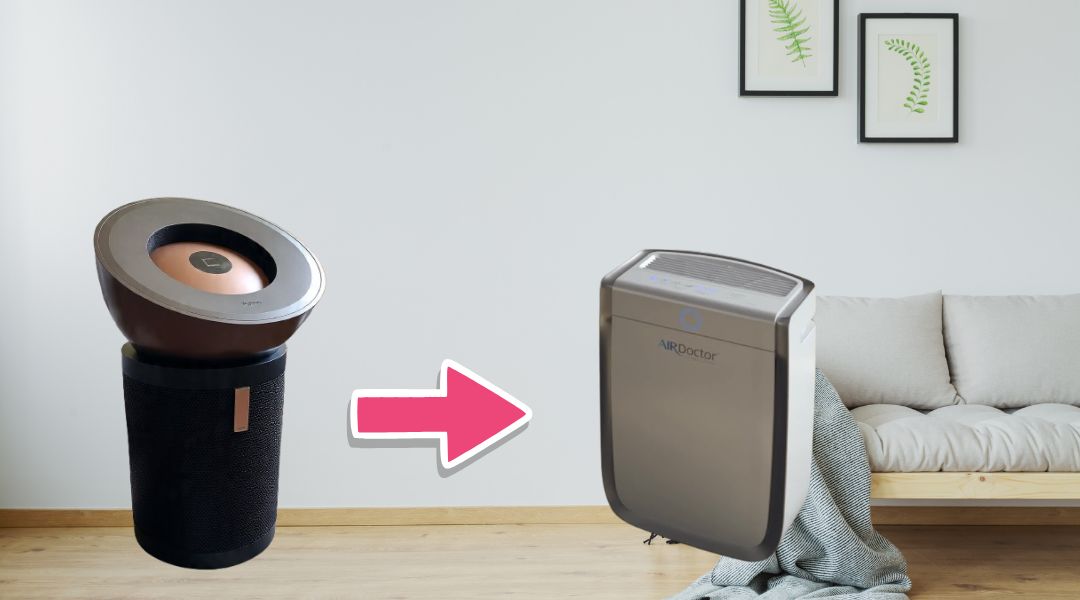
Six months later, we sold it and switched to the AirDoctor 3500. Here’s what happened.
Why We Chose the Dyson BP03 Initially
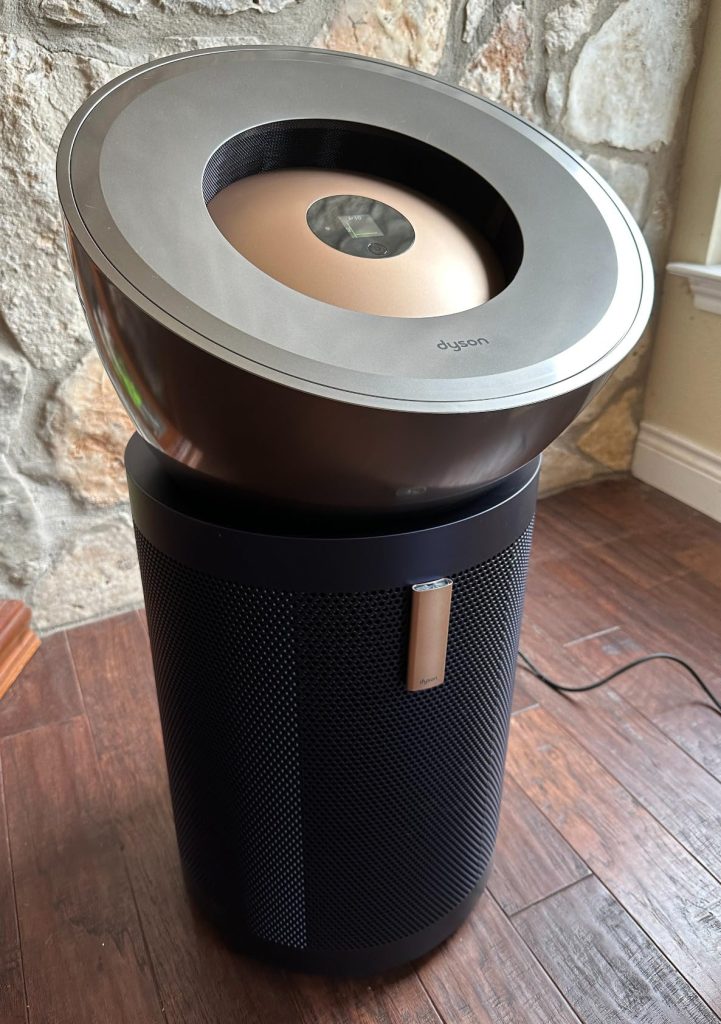
Our decision to go with Dyson felt obvious at the time. We’d dealt with increasingly poor air quality, between wildfire smoke seasons, cooking odors that lingered for hours, and year-round allergies that left us congested and tired.
We wanted a premium solution that could handle it all, and Dyson’s reputation for engineering excellence made the BP03 feel like a safe bet.
The marketing promised comprehensive protection: HEPA H13 filtration for particles down to 0.1 microns, activated carbon for gases and odors, and a unique catalytic filter specifically designed to destroy formaldehyde rather than just trap it.
The app integration appealed to us too—real-time air quality readings, scheduling, and remote control seemed like the smart home integration we wanted.
The Dyson Experience: Genuine Strengths and Growing Concerns
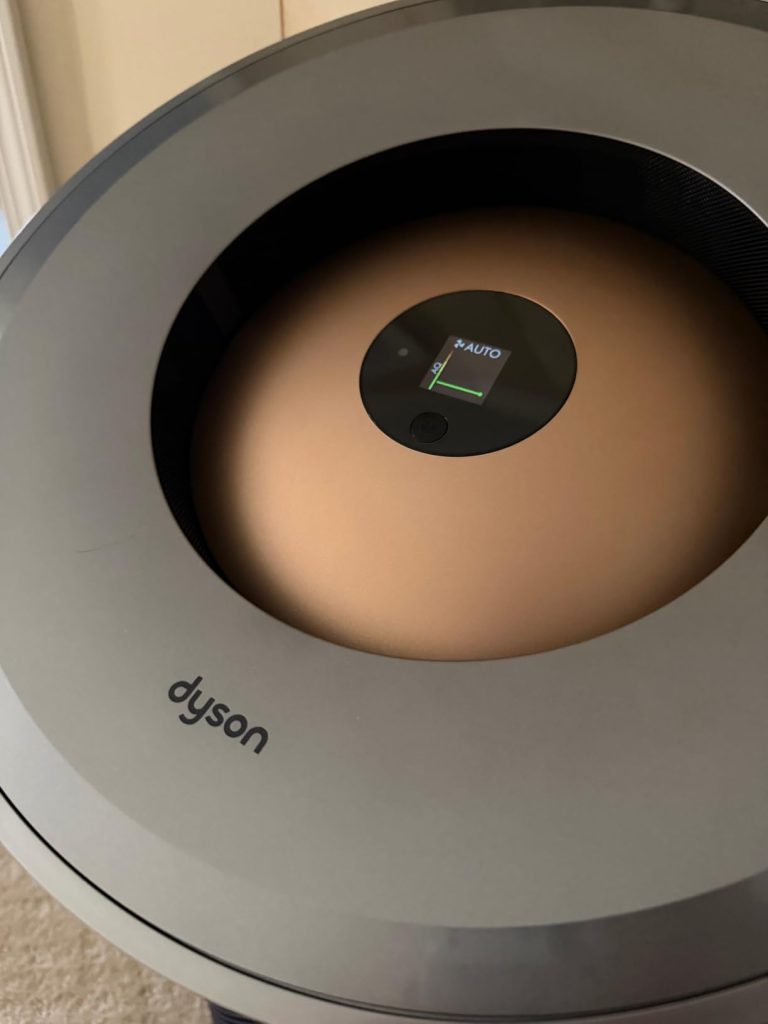
I’ll give credit where it’s due: the Dyson BP03 is genuinely quiet. Even on higher settings, it produced a gentle white noise that never felt intrusive.
At full speed, it was quieter than cheaper air purifiers running at maximum, while moving more air. The design is undeniably beautiful – minimalist, modern, and much more attractive than the typical boxy air purifier.
It fit seamlessly into our living room without looking like medical equipment. The wheels made it effortless to move between rooms, a small detail that proved surprisingly convenient.
The formaldehyde monitoring was legitimately impressive. We could watch real-time readings of formaldehyde levels on the display, something most purifiers don’t even attempt to measure.
The app integration provided detailed air quality data – PM 2.5, PM 10, VOCs, nitrous oxides, and formaldehyde – all tracked over time with beautiful graphics and analytics.
But within the first few weeks, cracks started to appear in our confidence.
The responsiveness issue was the first red flag.
We’d start cooking dinner, searing steaks, sautéing onions and garlic, and the Dyson would… barely react. The air quality indicator would eventually shift from green to yellow or even purple, but it felt sluggish.
I tested this with nail polish remover one day, opened the bottle near the unit, and the app showed it detected the VOCs. But it took 30-40 minutes to fully clear the air. When I accidentally burned cookies in the oven, the smoke lingered so long I eventually just opened a window. The purifier was working, but not fast enough to matter.
The issue wasn’t that the Dyson couldn’t detect pollutants, its sensors were actually quite sophisticated. The problem was how long it took to actually clean the air once it detected a problem.
Then came the odor problem.
Despite its activated carbon filter, cooking smells would linger for hours. The Dyson seemed to capture some of the particulate matter from cooking, but the actual odors, garlic, fish, fried foods, stuck around far longer than we expected from a premium purifier.
I mainly purchased this for dust control, but it didn’t really excel at that either. It was great at detecting very fine, nearly invisible particles, but the practical, everyday performance felt lacking.
The carbon filter also didn’t last as long as advertised. After about six months, I noticed it wasn’t removing cooking odors as effectively. The unit still detected them but wasn’t eliminating them.
The app became more annoying than helpful.
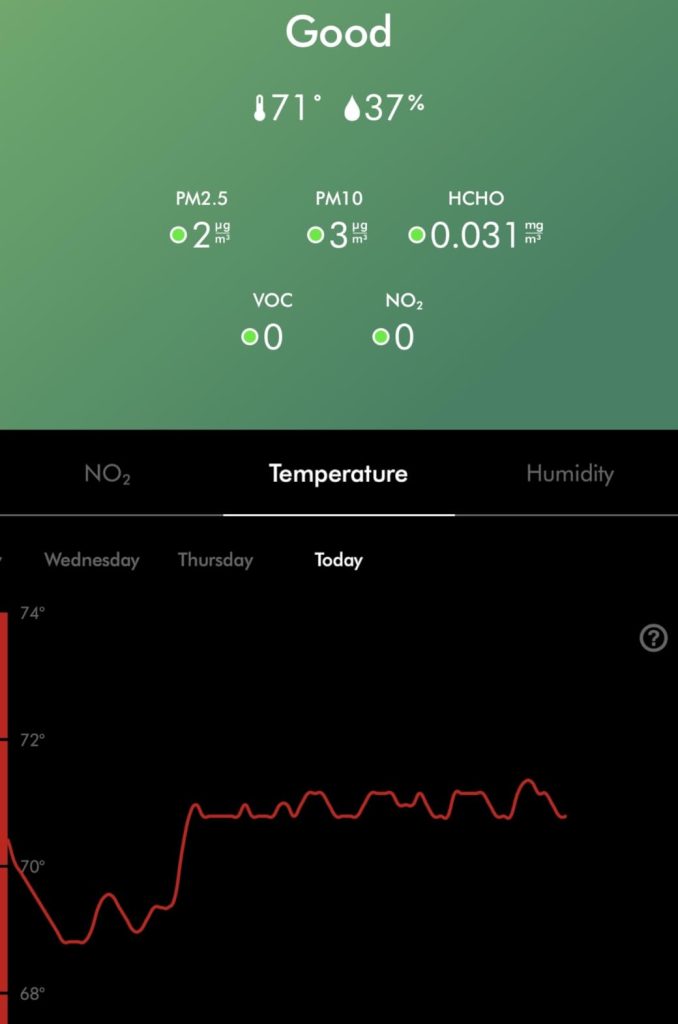
While the data was interesting, connectivity issues meant we couldn’t always check air quality remotely. The interface felt overly complex for what should be simple tasks.
And the scheduling features, while nice in theory, couldn’t compensate for the unit’s slow reaction times to actual air quality changes.
Sensor accuracy concerns also emerged.
I noticed the temperature reading was consistently off. When my thermostat read 72°F, the Dyson displayed 76-77°F. I checked with a laser thermometer, the Dyson was definitely wrong, off by 4-5 degrees.
The humidity reading also seemed inaccurate compared to a standalone hygrometer. If the basic sensors were this far off, how could I trust the more sophisticated air quality measurements?
And there was an unexpected annoyance:
The Dyson doesn’t oscillate sideways. The fan only blows in one direction, though you can adjust the vertical tilt angle.
This meant I had to physically move this large, heavy purifier to redirect airflow. For a thousand-dollar device, this felt like an odd limitation.
The Breaking Point
The moment we knew we needed to make a change came during last September’s wildfire smoke event. Our area was blanketed in haze, and the outdoor air quality index hit “unhealthy” levels for days.
We ran the Dyson continuously on Auto mode, expecting it to work overtime protecting our indoor air.
It didn’t.
The air quality readings showed elevated particle levels, but the Dyson’s response felt inadequate. We woke up with scratchy throats and irritated eyes, symptoms we shouldn’t have been experiencing with a $1,000+ air purifier running 24/7.
The machine was working, displaying its sophisticated graphs and sensor readings, but we weren’t feeling meaningfully protected.
That’s when I started researching alternatives and discovered something concerning: while the Dyson’s HEPA H13 filter captures particles down to 0.1 microns at 99.95% efficiency, wildfire smoke and many of the most dangerous pollutants are actually smaller, down to 0.003 microns.
The Dyson was filtering the air, just not as thoroughly as we needed for smoke particles that small.
I also realized the activated carbon filter, while present, was relatively minimal compared to what other manufacturers were offering. For such expensive unit, I expected more comprehensive filtration. The price felt especially hard to justify given the performance gaps I was experiencing.
The final straw was calculating long-term costs. Between the HEPA filter ($170, supposedly lasting 5 years) and carbon filter ($90, supposedly lasting 2.5 years), we were looking at around $79 per year in filter costs, and that assumed the filters actually lasted as advertised.
My carbon filter was already underperforming at six months. For a unit that wasn’t fully meeting our needs, the ongoing investment felt unjustifiable.
I’d also read enough horror stories about expensive Dyson post-warranty repairs, units dying right after the warranty expired, costly shipping fees, and proprietary screwdrivers needed for any DIY fixes.
I worried we’d invested in a beautiful but ultimately disappointing appliance that would become a money pit.
Enter the AirDoctor 3500
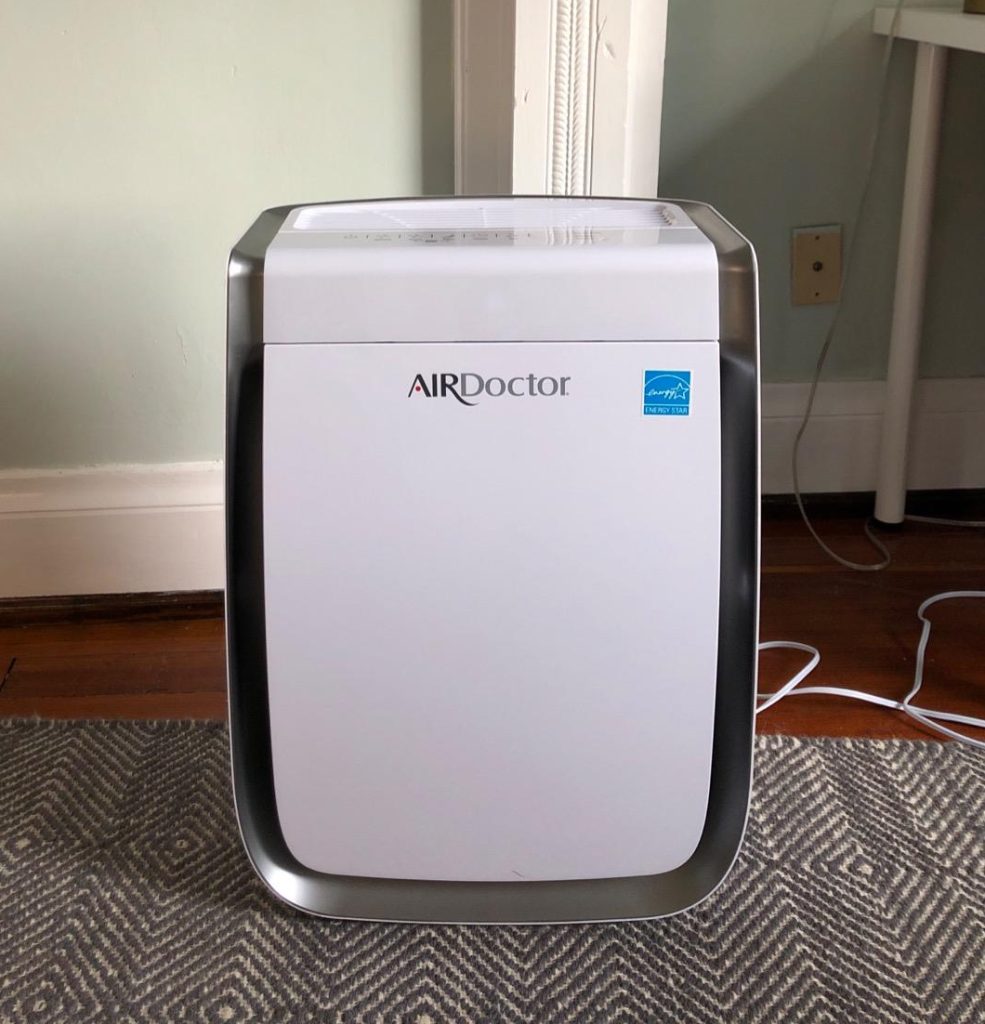
The AirDoctor 3500 represented a different philosophy entirely. Where Dyson focused on sleek design and app integration, AirDoctor prioritized one thing above all: filtration performance.
The UltraHEPA filter was the headline feature – medical-grade filtration that captures particles down to 0.003 microns at 99.99% efficiency. That’s 100 times smaller than what standard HEPA filters are tested for, and more than 30 times smaller than the Dyson’s capability.
We’re talking about ultrafine particles, smoke, bacteria, viruses, and the tiniest pollution molecules that easily slip through conventional filters.
But it wasn’t just the HEPA filter. The AirDoctor uses a true three-stage system with a pre-filter, dual carbon/VOC filter (with significantly more activated carbon than the Dyson), and then the UltraHEPA.
Critically, it’s a fully sealed system, every bit of air that enters the unit must pass through all filtration stages. No bypass, no leaks, no unfiltered air sneaking back into your room.
The coverage area matched our needs perfectly: up to 1,260 square feet according to the specs, though real-world performance varies by room configuration.
The Auto-Mode included a built-in air quality sensor that would adjust fan speed automatically. Similar to the Dyson, but as we’d soon discover, far more responsive.
What Changed Immediately
We set up the AirDoctor 3500 in the same spot where the Dyson had been. Within the first hour of operation, I noticed the air quality sensor responding more actively to changes in our environment.
When I opened the door to bring in groceries, the unit ramped up. When we closed the door, it adjusted back down. It felt alive to our air quality in a way the Dyson never had.
That evening’s cooking test was revelatory.
We made the same meal that had previously overwhelmed the Dyson – pan-seared salmon with garlic and ginger. The AirDoctor’s display immediately showed elevated levels (turning from blue to yellow to red) and kicked into high gear.
The smoke cleared noticeably faster. But the real difference came two hours later: no lingering fish smell. The kitchen just smelled… neutral. The carbon filter was actually doing its job.
I started testing it deliberately. When my wife did her hair with hairspray in the bathroom, I heard the AirDoctor in the bedroom kick into high gear within seconds.
It detected the VOCs and ramped up to clear them. When I ran the dishwasher one evening, the unit sensed the detergent vapors and increased speed, something that had never happened with the Dyson.
The responsive sensors became a daily source of reassurance. Open a bottle of nail polish remover? Blue to red instantly, then back to blue within 10-15 minutes. The Dyson had taken 30-40 minutes for the same task.
Our sleep quality improved within three nights.
This was unexpected but unmistakable. We’d been running the Dyson in our bedroom, but apparently not as effectively as we thought.
With the AirDoctor, we both woke up without the stuffiness and throat irritation we’d gotten used to.
My wife, who’d been dealing with morning congestion for months, noticed she was breathing clearer. We were sleeping more soundly.
The simple color-coded display told the story.
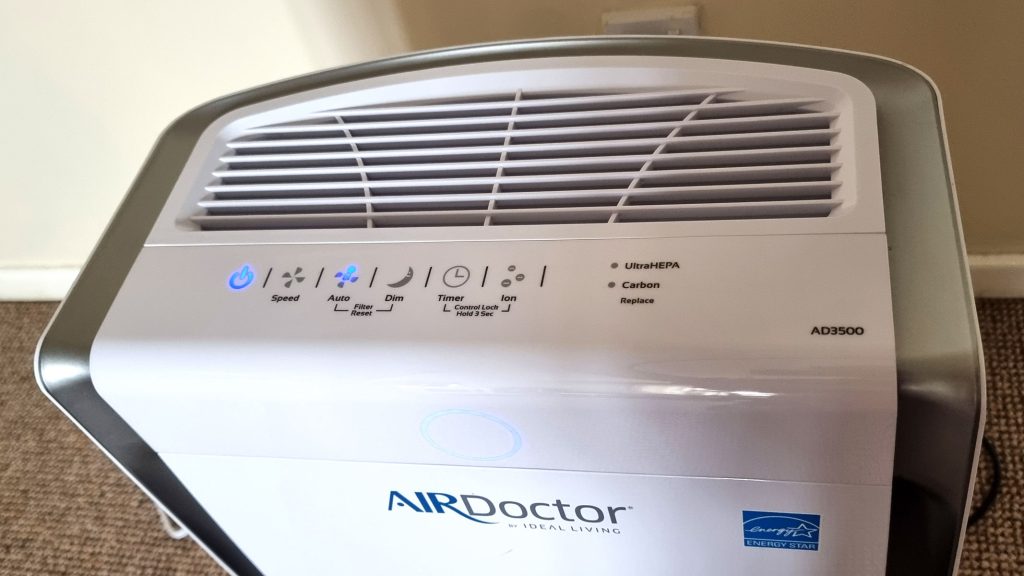
Blue for good air, yellow for moderate, red for poor. During that first week, I watched it drop to blue within hours and stay there, even during cooking, it would spike to red, clear the air, and return to blue within 30-60 minutes rather than the hours the Dyson had required.
Cooking became less of an ordeal.
I tested it with bacon, historically one of the worst offenders for lingering smells. The AirDoctor turned red immediately when I started frying, ramped the fan to high, and cleared both the smoke and odor within 30 minutes.
By dinner time, you couldn’t tell I’d cooked anything. With the Dyson, bacon smell would linger until the next day.
I also noticed I was dusting less frequently. One afternoon when sun was streaming through the window, I was sweeping and could actually see the dust particles being pulled toward the AirDoctor from across the room. The Dyson had never shown that kind of visible air movement for dust.
The noise level, which I’d worried might be higher than the whisper-quiet Dyson, turned out to be a non-issue. On Auto mode, the AirDoctor ran quietly enough that we could watch TV without any problem.
When it ramped up to high speed during cooking, yes, it was louder, you could hear the whoosh of air moving. But it was the sound of actual work being done, and it never lasted long. Within 20-30 minutes it would drop back down to nearly silent operation.
The sound was also different from the Dyson in a crucial way: it was just airflow, a steady whooshing.
The Dyson had developed a subtle but persistent whine at all speeds that had started to grate on my nerves after a few weeks, like a constant background hum I couldn’t unhear once I’d noticed it.
The Features That Made the Difference
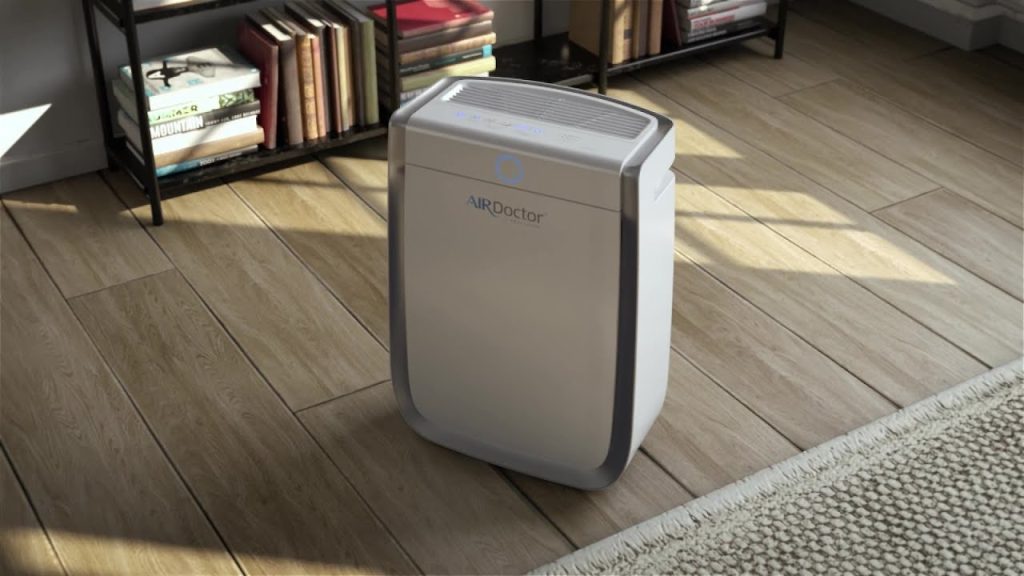
Looking back, several specific AirDoctor features proved superior to our Dyson experience:
Sensor responsiveness:
The AirDoctor reacts within seconds to air quality changes. I tested this multiple times to make sure I wasn’t imagining it.
I opened a bottle of rubbing alcohol and placed it near the sensor, it turned orange within 3-4 seconds. I opened my wife’s face cream with a strong fragrance, same result, immediate detection and response.
When I fried sausage and eggs one morning and got distracted, the AirDoctor kicked to red and high speed almost instantly.
Within 30 minutes we were back to blue and low fan speed. This wasn’t just about numbers on a display, it meant the unit was actively protecting us when it mattered most, not playing catch-up like the Dyson.
VOC and odor elimination:
The dual carbon/VOC filter contains substantially more activated carbon than the Dyson’s filter.
I could finally smell the difference, or rather, the lack of smell. We cook a lot – stir fries, curries, fish – and previously those smells would permeate the house for 12+ hours.
Now? Within an hour or two, the air is neutral.
I run it next to the stove when cooking anything smoky, and it captures about 90% of the smell before it spreads.
The pre-filter gets visibly dirty quickly (which I actually appreciate, it means it’s catching stuff), but it’s washable so maintenance is easy.
True HEPA performance:
The 0.003-micron capture rate meant we were finally filtering out the ultrafine particles that cause the most health concerns, combustion byproducts, virus particles, the smallest components of smoke and pollution.
During last summer’s wildfire season, the difference was night and day. The Dyson had left us with scratchy throats and irritated eyes. The AirDoctor kept our indoor air in the “good” range even when outdoor AQI hit 150+.
We’d wake up without symptoms, no coughing, no irritation. After dealing with weeks of discomfort the previous year, having clean air during smoke season felt like a miracle.
Sealed filtration system:
Knowing that 100% of the air passing through the unit was actually being filtered gave me confidence.
The Dyson’s construction was beautiful, but I’d read enough about air purifiers to know that unsealed systems can let dirty air bypass the filters.
The AirDoctor’s sealed design meant every cubic foot of air got the full treatment.
Simple, effective controls:
No app required (though there’s a smart version with WiFi if you want it). No connectivity issues. No complex menus.
Just a clear display showing blue/yellow/red, intuitive buttons, and an Auto mode that actually worked intelligently.
The night mode button was brilliant, one press and all the lights turn off completely. With the Dyson, even in “night mode” there were always glowing indicators.
The AirDoctor goes completely dark, which my wife appreciated since she’s sensitive to any light when sleeping.
Real-World Performance Testing
I put the AirDoctor through the same scenarios that had revealed the Dyson’s limitations:
Wildfire smoke season (Year 2):
When smoke returned the following summer, the difference was dramatic. I ran the AirDoctor on high whenever outdoor AQI spiked, and our indoor air quality stayed in the “good” range even when outside hit 150+.
No scratchy throats, no eye irritation, no feeling like we were breathing in smoke. After the miserable experience we’d had the previous year with the Dyson, this felt transformative.
The AirDoctor’s UltraHEPA filter was specifically designed for these ultrafine smoke particles that the Dyson’s H13 filter couldn’t effectively capture.
Cooking high-heat meals:
I’m a fairly serious home cook – I sear steaks at high temperature, do a lot of wok cooking, pan-fry regularly. These are the techniques that had sent the Dyson into its slow, ineffective response. The AirDoctor handled them confidently.
One Sunday I fried sausages and got distracted by a phone call. By the time I got back to the kitchen, there was visible smoke.
The AirDoctor had already kicked to red and high speed. Within 30 minutes the smoke was gone and the unit had dropped back to blue.
An hour later, you couldn’t smell that we’d cooked anything. The Dyson would have taken 3-4 hours and still left lingering odors.
Renovation and construction dust:
Six months after switching to the AirDoctor, we did a bathroom renovation. Drywall dust, sawing, sanding – normally this would trigger weeks of respiratory irritation for both of us.
I ran the AirDoctor continuously in the bedroom (door closed) during the day while work was happening elsewhere in the house.
Within a couple of days, I realized I wasn’t waking up with coughing fits like I had during previous home projects.
My wife’s sinuses stayed clear. The bedroom remained a clean-air sanctuary even though the rest of the house was a construction zone.
Reducing dusting frequency:
I’m not someone who enjoys dusting, so I noticed when I started doing it less often. Surfaces that used to accumulate a visible layer of dust within 3-4 days were staying cleaner for a week or more.
One afternoon when the sun was streaming through the windows at just the right angle, I was sweeping the floor and could actually see dust particles being pulled across the room toward the AirDoctor.
The Dyson had never shown that kind of visible suction power for airborne particles.
Testing with strong VOCs:
I work from home and occasionally need to use things like super glue, spray paint (well-ventilated area, but vapors still linger), and wood stain.
With the Dyson, these smells would hang around for hours even with the unit running. With the AirDoctor, I can clear strong chemical odors in 20-30 minutes on high speed.
The carbon filter is no joke, it actually works.
Maintenance and Long-Term Costs
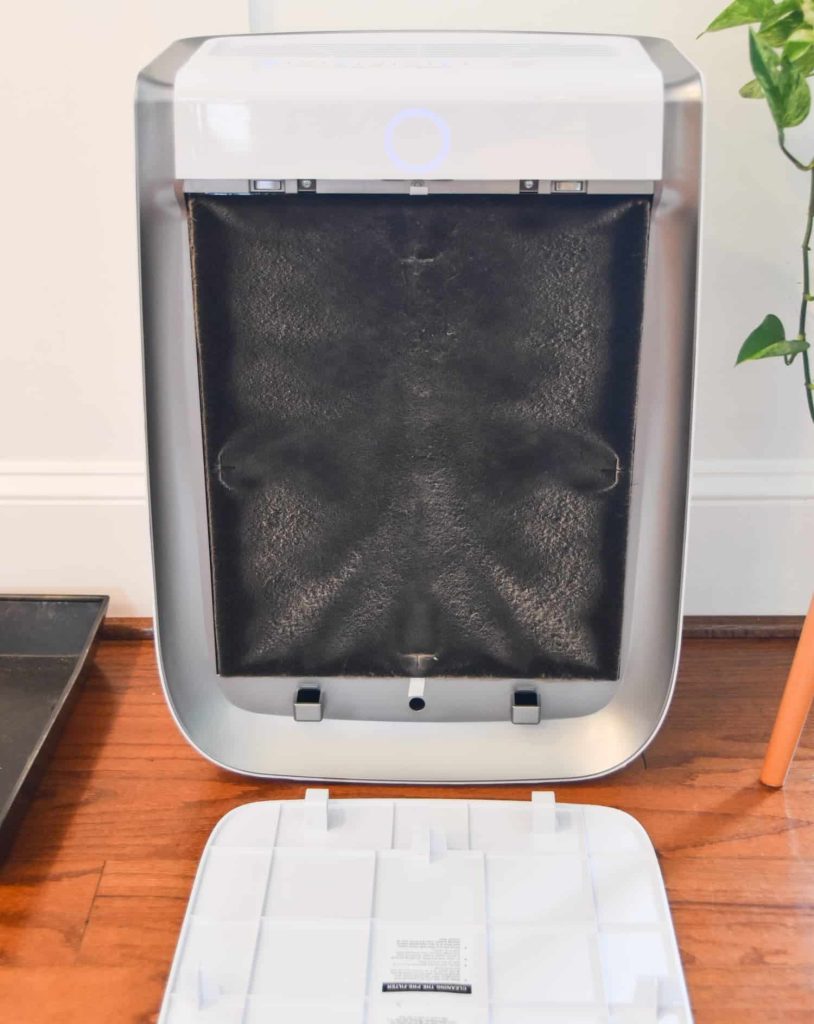
The AirDoctor’s filter replacement schedule is straightforward and honest. The pre-filter is washable (I vacuum it every few weeks), but you can buy replacements for about $35 if needed.
The carbon/VOC filter needs replacement every 6 months and costs around $65-85. The UltraHEPA filter is annual replacement at approximately $95-120 depending where you buy.
Total annual cost: roughly $160-$205 for filters if you replace everything on schedule. The unit has indicator lights that tell you when filters need changing based on actual runtime hours, not just estimates.
That’s comparable to the Dyson’s $79/year (assuming filters last as advertised, which mine didn’t), but the value proposition makes more sense.
I’m getting demonstrably better filtration and real-world performance. With the Dyson, I was paying for sophisticated sensors and beautiful design but getting underwhelming air cleaning.
Filter replacement is simple, no tools required, just open the back panel, pull out the old filters, slide in the new ones.
Takes maybe 3 minutes. The carbon filter is substantially larger and heavier than the Dyson’s, which explains why it actually works for odor removal.
One thing to note: make sure you buy genuine AirDoctor filters. I’ve seen cheaper third-party options, but given that the whole point is superior filtration, I’m not going to cheap out on the actual filters and undermine the system’s performance.
Who Should Choose Which?
After living with both units and reading hundreds of real user experiences, here’s my honest assessment of who each purifier serves best:
Choose the Dyson BP03 if you:
- Prioritize design aesthetics above all else and want a purifier that looks like a piece of modern sculpture
- Specifically need formaldehyde monitoring and destruction (new construction, new furniture, specific chemical sensitivities, 3D printing VOCs)
- Want deep app integration with detailed analytics and scheduling features
- Live in an area with generally good air quality and just want maintenance-level filtration
- Value brand prestige and the Dyson ecosystem
- Have a very large open space where the Dyson’s long-range airflow projection excels
- Are willing to accept slower air cleaning in exchange for whisper-quiet operation
- Don’t mind paying premium prices for incremental improvements over cheaper options
The Dyson does have its sweet spot.
If you have a 1,000+ square foot open-concept space with vaulted ceilings and generally good baseline air quality, the Dyson’s ability to project clean air over long distances while remaining nearly silent has real value.
It’s also genuinely excellent if formaldehyde is your primary concern.
Choose the AirDoctor 3500 if you:
- Need serious air cleaning performance, especially for ultrafine particles down to 0.003 microns
- Deal with wildfire smoke, urban pollution, or frequently poor outdoor air quality
- Have allergies, asthma, COPD, emphysema, chronic sinusitis, or respiratory sensitivities
- Want effective odor and VOC removal (cooking, renovation work, strong chemicals)
- Prefer responsive, automatic operation that reacts quickly to air quality changes
- Value proven filtration technology and sealed systems over app features and analytics
- Want better real-world performance per dollar spent
- Need a unit that actually clears cooking odors, not just detects them
- Prioritize health outcomes and breathing quality over design aesthetics
- Cook frequently with high-heat methods that produce smoke and strong odors
Important caveats from my experience:
The AirDoctor is louder than the Dyson when running at high speed, there’s no getting around that. It’s the sound of moving a lot of air quickly, which is exactly what you want when clearing smoke or odors, but it’s audible.
On low and medium speeds it’s quiet enough for sleeping and conversation. The noise doesn’t bother me because it’s productive noise, the sound of actual air cleaning happening.
The Dyson, by contrast, developed a subtle electrical whine that persisted at all speeds. It was quieter in terms of volume, but the quality of the sound was more annoying once I’d noticed it.
The bottom line:
The Dyson BP03 is a beautifully engineered appliance with sophisticated sensors and impressive specs on paper.
But for most people who need serious air purification, not just air quality monitoring with pretty graphs, the AirDoctor 3500 delivers superior real-world performance at a comparable or lower price point.
If you’re buying an air purifier primarily to improve your health and breathing quality, the AirDoctor is the better choice.
If you’re buying one primarily as a smart home status symbol that happens to clean air, the Dyson might suit you better.
How to Compare High-End Air Purifiers
If you’re in the market for a premium air purifier, here are the critical factors I wish I’d understood before buying the Dyson:
Micron capture rating: Don’t just accept “HEPA filter” at face value. Ask what size particles it captures and at what efficiency. The difference between 0.1 microns and 0.003 microns is enormous when it comes to smoke, pollution, and viruses.
CADR ratings: Clean Air Delivery Rate measures how much filtered air the unit actually delivers per minute. Higher CADR means faster room cleaning. Compare CADR to the room size you’re trying to cover.
Sealed vs. unsealed systems: If air can bypass the filters, you’re not getting complete filtration. Look for units that explicitly advertise sealed systems or 360-degree filtration with no gaps.
Carbon filter substance: How much activated carbon is actually in the filter? More carbon means better VOC and odor removal. Some “carbon filters” are barely dusted with activated carbon—essentially marketing rather than meaningful filtration.
Filter replacement costs: Calculate the annual filter replacement cost and factor it into your purchasing decision. A cheaper unit with expensive filters might cost more over time than a pricier unit with affordable filters.
Sensor quality and responsiveness: If the purifier can’t detect air quality problems quickly, it can’t respond to them. Look for units with proven responsive sensors, not just “air quality monitoring” as a checkbox feature.
Test during the return window: Don’t assume it’s working just because the indicator light says your air is clean. Actually test it, cook something smoky, use strong-smelling products, see how quickly it responds and how well it clears the air.
Why We’re Staying with AirDoctor
Six months after making the switch, we have zero regrets. The AirDoctor 3500 simply outperforms the Dyson BP03 in every metric that matters to us: filtration depth, responsiveness, odor removal, and real-world air quality improvement.
Are we breathing cleaner air?
Yes, measurably and noticeably.
Do we feel healthier?
Absolutely. Better sleep, fewer allergy symptoms, less respiratory irritation.
Would we buy the Dyson again?
No. It’s a beautiful machine that prioritizes form over function, smart features over smart engineering.
The Dyson BP03 isn’t a bad air purifier, it’s just not the best air purifier, despite its premium price tag suggesting it should be. For some buyers, its unique formaldehyde handling, sophisticated app features, and stunning design will justify the cost.
But for most people who need serious air cleaning in real-world conditions, smoke, allergens, cooking odors, pet dander, urban pollution, renovation dust, the AirDoctor 3500 delivers superior performance at a comparable or even lower price point.
We bought the Dyson expecting the best. We switched to the AirDoctor and actually got it.
The air in our home has never been cleaner, and that’s not marketing speak, it’s what I see on the indicator light every day, and the way we feel every morning when we wake up breathing easy.
Sometimes the best choice isn’t the most famous brand. Sometimes it’s simply the one that does the job better.