
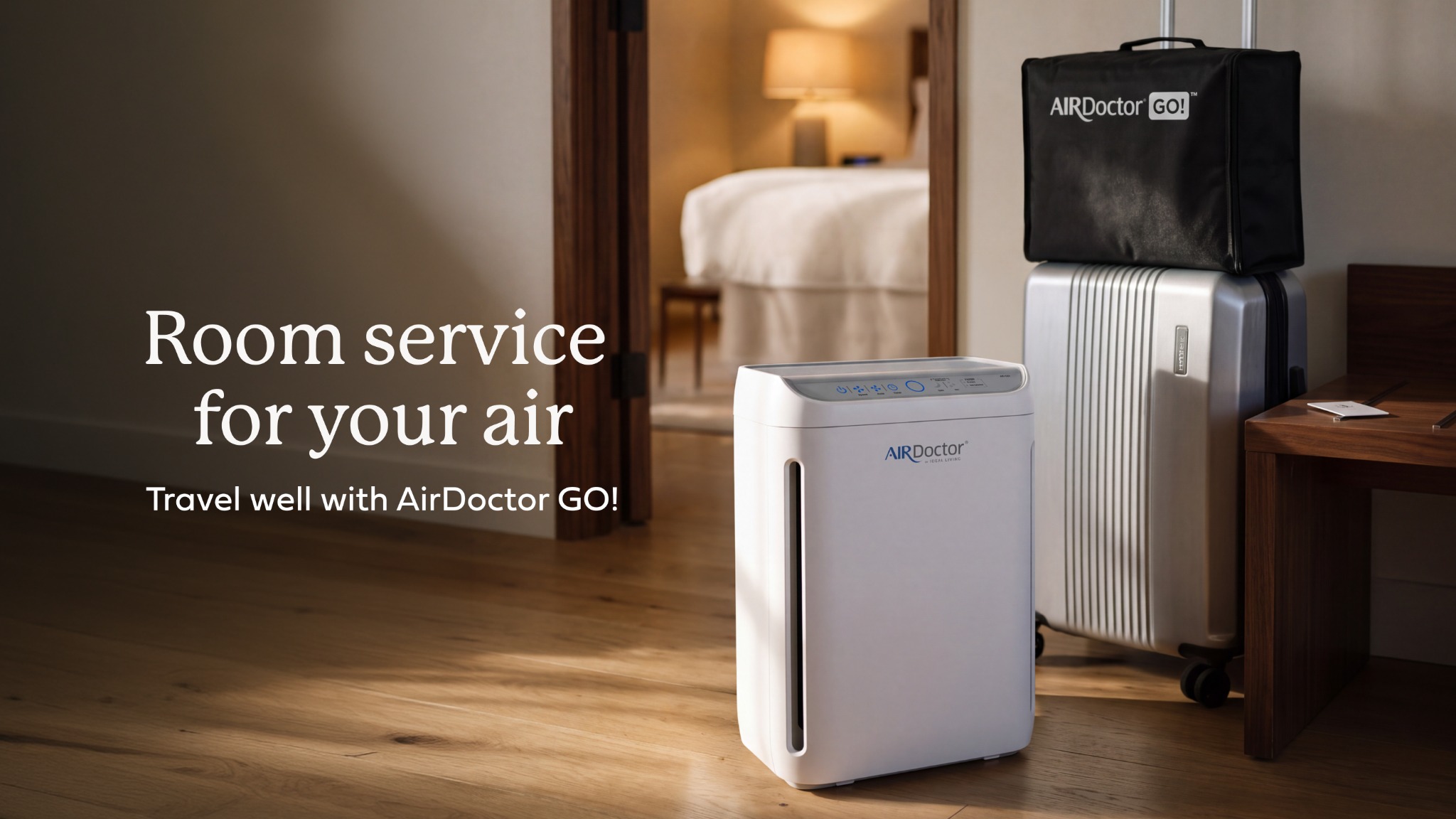
Taking your air purifier on vacation usually means finding room for another bulky appliance. The new AirDoctor GO! is designed to make that a more practical option, with a compact body, a carrying sleeve and power compatibility for international travel.
The appeal is straightforward: familiar AirDoctor filtration in a smaller machine for a hotel room, guest bedroom or home office. Before buying, though, it helps to understand its room-size rating, how much luggage space it needs and what the filters will cost.
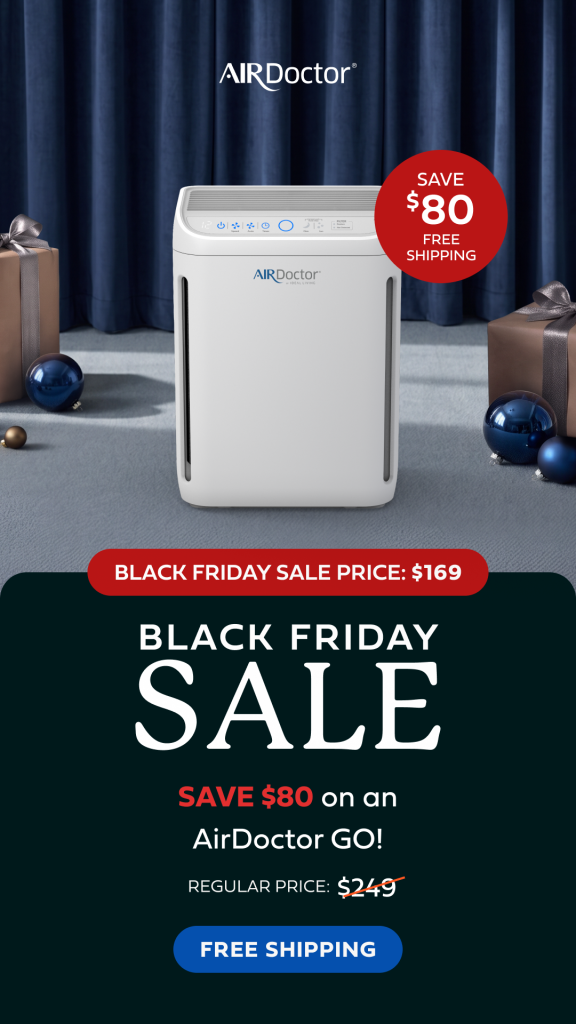
The AirDoctor GO! launch offer
| Offer detail | What is included |
|---|---|
| Promotional price | $169 |
| Regular price | $249 |
| Saving | $80, approximately 32% |
| Included carrying option | Complimentary standard sleeve/carrying case |
| Premium case | Optional upgrade, separate from the complimentary sleeve |
What is AirDoctor GO!?
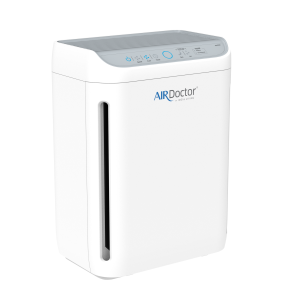
GO! is AirDoctor’s new travel-focused purifier. It measures 15 inches high, 11 inches wide and 7 inches deep and weighs 9.8 pounds. It can sit on a suitable nightstand, desk or dresser, then go into its carrying case when you leave.
It uses the same three types of filtration found in the AirDoctor family: a pre-filter, a carbon/VOC layer and UltraHEPA material. Here, those layers are combined into one replacement filter.
That keeps maintenance simple, although a smaller machine also means less room-cleaning capacity than the larger AirDoctor models.
If you already use an AirDoctor at home, GO! could serve as a second unit for trips or a small room. Our AirDoctor review provides background on the brand’s larger home models.
AirDoctor GO! specifications at a glance
| Specification | AirDoctor GO! |
|---|---|
| Dimensions | 15 × 11 × 7 inches (H × W × D) |
| Weight | 9.8 lb, approximately 4.4 kg |
| Advertised coverage | 270 sq. ft. at three air changes per hour |
| CADR | Smoke: 108 CFM; dust: 120 CFM; pollen: 124 CFM |
| Filtration | Combined pre-filter, Premium Carbon/VOC and UltraHEPA filter |
| Fan controls | Four speeds plus Auto mode |
| Power | 100–240V input; outlet required; six-foot cord |
| Other features | AirDoctor Halo indicator, dim mode, timer and filter-replacement light |
| Aromatherapy | Built-in tray with one felt pad; essential oil not included |
| Recommended filter change | Every six months |
Specifications follow the supplied launch materials, with CADR updated to the figures on the current AirDoctor GO! product page. The earlier launch brief listed 120 CFM as smoke CADR; the live page identifies 108 CFM for smoke and 120 CFM for dust.
How much room can it realistically handle?
AirDoctor advertises 270 square feet at three air changes per hour. The air-change rate is part of that claim: it should stay beside the square-foot number whenever you compare GO! with another purifier.
Using the current 108 CFM smoke CADR and an eight-foot ceiling gives the following calculated equivalent air-change rates:
| Room size | Example dimensions | Equivalent air changes per hour |
|---|---|---|
| 135 sq. ft. | 9 × 15 feet | 6.0 |
| 180 sq. ft. | 12 × 15 feet | 4.5 |
| 270 sq. ft. | 15 × 18 feet | 3.0 |
Calculation: 108 CFM × 60 ÷ room volume in cubic feet. These are sizing estimates based on rated performance, not measurements in a furnished room. Higher ceilings increase room volume, and lower fan speeds reduce clean-air delivery.
A small bedroom or private office is therefore an easier assignment than a large hotel suite. For an open-plan rental, include the connected area you expect the purifier to serve.
The EPA’s air-cleaner guide explains why CADR and room size matter, and why portable filtration supplements ventilation and pollution-source control.
For several rooms separated by closed doors, placement matters as much as the model name. Our guide to whether you need an air purifier in every room explains that decision.
How the three-stage filter works
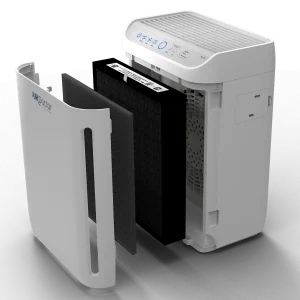
The pre-filter catches larger airborne debris such as hair and dust. The carbon/VOC layer uses activated carbon enhanced with potassium permanganate to target certain gases and odors. The UltraHEPA layer captures fine airborne particles.
AirDoctor reports that its UltraHEPA material has been independently tested to capture 99.99% of particles as small as 0.003 microns.
That is a manufacturer-reported filtration claim, not a promise that every room will become 99.99% pollutant-free. Room results also depend on airflow, placement, runtime and continuing sources of pollution.
Likewise, the presence of carbon does not establish how quickly GO! removes a particular odor or how long that capacity lasts. CADR rates particle cleaning, not gas removal.
If a hotel room has persistent smoke odor or visible mold, request another room rather than relying on a purifier to make it suitable.
The complimentary sleeve versus the premium case
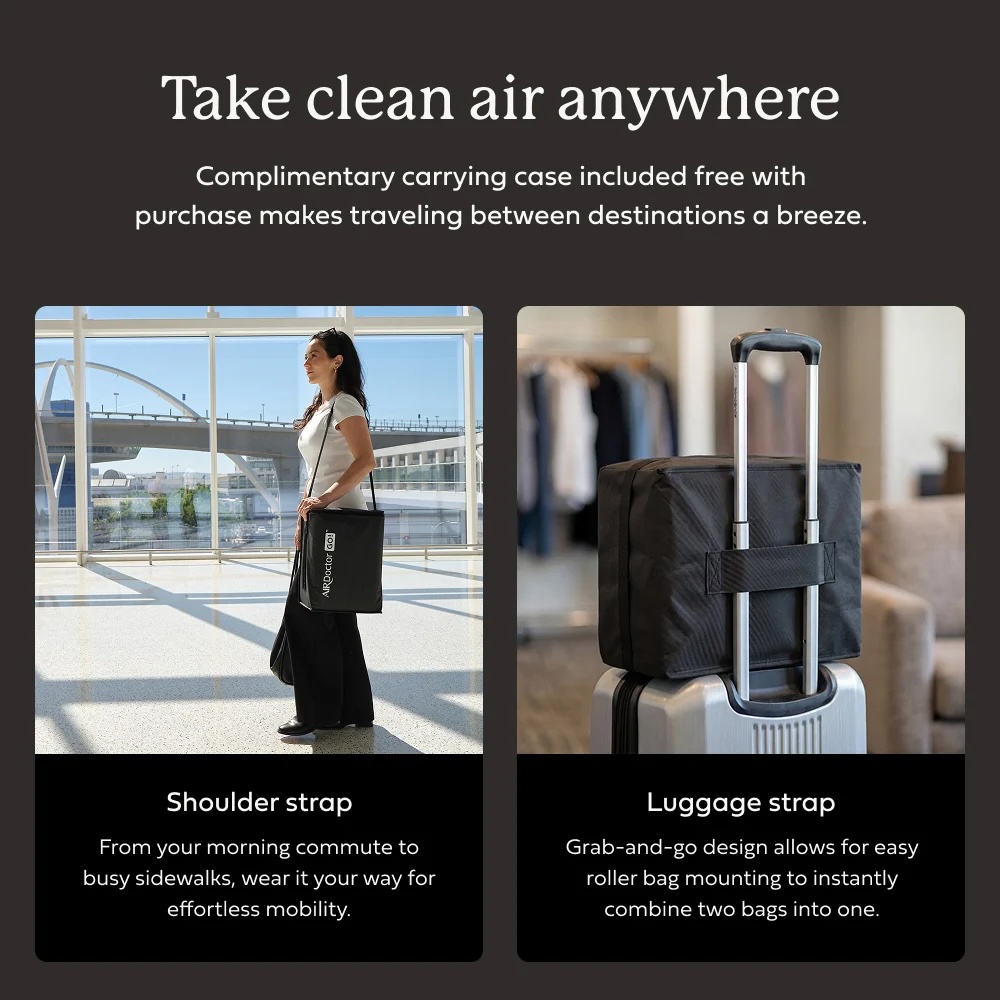
The complimentary case has a shoulder strap and a back strap that slides over a rolling suitcase handle. That is useful if you would otherwise have to carry the purifier under one arm while managing the rest of your luggage.
The premium case adds ventilation panels. AirDoctor’s launch brief says you can operate GO! inside that specific case with the top unzipped, following the product instructions.
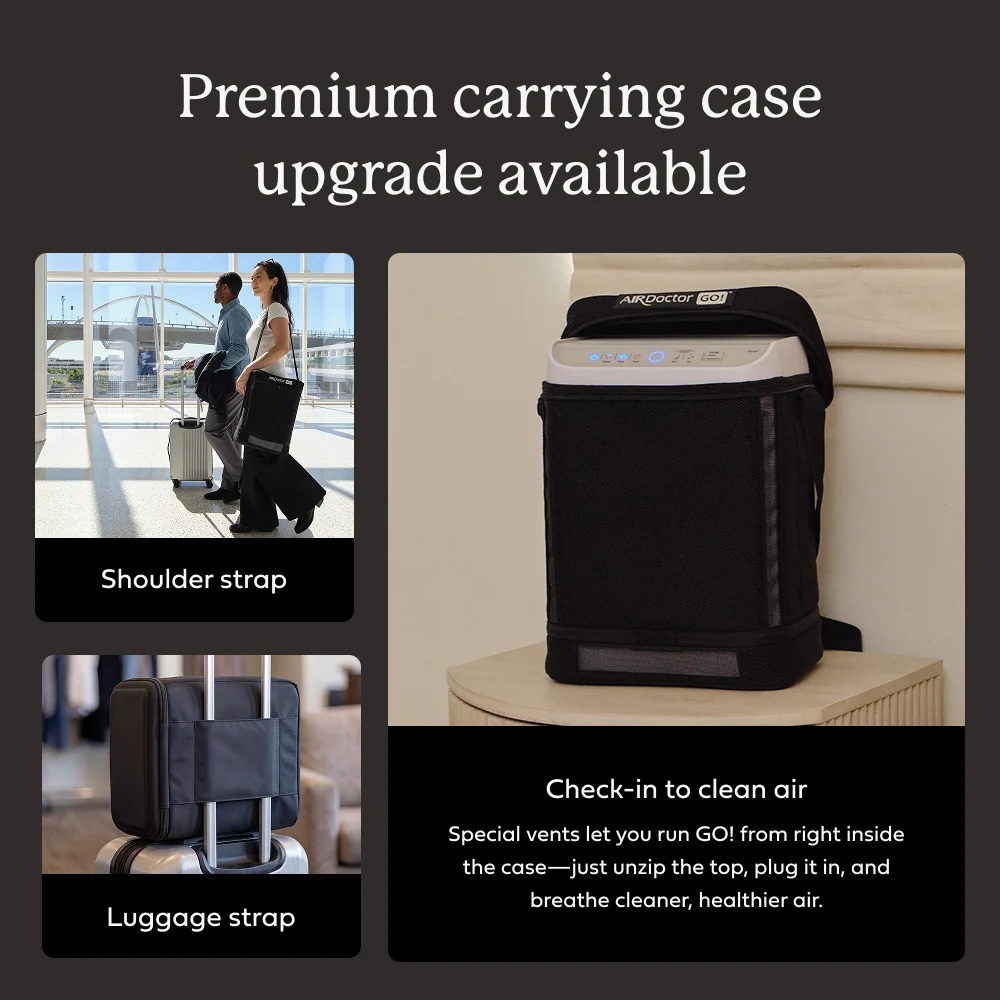
Remove the standard sleeve before running the purifier. The permission to operate inside a case applies to the ventilated premium design, not to any closed travel bag. Keep the air inlet and outlet clear.
What to know before taking GO! on a trip
It needs an electrical outlet
GO! is portable because of its size and carrying options, but it is a plug-in appliance. It does not run on a rechargeable battery. You need suitable power at your destination, including in an RV or camper.
The 100–240V input accommodates common international mains voltages. A plug adapter may still be necessary to fit the local socket. Check the unit’s label and instructions before travel. The six-foot cord gives you some flexibility, but the purifier still needs a stable place with unobstructed airflow.
Check airline baggage rules for your ticket
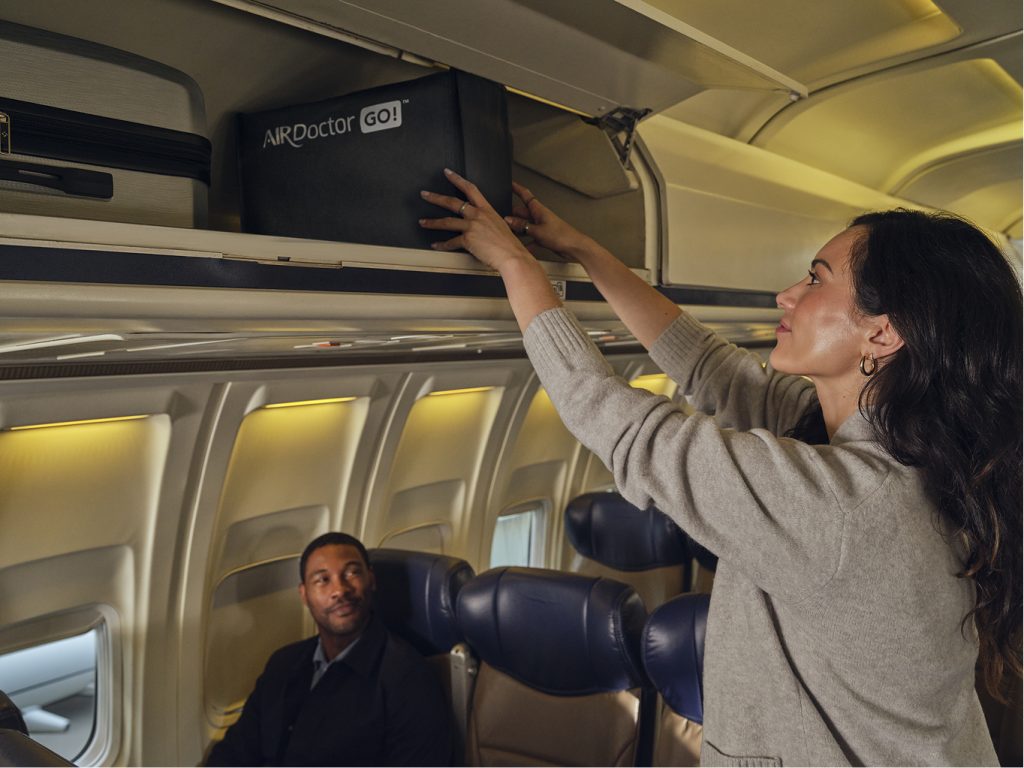
AirDoctor markets GO! for carry-on travel. Its 15 × 11 × 7-inch body is compact, but the carrying case adds to the packed dimensions and weight. Check your airline’s allowance for the case you will actually bring, including whether it counts as your personal item.
Being permitted as baggage does not automatically mean an airline will allow you to operate it onboard. The most straightforward use is to pack it for your destination and plug it in after arrival.
Road trips may be its easiest use case
Car travel avoids the personal-item tradeoff and makes it simpler to take the purifier between hotels or family visits. At almost 10 pounds before the case and other accessories, it still takes a meaningful share of your luggage allowance when flying.
Auto mode, nighttime controls and aromatherapy
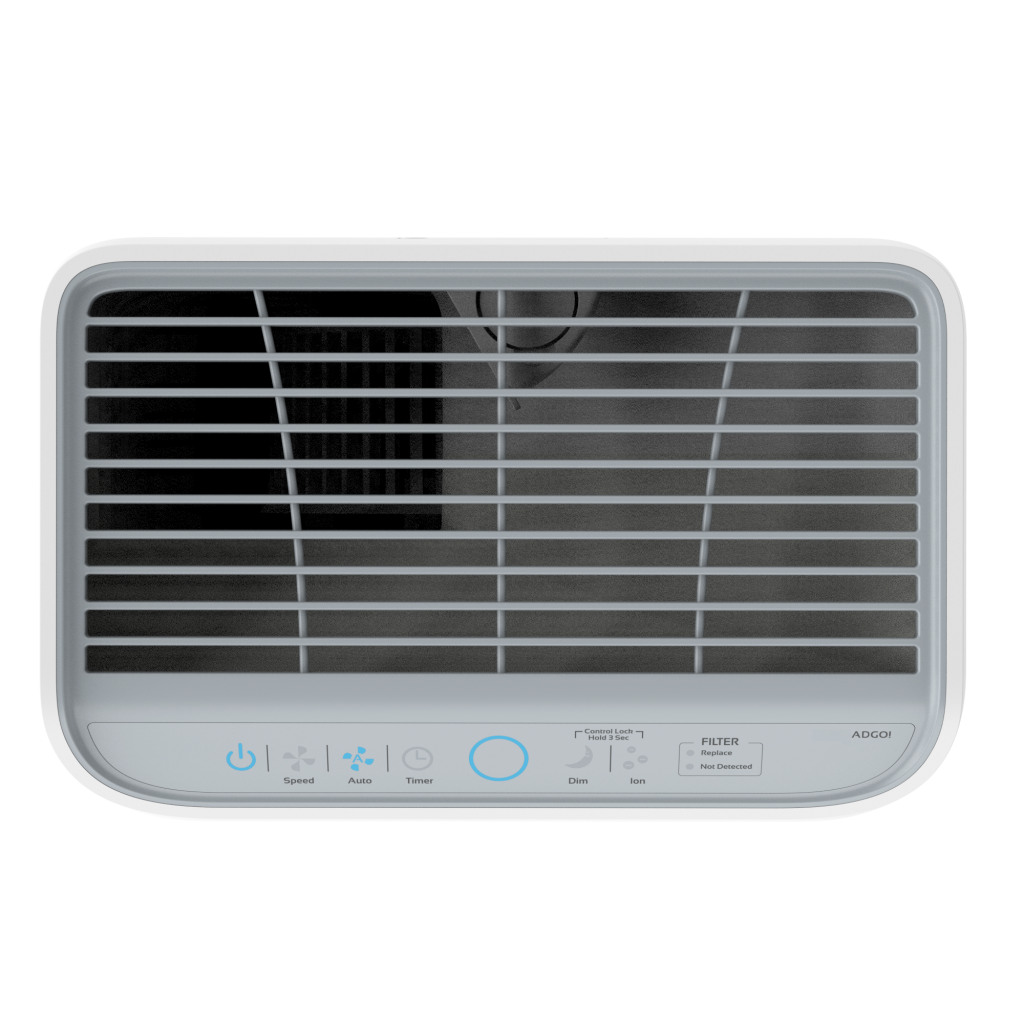
Auto mode adjusts the fan in response to the built-in air-quality sensor. The Halo light gives a color-coded indication of air-quality changes, while dim mode switches off the LEDs for a darker sleeping space. There is also a timer and a filter-change reminder.
Those controls are useful, but a favorable sensor reading does not measure every possible contaminant. Choose a fan setting you can tolerate for the time you will spend in the room.
AirDoctor describes the lowest speed as very quiet; I have not independently measured GO!’s sound levels.
The aromatherapy tray comes with a felt pad, but no essential oil. Treat it as an optional scent feature. You can leave it unused if you prefer fragrance-free air.
If you use it, follow the instructions and remove the pad before adding oil to avoid spills.
Replacement filters and ongoing costs
AirDoctor recommends replacing the combined GO! filter every six months. The official replacement-filter listing showed $49.95 when checked on October 2026.
At that price, two replacement filters represent a $99.90 annual filter allowance, before taxes and shipping. That is a recurring budget figure, rather than the first-year bill: the purifier includes its first filter, so a six-month replacement schedule normally requires one additional purchase before the first anniversary.
For example, buying at the announced $169 price and purchasing one $49.95 replacement at month six gives $218.95 in hardware and filter spending before month 12. A replacement due at month 12 starts the next year. Electricity, shipping, tax and accessories are extra.
The product page also advertises an optional filter subscription and five-year extended coverage with an active subscription. Check the plan’s conditions and recurring charges before selecting it; the filter allowance above uses the one-time purchase price.
Who should consider AirDoctor GO!?

Frequent travelers with small rooms in mind are the clearest audience. If you regularly stay in hotels, visit family or work from temporary accommodation, the included carrying sleeve and international voltage support address practical problems that a larger home purifier creates.
People who want one compact unit for home and occasional trips may also find it useful. A small home office during the week and a guest bedroom on a weekend trip is a more realistic job for GO! than cleaning an entire rental property.
A larger AirDoctor is worth considering when room-cleaning capacity matters more than portability. If your main concern is several rooms at home, our guide to one AirDoctor 5500 versus smaller purifiers in separate rooms looks at that different buying decision.
My first-look take: the announced $169 offer makes GO! an interesting addition to the AirDoctor family for travel and small rooms. Its strengths are the compact shape, included sleeve, straightforward filter changes and international power compatibility. Its limits are equally clear: it needs an outlet, takes up luggage space and has substantially less cleaning capacity than a larger room purifier.
If those tradeoffs fit how you travel, check the AirDoctor GO! offer and confirm the $169 promotional price, included sleeve and replacement-filter availability before ordering.


[…] may think you need a tiny air purifier for your bedroom, but that’s not true. The smallest ones can’t clean the air well […]