
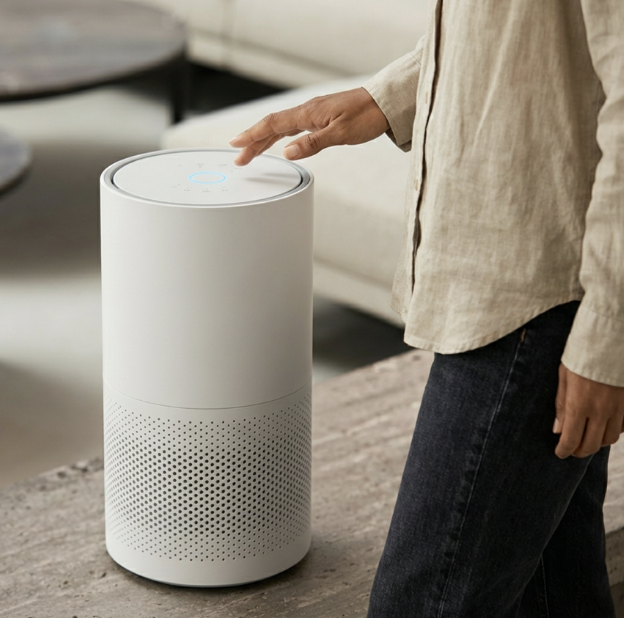
A bedroom purifier should fit the room, leave space around the bed and deliver enough clean air without becoming another appliance you regret buying.
The AirDoctor 1500 looks well suited to that job—provided you size it for the room you actually use.
The question is whether this smaller AirDoctor meets your needs, or whether paying for a larger model would be the better decision.
Who should buy the AirDoctor 1500?
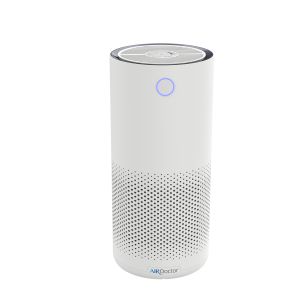
I would shortlist it for a dedicated bedroom or home office, particularly if you want an AirDoctor without buying the larger 3500. For a room near its maximum advertised size, I would compare a larger unit before deciding. A discount is useful only when the purifier fits the space.
The strongest use case is straightforward: one purifier, one regularly occupied room. If you already have a larger AirDoctor in the living room, the 1500 could be a separate bedroom purchase rather than a replacement for it.
AirDoctor 1500 specifications at a glance
| Item | AirDoctor 1500 |
|---|---|
| Regular price / Special offer | $399 / $289 |
| Advertised coverage | 320 sq. ft. at 4 air changes per hour |
| Smoke CADR | 170 CFM |
| Dimensions | 9.75 inches wide × 9.75 inches deep × 21 inches high |
| Weight | 9.5 lb |
| Filtration | Pre-filter, Carbon/VOC and UltraHEPA in one filter assembly |
| Included | Purifier, filter, manual and quick-start guide |
Source: AirDoctor’s official 1500 page. At less than 10 inches across, its body is relatively easy to accommodate; allow additional space for unobstructed airflow.
What does 320 square feet of coverage mean?
AirDoctor advertises four air changes per hour in 320 square feet. That describes a cleaning rate, not a promise that every particle disappears every 15 minutes.
To make the number useful, the table below calculates equivalent air changes using the published smoke CADR.
These are estimates for a single room, assuming the purifier delivers its rated output and the air mixes evenly.
| Room example | Ceiling | Equivalent ACH | Buying implication |
|---|---|---|---|
| 12 × 15 ft. bedroom: 180 sq. ft. | 8 ft. | 7.1 | More capacity relative to room size |
| 15 × 18 ft. room: 270 sq. ft. | 8 ft. | 4.7 | A more demanding single-room assignment |
| 16 × 20 ft. room: 320 sq. ft. | 8 ft. | 4.0 | Approximately the advertised coverage point |
| Same 320 sq. ft. room | 10 ft. | 3.2 | Compare a larger model |
| 20 × 20 ft. living room: 400 sq. ft. | 8 ft. | 3.2 | Consider the 3500 for more capacity |
Calculation: 170 × 60 ÷ (floor area × ceiling height). Rounded to one decimal place. These are calculations, not measured results or health guarantees.
The EPA’s air-cleaner guide explains that CADR is typically measured at the highest speed. Lower speeds clean less air. For bedrooms, consider the speed you can comfortably sleep with, not just the maximum rating. We have not measured this model’s sound level or lower-speed CADR.
For an open-plan room, count the entire connected area. For separate bedrooms with closed doors, plan room by room; a purifier outside the door is not a dependable substitute for one inside.
Our guide to whether you need an air purifier in every room helps prioritize where to start.
How the three-stage filtration works
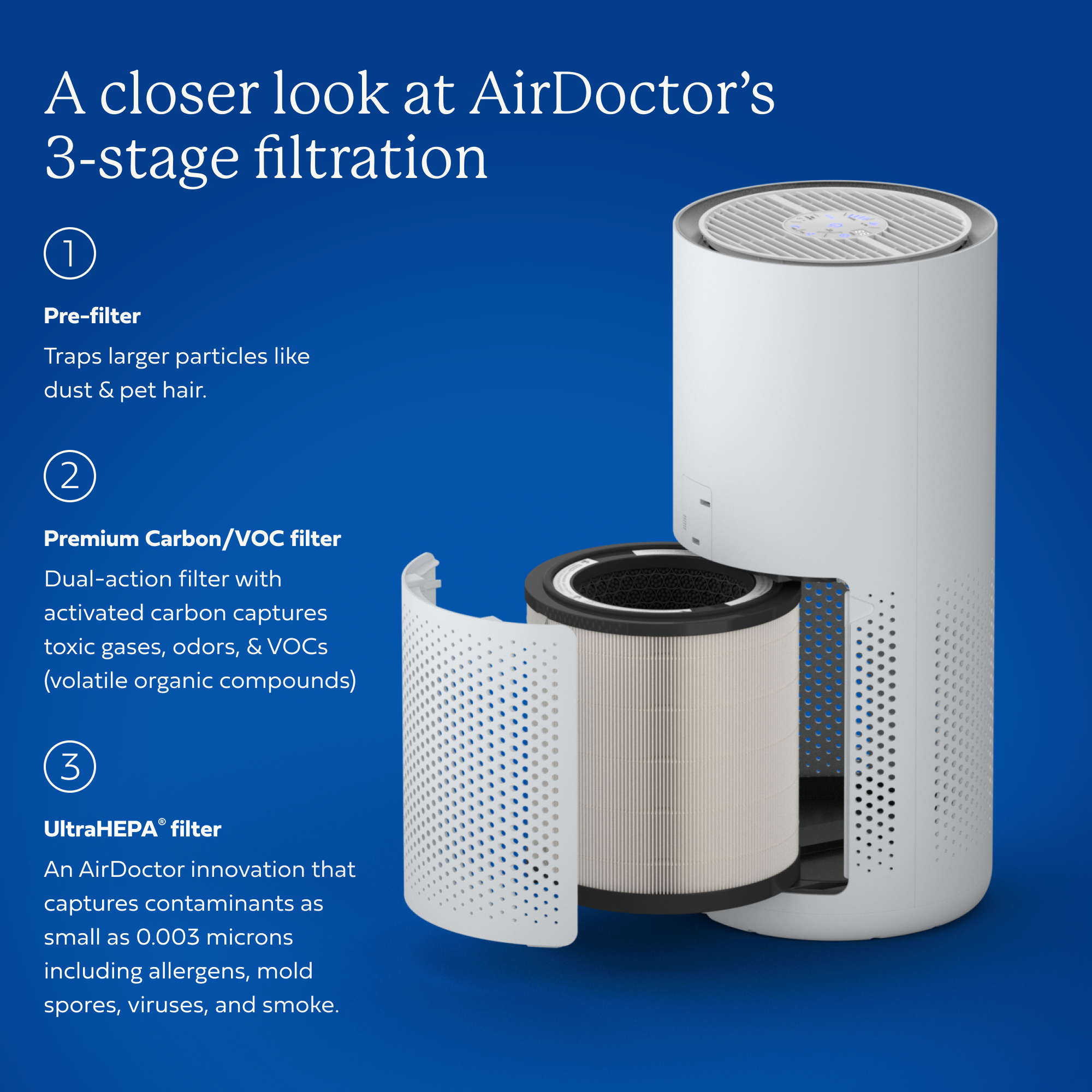
The pre-filter catches larger debris such as hair and lint. The Carbon/VOC stage targets gases and odors, while UltraHEPA handles fine particles.
AirDoctor reports 99.99% capture of particles down to 0.003 microns in testing. That is a manufacturer filtration claim, not a measurement of the air in your bedroom.
Particle capture and gas removal are different jobs. The 170 CFM smoke CADR measures particle cleaning; it does not quantify VOC removal.
Carbon performance depends on the pollutant and the available filter material. A purifier supplements ventilation and removing pollution sources; it cannot eliminate every contaminant or fix the moisture problem behind mold.
Controls and everyday practicality
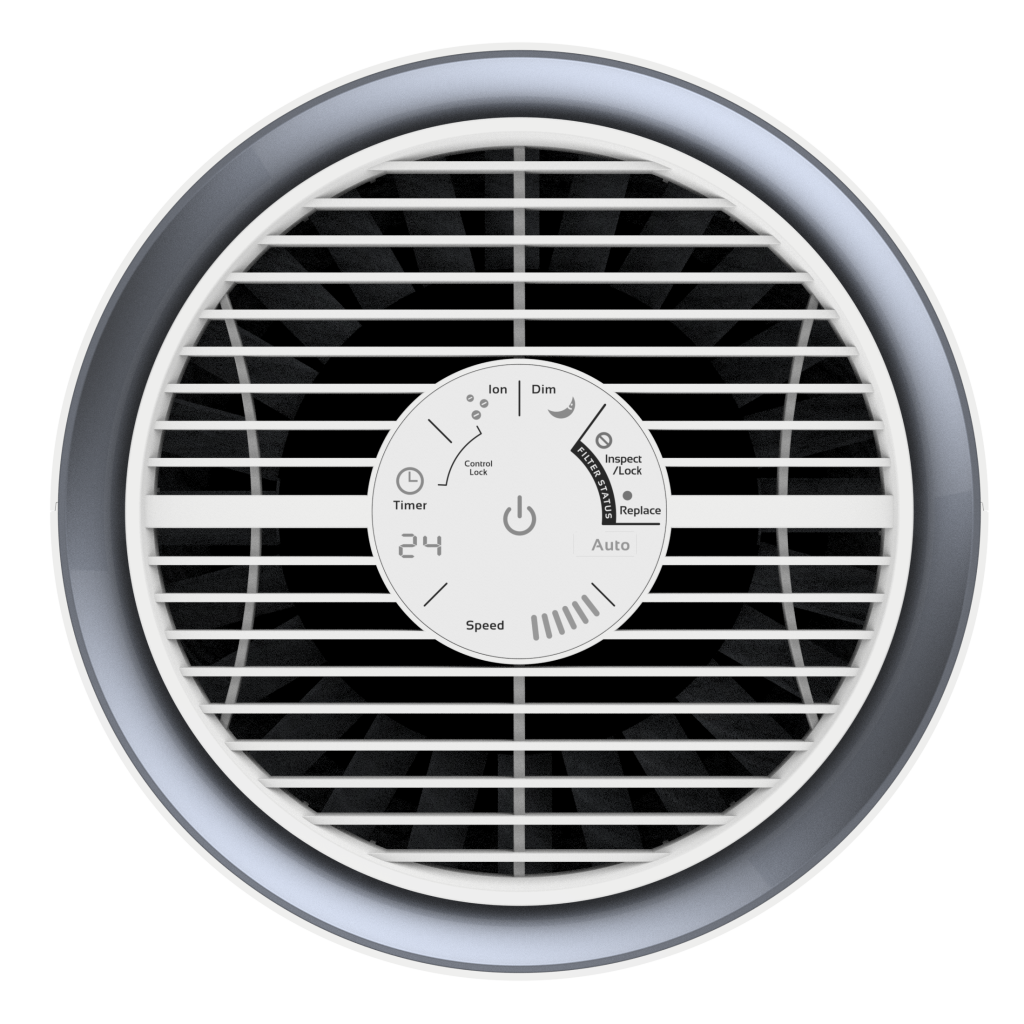
AirDoctor advertises automatic adjustment and a light-dimming feature for the 1500. These are useful bedroom conveniences.
The website’s generic app section is labeled for Smart models; do not assume this 1500 includes Wi-Fi or app control.
Before choosing its permanent spot, check where you can route the cord and whether furniture or curtains would obstruct the intake or outlet.
A convenient location makes it easier to leave the purifier operating consistently. A tucked-away corner that blocks airflow defeats the reason for buying it.
Filter costs: budget beyond the $289 purchase
The product page lists an optional subscription at $59.46 per shipment, every six months, with a five-year extended warranty while the subscription remains active.
That is a conditional benefit, not an unconditional five-year warranty on every purchase.
| Budget item | Calculation | Amount |
|---|---|---|
| Initial purifier purchase | IndoorClime reader offer | $289 |
| Two subscription shipments | 2 × $59.46 | $118.92 |
| Monthly filter reserve | $118.92 ÷ 12 | $9.91 |
| Purchase plus two paid shipments | $289 + $118.92 | $407.92 |
This is a planning example, not a first-year billing quote. It excludes electricity, tax and any shipping. Confirm whether the $289 promotion can be combined with the subscription, when billing starts, and which replacement filter is supplied. The included filter is not an extra purchase.
The page’s general FAQ gives replacement intervals for several AirDoctor models without clearly separating the 1500.
Follow the 1500 manual or obtain model-specific confirmation before ordering replacements. Do not buy a 1000-series filter merely because its model number looks similar.
For budgeting, I would set aside the monthly filter reserve from the beginning. If that recurring amount feels uncomfortable, the purchase discount does not resolve the long-term cost concern.
AirDoctor 1500 vs. 2000, 3500 and 5500
Model numbers alone are a poor sizing guide. The 2000 sits very close to the 1500 in published clean-air delivery, while the 3500 and 5500 offer much larger increases.
| Model | Smoke CADR | Calculated area at 4.8 equivalent ACH* | Main reason to consider it |
|---|---|---|---|
| AirDoctor 1500 | 170 CFM | 266 sq. ft. | A dedicated smaller room |
| AirDoctor 2000 | 162 CFM | 253 sq. ft. | Different shape or Smart option |
| AirDoctor 3500 | 340 CFM | 531 sq. ft. | A larger bedroom or living room |
| AirDoctor 5500 | 556 CFM | 869 sq. ft. | A much larger open space |
*Calculated at an 8-foot ceiling: CADR × 60 ÷ (8 × 4.8), rounded to the nearest square foot. The 4.8 figure is a common comparison target here, not a claim that the manufacturer rates every model this way.
1500 or 2000: compare the features you need
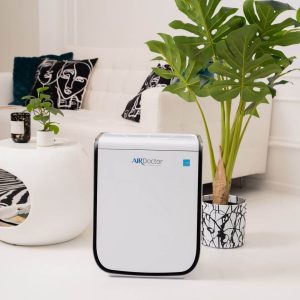
The 1500’s rated smoke CADR is about 5% higher. That is too small a difference to treat the 2000 as an airflow upgrade. The 2000 has a shallower rectangular body and Classic or Smart versions. If app control matters, investigate the Smart version; if it does not, focus on placement, current checkout price and replacement-filter costs.
1500 or 3500: a meaningful increase in capacity
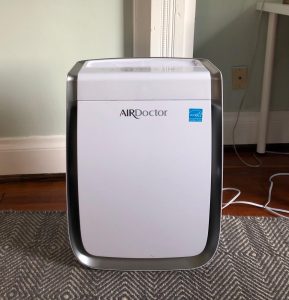
The 3500’s published smoke CADR is twice the 1500’s. For a 400-square-foot room with an 8-foot ceiling, that works out to roughly 6.4 equivalent ACH versus 3.2. It is also larger and heavier, at 18 lb. This is the comparison I would make when room size is the main concern. Our long-term AirDoctor review discusses the larger model in more detail.
1500 or 5500: one large space versus separate rooms

The 5500 is a different proposition: substantially more airflow, a 16-by-16-inch footprint and a 33 lb body. It makes more sense to compare it for a large open living area than for a compact bedroom.
Two 1500s at the reader price would cost $578 before tax and any shipping, giving you one unit in each of two bedrooms—but also two filters to budget for.
Do not treat those two bedroom units as identical to one larger purifier in an open room. Placement changes the result. See our guide to one AirDoctor 5500 versus two smaller purifiers for the layout decision.
Is the AirDoctor 1500 worth buying?
At $289 for IndoorClime readers, compared with the $399 regular price, the 1500 is worth shortlisting for a dedicated bedroom or home office.
I would be most comfortable choosing it for a room comfortably below the advertised maximum, with a clear place to stand and a budget for replacement filters.
Choose the 2000 for a feature or shape preference, not a higher model number. Compare the 3500 when you need a substantial capacity increase. Reserve the 5500 comparison for a much larger connected space.
The best reason to buy the 1500 is that it fits a specific room and your ongoing budget. The reader discount makes that decision more attractive; it should not be the only reason for it.

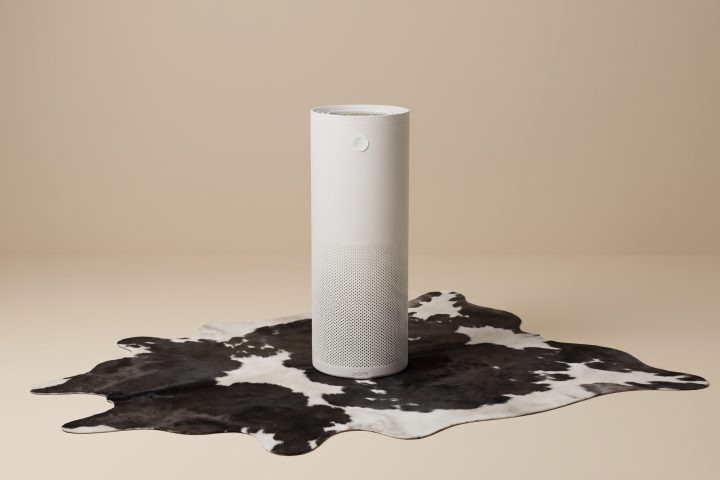
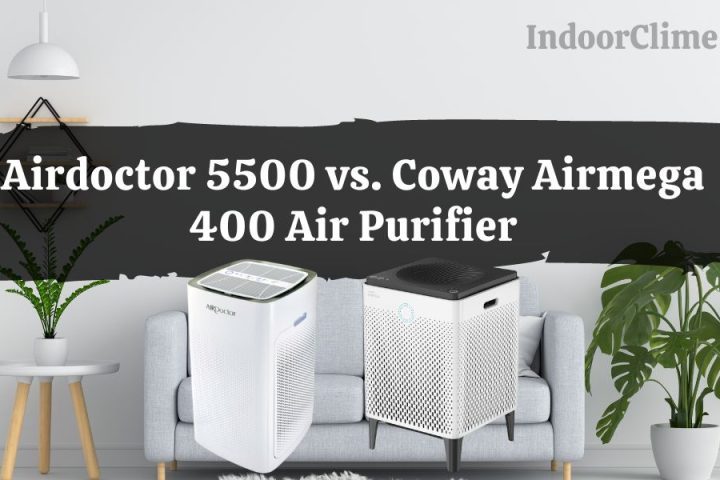

[…] testing it deliberately. When my wife did her hair with hairspray in the bathroom, I heard the AirDoctor in the bedroom kick into high gear within […]
[…] you use an air purifier in your bedroom, dim lights or night mode should be a feature to look […]