
This article contains affiliate links. If you buy through them, IndoorClime may earn a commission at no extra cost to you.
Your Levoit Core 300 seemed like a sensible purchase for the bedroom. Then you moved it into the living room, opened the door to the kitchen, or moved to a bigger home.
Now it spends more time on high, and you are wondering whether you bought the wrong purifier.
You may simply have given a small purifier a much bigger job. A useful Levoit Core 300 upgrade should deliver substantially more clean air at a running cost you can live with.
A more expensive filter label, by itself, does not solve an undersized purifier.
For a larger room, the Levoit Core 600S-P is my starting recommendation among these three options.
The AirDoctor 3500 is worth considering if you prefer its separate filter arrangement, while Jaspr is a premium choice with a much larger filter budget. Here is how I would choose between them.
The quick decision
- Keep the Core 300: it still suits a smaller enclosed room and is working properly.
- Choose the Core 600S-P: you want the most listed clean-air delivery for the money in this comparison.
- Consider AirDoctor 3500: you want separate carbon and particle filters and accept a higher purchase price.
- Consider Jaspr: you value its steel body and simple controls enough to justify its purchase and replacement-filter costs.
Specifications and US prices checked October 12, 2026. This is a buying guide based on manufacturer specifications and our calculations, not a side-by-side laboratory test. For the Core 300 baseline, I use the current US Core 300-P listing; owners of older versions should check their model’s manual.
First, check whether your Core 300 actually needs replacing
Before spending several hundred dollars, check the things a new machine would not automatically fix:
- Check the filter and intake. Make sure the filter is correctly installed, its packaging has been removed, and furniture or curtains are not blocking airflow. Follow your manual’s cleaning instructions; do not wash a disposable particle or carbon filter.
- Check the fan setting. A quiet setting moves less air than the setting used for the maximum CADR rating. Try a higher manual speed before concluding that the purifier has failed.
- Measure the whole connected space. A 250-square-foot lounge open to a kitchen is a different job from an enclosed 250-square-foot bedroom. Ceiling height matters too.
- Identify the actual problem. Dust already sitting on shelves still needs cleaning. Persistent odors need attention to their source. A larger particle CADR is not a measure of gas or odor removal.
If the unit only seems inadequate after moving to a larger room, more capacity is a reasonable next step. If it has developed an unusual mechanical noise or lost airflow in its original room, troubleshoot that fault first.
How much bigger should your next air purifier be?
Start with CADR: clean air delivery rate, usually shown in cubic feet per minute (CFM). It estimates the delivery of particle-cleaned air. Raw fan airflow and filter capture percentages are different measurements.
The EPA’s guide to home air cleaners explains why room size and CADR matter, and why filtration complements source control and ventilation. The practical question is how much clean air reaches the space you want to treat.
To put the models on a common room-size basis, the table below uses 4.8 equivalent air changes per hour and an 8-foot ceiling.
That is a comparison baseline, not a universal health requirement. Equivalent air changes describe clean-air delivery relative to room volume; they do not mean fresh outdoor air is entering the room.
The calculation: room area = CADR × 60 ÷ (ceiling height × target air changes per hour).
| Model | Listed CADR | Area at 4.8 air changes/hour | Air changes/hour in 400 sq ft |
|---|---|---|---|
| Levoit Core 300-P Baseline |
143 CFM | 223 sq ft | 2.7 |
| Levoit Core 600S-P | 391 CFM | 611 sq ft | 7.3 |
| AirDoctor 3500 Classic | 340 CFM (smoke) | 531 sq ft | 6.4 |
| Jaspr Air Scrubber | 340 CFM (smoke) | 531 sq ft | 6.4 |
Calculated from manufacturer-listed maximum CADR, rounded to the nearest square foot and one decimal place. The Levoit listings give a headline CADR; AirDoctor and Jaspr identify smoke CADR. These are not four results from one independent test. Our calculated areas may differ slightly from manufacturers’ rounded coverage figures. Lower fan speeds, room layout, filter condition and imperfect mixing affect actual performance.
The room-size effect is substantial. At 143 CFM, the Core 300-P provides about 6.0 equivalent air changes per hour in a 180-square-foot bedroom, but only 2.7 in a 400-square-foot living room, assuming 8-foot ceilings. Nothing has broken; there is more than twice as much air to process.
A 400-square-foot room needs 256 CFM to reach our 4.8-air-change baseline with an 8-foot ceiling, or 320 CFM with a 10-foot ceiling. That is why I would leave some capacity in reserve rather than buy a machine whose maximum rating just covers the room.
Three worthwhile Core 300 upgrades, with different tradeoffs
1. Levoit Core 600S-P: the strongest value for a larger room
Best fit: you mainly want more particle-cleaning capacity without turning a modest upgrade into a four-figure purchase.
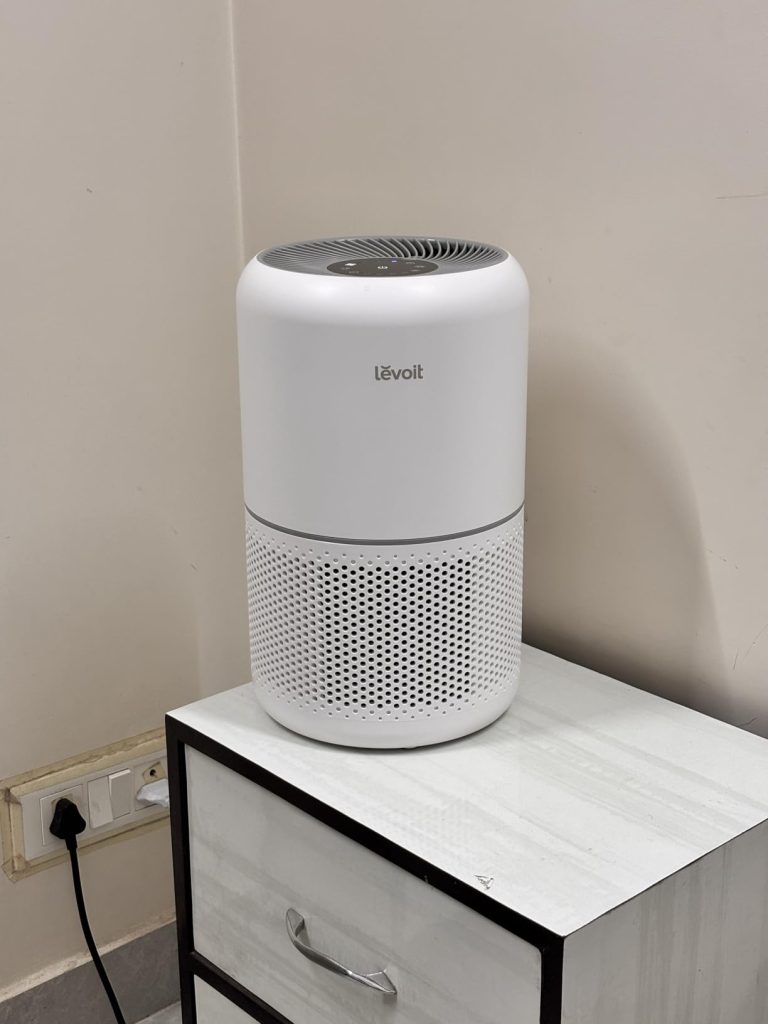
The current US Core 600S-P lists 391 CFM and a regular price of $299.99. Among these candidates, that gives it both the highest listed CADR and the lowest purchase price. Its app controls and particle-sensing Auto Mode also add convenience.
The tradeoff is size: its listed dimensions are 12.3 × 12.3 × 23.6 inches. Measure where it will stand, including the clearance required by the manual. Also, do not pair its quietest advertised noise figure with its maximum room coverage; those describe different operating conditions.
My recommendation is straightforward: for a typical 300–400-square-foot enclosed living room with an 8-foot ceiling, start here. There is more rated capacity available than with the Core 300, plus a relatively manageable filter budget. That does not establish which model is quietest at the same clean-air output; we would need comparable measurements for that.
Check the Core 600S-P specifications and current price.
2. AirDoctor 3500: an alternative with separate replacement filters
Best fit: you prefer AirDoctor’s filter arrangement and automatic operation, and are comfortable paying more for those preferences.
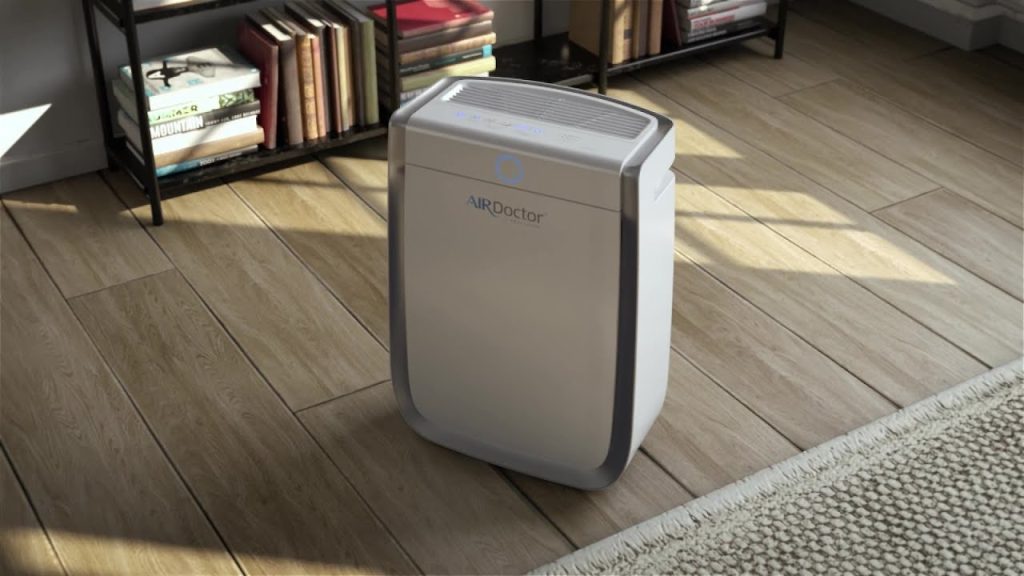
The 3500 Classic lists a smoke CADR of 340 CFM and a regular price of $659. That is a meaningful capacity increase over the Core 300 baseline, but it does not exceed the Core 600S-P’s listed CADR.
Its separate carbon/VOC and UltraHEPA filters follow different replacement schedules: six months for carbon and twelve months for UltraHEPA under the manufacturer’s guidance. That makes filter budgeting a little different from replacing a single combined cartridge.
I would choose it for that design and the overall ownership package, rather than assume the UltraHEPA name means better whole-room performance than every competing purifier. The comparison table concerns particles; it does not establish which machine removes odors or gases faster.
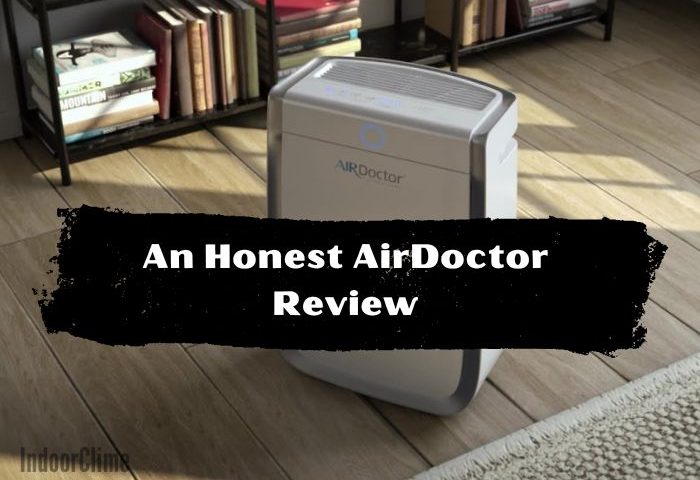
For more detail on the range and everyday considerations, see our AirDoctor review. This guide prices the 3500 Classic; check the exact variant when comparing offers.
Check current AirDoctor offers.
3. Jaspr: a premium option, with premium filter costs

Best fit: you value the design and warranty arrangement enough to accept a much higher long-term budget.
Jaspr lists 340 CFM smoke CADR, matching the AirDoctor figure used here. Its steel body and simple controls distinguish the ownership experience, but a higher price does not buy a higher smoke CADR in this comparison.
Using its $1,199 standard price, the ongoing cost deserves close attention: replacement filters are listed at $199 every six months on subscription, or $299 each as a one-time purchase. Promotions may reduce the initial price.
The advertised lifetime warranty is conditional on maintaining the filter subscription and changing the filter every six months. Treat those conditions as part of the purchase decision, not as a free lifetime benefit attached to any purchase.
Our Jaspr Air Scrubber review goes into more detail. For someone whose main complaint is simply that a Core 300 is too small, the Core 600S-P is easier to justify on capacity and cost alone.
What will the upgrade cost over three years?
A sale price is only one part of the decision. Here is a purchase-plus-filter budget using the standard prices checked above and genuine replacement filters.
Counting rule: each new purifier starts with its included filter. We count replacement purchases before the third anniversary, including month 30 where applicable.
A replacement due at month 36 starts the next period and is excluded. Electricity, tax, shipping, discounts and future price changes are also excluded.
| Upgrade | Purifier | Replacement filters counted | Three-year total |
|---|---|---|---|
| Levoit Core 600S-P | $299.99 | 2–5 original filters × $59.99 12- to 6-month replacement scenarios |
$419.97–$599.94 |
| AirDoctor 3500 Classic | 2 annual packs × $171.99 + 1 carbon filter × $63.95 |
$766.93 | |
| Jaspr, with filter subscription | 5 replacements × $199.00 Every six months |
$2,094.00 |
The Levoit range shows two possible replacement schedules, not a guarantee that every filter lasts a year. Replace according to condition and the manufacturer’s guidance.
For AirDoctor, each annual pack contains one UltraHEPA and two carbon filters; the extra carbon filter covers the fifth six-month change. Jaspr’s one-time filter price would raise its total to $2,694 with the same five changes.
For checking replacement prices, use the manufacturers’ Core 600S-P original filter, AirDoctor annual filter pack and Jaspr filter options. These costs can change the recommendation more than a small difference in the purchase price.
Should you keep the Core 300 and add another purifier?
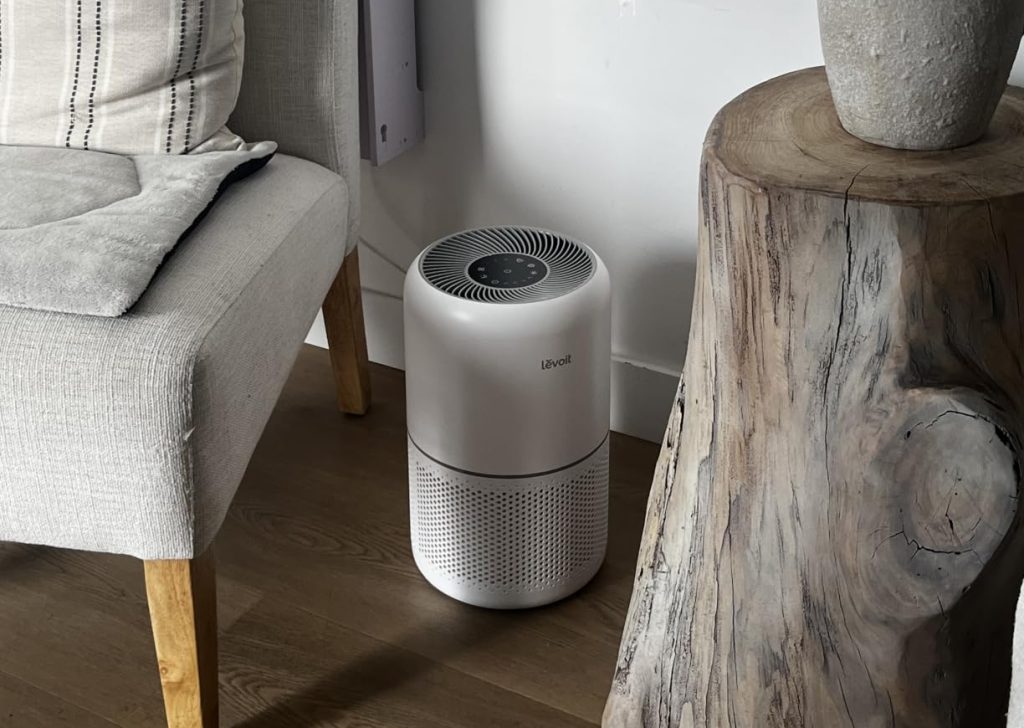
Often, yes. If your Core 300 is functioning well, put it back in the smaller room where it makes sense and buy the larger purifier for the living area. You gain coverage in two places without retiring a useful appliance.
A living-room purifier also cannot promise the same cleaning rate inside a bedroom behind a closed door. Our guide to whether you need an air purifier in every room helps you think through room layout and placement.
Adding a second small purifier in the same open room is another possibility. Two units each rated at 143 CFM provide a combined nominal 286 CFM, enough for about 447 square feet at our 4.8-air-change, 8-foot-ceiling baseline.
That assumes both run at their rated output and air mixes well. You would also have two filters to replace, two power cords and two noise sources.
If you already own one unit and can buy another cheaply, compare that additional cost with one larger machine.
If you want a simpler setup and more spare capacity, the larger unit is more appealing. Keeping the Core 300 running in another room adds its own filter and electricity costs to the budgets above.
My recommendation for a bigger room
For a 300–400-square-foot enclosed room with an 8-foot ceiling, I would start with the Core 600S-P. It provides the strongest capacity-to-cost case among these three upgrades.
Choose the AirDoctor 3500 if its filter arrangement and other ownership features matter more to you than the price difference. Choose Jaspr when its build, controls and conditional warranty justify the higher ongoing expense for you.
As room size approaches the calculated limits, or ceilings get higher, compare larger models or multiple units rather than relying on a maximum-coverage headline.
Published maximum CADR does not tell us how much air a purifier delivers at the quieter speed you may prefer.
And if your Core 300 still works well in its original bedroom, keep it there. A good upgrade can be an addition to your home, not a replacement for everything you already own.
Questions before upgrading
Can a Core 300 clean a 400-square-foot room?
It can contribute particle filtration, but using the current Core 300-P’s 143 CFM rating gives about 2.7 equivalent air changes per hour at maximum output with an 8-foot ceiling.
It does not meet the 4.8-air-change comparison baseline used here. A lower fan setting reduces that rate further.
Does a better filter make the Core 300 suitable for a bigger room?
A filter’s capture claim alone does not establish whole-machine clean-air delivery. Use a compatible filter specified for your model, and judge room capacity using CADR.
Do not assume a different cartridge increases the purifier’s rated coverage.
Will a larger purifier be quieter?
It may let you use a lower fan setting for the same room, but that is not guaranteed by a maximum CADR rating.
For a fair comparison, you need noise and clean-air output measured at the same operating setting. Minimum noise figures alone cannot answer that question.
How this guide was prepared: US manufacturer listings supplied the prices, CADR figures, features and filter information. Room coverage and cost totals are IndoorClime calculations using the assumptions stated above. The current Core 300-P specification supplies the baseline; the AirDoctor 3500 and Jaspr pages supply their product specifications. Product photos illustrate the models and are not evidence of comparative testing.

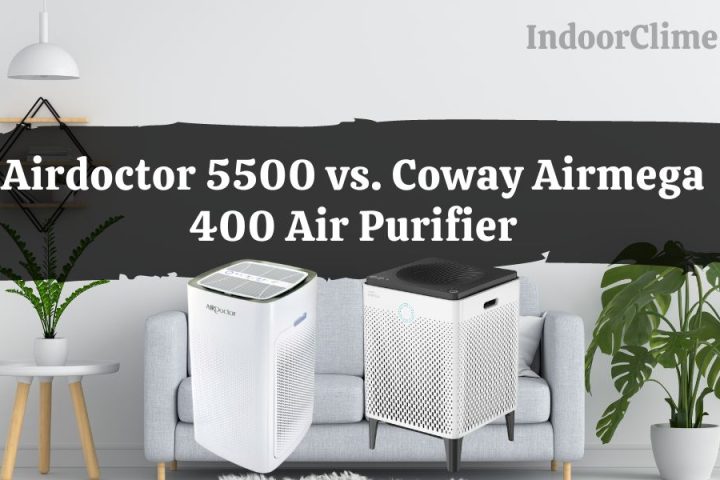

[…] purifiers like the AirDoctor 1000 and Levoit Core 400S are ideal for small spaces. Generally, the Airdoctor brand is a globally recognized leader in its field. Meanwhile, Levoit is […]