
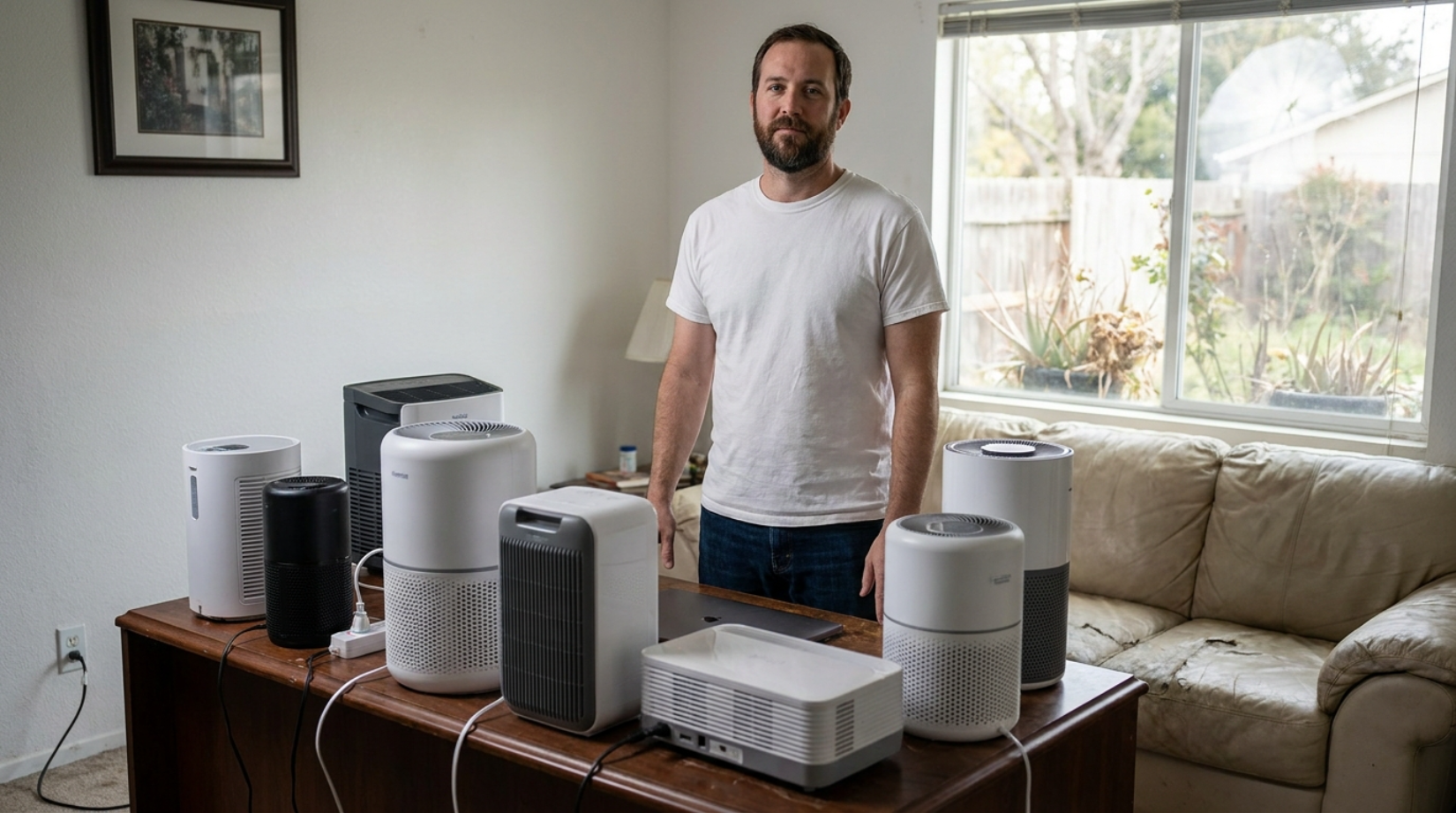
I have spent more time around air purifiers than I would like to admit.
I have tested them, compared filters, listened to fans develop strange noises at night, replaced expensive filters, and dug through specification sheets that seem designed to confuse normal people.
And after all of that, I understand why people ask one question:
Are air purifiers basically a scam?
My answer is complicated.
A lot of them are a terrible use of money.
But air purification itself absolutely is not.
I’ve lived with cheap units bought on a whim during wildfire season, mid-range machines that promised more than they delivered, and a couple of genuinely well-built purifiers that changed how I thought about the category entirely.
Somewhere in that pile of boxes, filters, and manuals, I started noticing a pattern. The machines that disappointed me weren’t necessarily “bad” products in a legal sense.
They weren’t lying, exactly. They just weren’t telling me the thing I actually needed to know.
Most people, myself included at the start, make the same assumption when shopping for one of these machines: expensive machine + impressive filter + huge advertised room coverage = clean air.
It feels logical. It’s also wrong more often than it should be.
Here’s the distinction that took me embarrassingly long to understand, and that I think sits at the center of almost every complaint about this entire product category:
Filter efficiency is not the same thing as room-cleaning performance.
A machine can contain an excellent filter and still do a mediocre job in the room where you actually breathe. That gap — between what the filter can do in a lab and what the whole machine actually does in your bedroom — is where most of the disappointment lives.
And this is where one number matters much more than most of the impressive percentages printed on the box. But before we get there, it helps to understand what these machines are actually doing.
WHY SO MANY AIR PURIFIERS FEEL LIKE A SCAM
Air Purifiers Are Actually Very Simple Machines
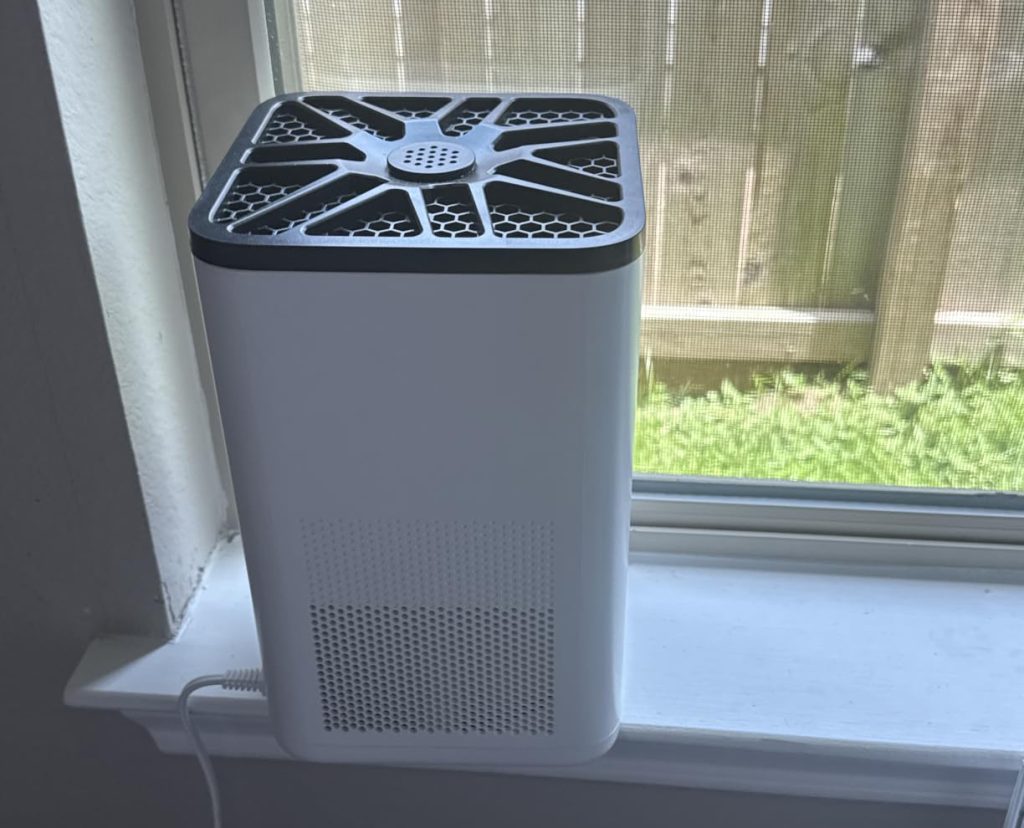
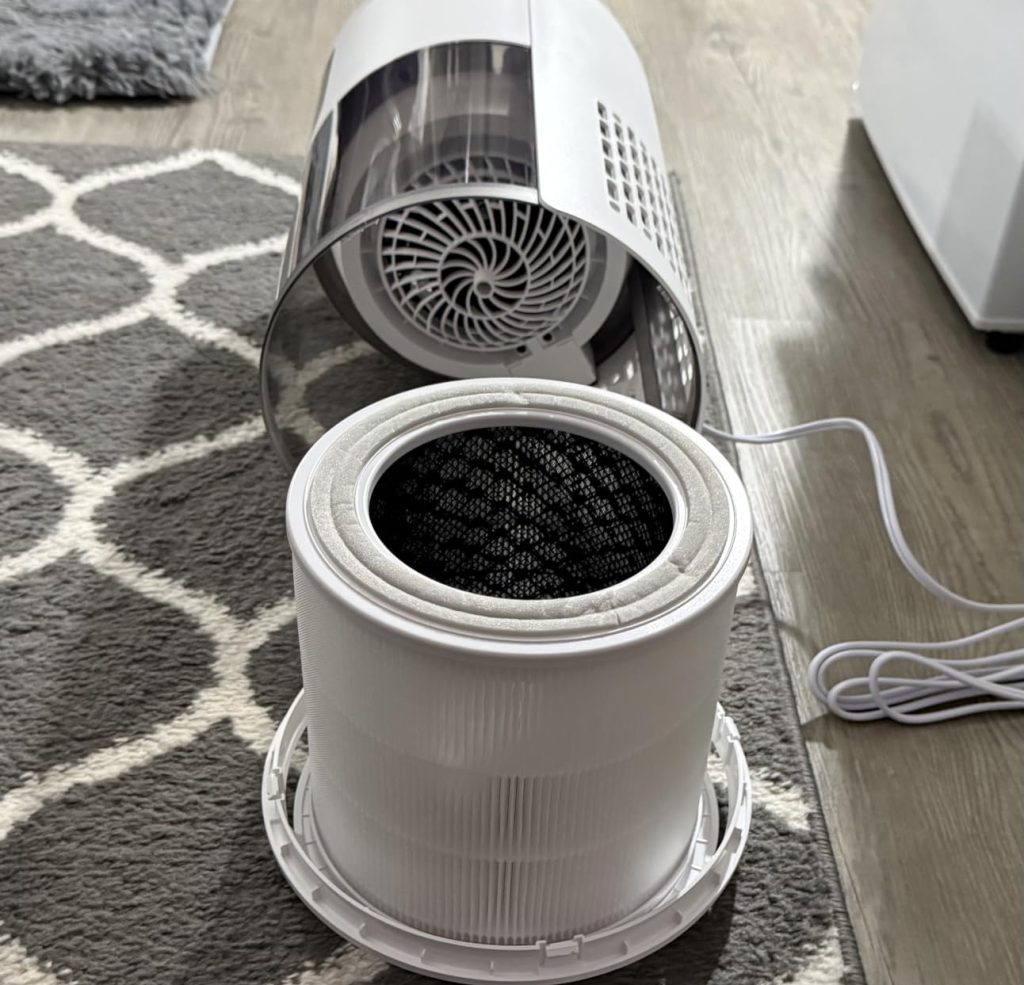
Strip away the marketing, the app, the glowing ring light, and the auto-mode sensor, and every air purifier does the same three-step job: fan pulls air in, filter captures pollutants, cleaned air goes back into the room.
That’s it. That’s the whole idea.
How well that simple loop works depends on a handful of unglamorous factors:
- how effectively the filter captures pollutants
- how much air the fan can actually move through that filter
- how well the system is sealed, so air isn’t leaking around the filter instead of through it
- how consistently the machine can operate without you shutting it off
- whether it’s appropriately sized for the room it’s sitting in
Filtration itself isn’t one single job. Particle filtration and gas filtration are different problems solved by different materials.
HEPA-style filtration targets particles — dust, pollen, smoke particles, pet dander, mold spores, and the fine particulate matter known as PM2.5. Activated carbon, on the other hand, is what handles gases, odors, and some volatile organic compounds (VOCs).
Here’s a nuance that gets glossed over constantly: activated carbon in a purifier does not automatically mean excellent VOC removal.
The amount of carbon matters enormously. A thin carbon-infused sheet stapled to the outside of a HEPA filter is not the same thing as a substantial bed of carbon designed to actually adsorb gases over time.
One is a marketing checkbox. The other is a real filtration stage.
But this brings us to the first big air-purifier trap. Manufacturers know that “99.97%” sounds much more impressive than airflow.
The HEPA Marketing Trap: 99.97% Doesn’t Tell You How Clean Your Room Will Be
I want to be clear about something before I criticize this: HEPA filtration is legitimate and useful technology. Nothing about this section is an attack on HEPA itself.
The problem isn’t the filter material. The problem is treating a single number — single-pass filter efficiency — as if it tells you everything about how a purifier will perform in your home.
Here’s an easy way to picture it. Imagine two machines sitting side by side.
Machine A captures almost every particle that passes through it, but moves relatively little air through the unit per minute.
Machine B captures a slightly lower percentage of particles per pass, but processes several times more room air in that same minute.
Which one actually cleans your room faster? It depends on the total volume of clean air each one delivers over time — not just on the percentage stamped on the filter.
In a lot of real-world scenarios, Machine B, with its more modest per-pass efficiency but dramatically higher airflow, ends up removing more particles from the room than Machine A does.
This matters because pollutants aren’t introduced into a room once and then left alone. They keep arriving.
Cooking generates fresh particles. Pets shed. Outdoor pollution seeps in through doors and windows.
Smoke drifts in from a neighbor’s fireplace or a distant wildfire. Pollen rides in on clothing.
People moving through a room disturb settled dust. Your HVAC system recirculates all of it. The purifier isn’t cleaning a static pool of air — it’s trying to keep up with a moving target.
This is actually the same principle behind the DIY Corsi-Rosenthal box that became popular during the pandemic: a simple box fan wrapped in MERV-13 furnace filters.
Individually, those filters aren’t as efficient per pass as true HEPA media. But the sheer filter surface area combined with strong airflow can produce a surprisingly high clean-air delivery rate — sometimes rivaling commercial units costing many times more.
It’s a good illustration of the underlying principle, not an argument that you should build your own purifier out of cardboard.
None of this means HEPA is bad. It means the lesson is narrower and more useful than that:
A great filter attached to inadequate airflow is still an inadequate air purifier.
Fortunately, there is a number designed to tell us much more about what the entire machine is doing — not just what the filter material can do in isolation.
CADR: The Number I Look at Before Almost Anything Else
CADR stands for Clean Air Delivery Rate. It’s the metric I check before almost anything else on a spec sheet, because it’s the one number designed to combine the two things that actually matter together: airflow and particle removal efficiency.
Put simply, CADR tells you how much cleaned air a machine can deliver over a given period of time. A higher CADR generally means the purifier can remove particles from a room faster — which is the whole point of owning one.
CADR is often reported separately for three categories: smoke, dust, and pollen, because those particle types differ in size and behave differently in the air.
For most people worried about wildfire smoke, cooking exhaust, or general fine particulate matter, the smoke CADR figure is the most useful one to focus on, since smoke particles tend to be smaller and more persistent.
AHAM, the organization behind the CADR testing standard, publishes a practical sizing guideline sometimes called the two-thirds rule: for a room with roughly 8-foot ceilings, the purifier’s smoke CADR should be at least about two-thirds of the room’s area in square feet.
A 150-square-foot bedroom, for example, would call for a smoke CADR of roughly 100 CFM at minimum.
That’s a useful starting point, not a universal law carved into stone. Rooms with unusually high ceilings have more air volume than their square footage suggests, so they need more capacity than the simple floor-area math implies.
And if you’re dealing with wildfire smoke events, a source that can push particle concentrations dramatically higher than everyday indoor pollution, it’s reasonable to want substantially more cleaning capacity than the baseline minimum.
Personally, I’ve come around to buying somewhat more capacity than the theoretical minimum calls for. The reason isn’t about bragging rights over a bigger number.
It’s about what that extra headroom lets you do day to day: a stronger machine doesn’t have to run flat-out to hit its numbers. You can run it on a quieter setting and still get solid clean-air delivery.
A machine sized exactly to the minimum, on the other hand, often has to run near maximum speed just to keep up — and that becomes a real problem, because there’s another trick hidden in many specification sheets.
The impressive performance number and the impressive noise number may come from completely different fan speeds.
The Maximum-Speed Problem
Most published CADR numbers are measured, and marketed, at the purifier’s highest fan setting. That’s useful for standardized comparison between models.
It’s also easy to misread if you don’t stop and think about what it actually means for daily use.
Running at maximum speed is usually where a purifier is loudest — often significantly louder than the setting most people will actually tolerate for hours at a time.
A purifier advertised with an eye-catching CADR figure may, in practice, spend most of its life sitting on low or medium, because nobody wants to sleep next to a machine roaring on high all night.
So the more useful question isn’t “what’s the best this machine can theoretically do?” It’s:
What does this machine actually do at the speed I will realistically run it?
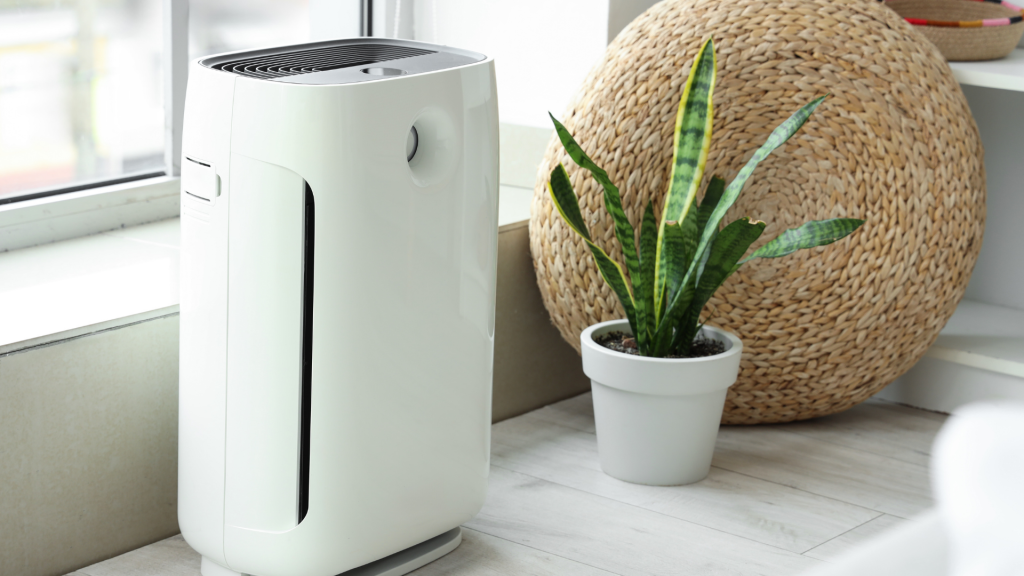
Think about a bedroom purifier specifically. A unit capable of enormous airflow at 58–65 decibels doesn’t help you much if you turn it down every single night because it keeps you awake.
At that point, the number on the box becomes almost irrelevant — you’re living with whatever performance the lower, tolerable setting provides.
The EPA itself notes that filtration performance decreases at lower fan speeds, which makes this gap between advertised and real-world performance even more important to understand before you buy.
Noise Is Not a Minor Detail
I used to treat noise as an afterthought when shopping for a purifier. I don’t anymore.
A loud purifier is annoying. A purifier with an irregular mechanical noise is worse.
Your brain can eventually learn to tune out steady white noise — a fan running at a consistent pitch fades into the background surprisingly fast. What it doesn’t tune out is inconsistency.
Tick… tick… tick…
That’s a different kind of noise problem entirely, and I’ve owned machines that developed exactly that kind of quirk within a few months.
One purifier I lived with produced enough vibration that I ended up putting a folding pad underneath it, because the hum was traveling straight through the floor into the room below.
Rough, practical ranges to keep in mind, understanding these vary by room and by person:
- Low 30s dBA: very quiet, easy to live with almost anywhere
- 40s dBA: clearly audible, but tolerable for most people during the day
- 50s dBA: increasingly intrusive, especially at night
- Approaching 60 dBA: difficult for many people to tolerate next to a bed
The practical takeaway is that usable CADR matters more than theoretical maximum CADR.
A purifier’s real value is the clean-air delivery it provides at the speed you’ll actually keep it running, not the number it hits for thirty seconds during a lab test.
And noise is only one reason the cheapest machine can become expensive.
The Real Price of an Air Purifier Is Not the Price on the Box
The sticker price on an air purifier is the least important number in the entire ownership calculation. What actually matters is:
purchase price + replacement filters + electricity + expected lifespan.
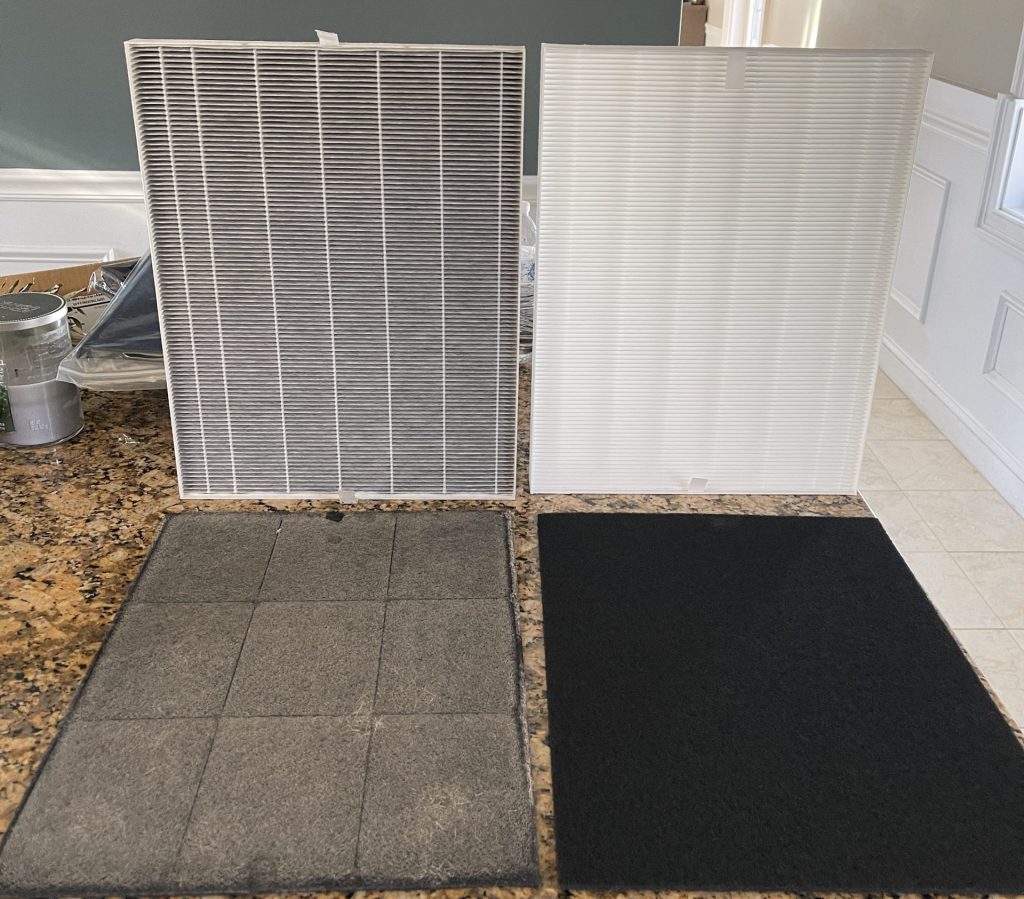
Here’s a simple hypothetical to make that concrete. A $200 purifier sounds cheap walking out of the store. But if it needs an $80 replacement filter every four months, that’s $240 a year in filters alone.
Over three years, you’ve spent $720 on filters before you’ve even accounted for electricity — more than three times the purchase price.
Compare that against a pricier machine upfront with longer-lasting, more reasonably priced filters, and the “expensive” option can easily come out cheaper over time.
Before buying, it’s worth digging into a few unglamorous details:
- How often do the filters actually need replacing?
- Are they proprietary, locking you into one manufacturer’s pricing, or can you source compatible alternatives?
- Is the machine using one combined filter, or separate HEPA, carbon, and pre-filter components that each need replacing on their own schedule?
- Are filters reliably in stock, or will you be waiting weeks during peak wildfire season?
- Does a subscription meaningfully lower the price, and does it factor in shipping?
- Does the “change filter” indicator actually measure filter loading, or does it just count elapsed days regardless of how hard the machine has been working?
That last point matters more than it sounds. Actual filter life depends heavily on environment. A purifier running in a home with pets, nearby construction dust, wildfire smoke, or heavy general pollution will load its filter far faster than the same machine in a clean, low-traffic apartment. A generic “replace every six months” estimate is just that — an estimate.
This is also why I have stopped being impressed by long feature lists.
Features I Mostly Don’t Care About
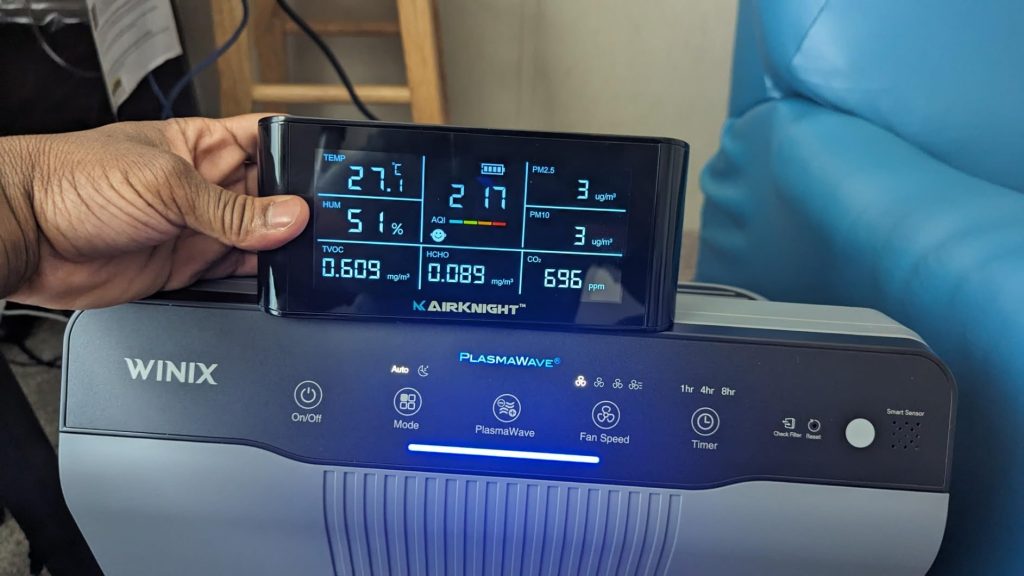
Wi-Fi connectivity, companion apps, voice control, elaborate touchscreens, a dozen different fan modes — none of these are inherently bad.
I’m not going to tell you they’re scams. They’re just secondary.
A good app does not compensate for inadequate clean-air delivery.
It’s a convenience layer sitting on top of the thing that actually matters, which is whether the machine is moving enough properly filtered air through your room.
What actually determines whether a purifier is worth owning:
- filtration quality
- airflow
- sensor quality
- noise
- build quality
- replacement cost
- reliability
Then there’s ionization, which deserves a more careful conversation than it usually gets.
I’m not going to make the sweeping claim that every ionizing air purifier necessarily produces dangerous ozone levels — that’s an overstatement that isn’t fair to every product using the technology.
What’s true is more specific: some electronic and ionizing air-cleaning technologies can produce ozone or other by-products as a side effect of how they operate.
The EPA specifically recommends avoiding devices that intentionally generate ozone, and advises caution around ionization technology more broadly.
If a purifier you’re considering includes ionization, it’s worth looking for independent low- or zero-ozone certification, and ideally a way to disable the feature entirely if you’d rather not use it.
I am buying an air purifier to remove pollutants. I don’t want it introducing a new one.
The Biggest Mistake: Expecting One Purifier to Clean an Entire House
This is, in my opinion, the single most common and most expensive mistake people make with air purifiers — and it connects back to that open question from the introduction.
Picture the scenario. A large purifier sits beautifully in the living room. The manufacturer says it covers 1,000-plus square feet.
The homeowner does the mental math: living room, kitchen, hallway, bedrooms — that adds up to roughly 1,000 square feet, so surely the whole house is covered now.
It almost never works that way in practice.
Walls, closed doors, furniture, and generally weak air exchange between separate rooms all get in the way.
Different rooms also have different pollutant sources — cooking in the kitchen, pet dander concentrated wherever the pet sleeps, dust stirred up in a home office.
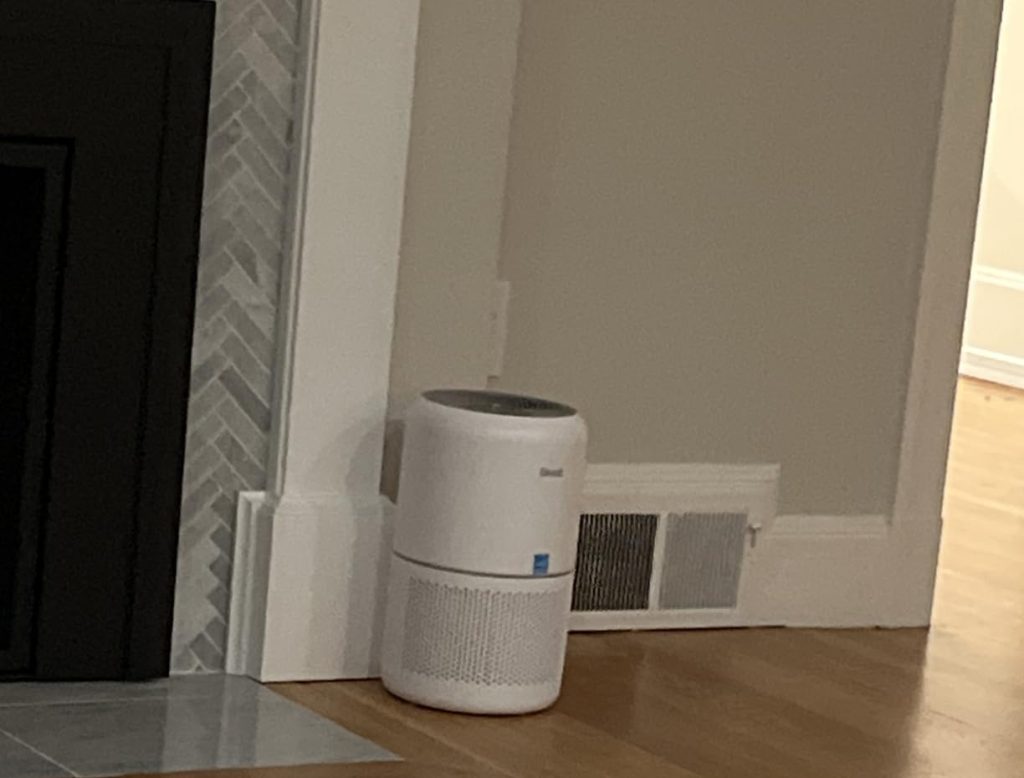
A portable purifier can only clean the air that actually reaches it. The EPA specifically describes portable air cleaners as devices intended for a single room or area, not a whole-house solution, even when the advertised square footage number looks generous.
A more effective strategy is to prioritize rooms based on time actually spent in them:
- Bedroom
- Home office
- Main living area
- Other frequently occupied rooms
It’s generally more effective to use one properly sized purifier per important room than to expect a single monster machine to clean air around corners, through hallways, and behind closed doors.
The bedroom is the room I would prioritize first, personally. You may spend eight hours there every night.
That’s roughly one-third of your life breathing the same room air, often with the door closed, often with the least ventilation of anywhere in your home.
SO… ARE AIR PURIFIERS ACTUALLY SCAMS?
No. Good Air Purifiers Are Absolutely Not a Scam.
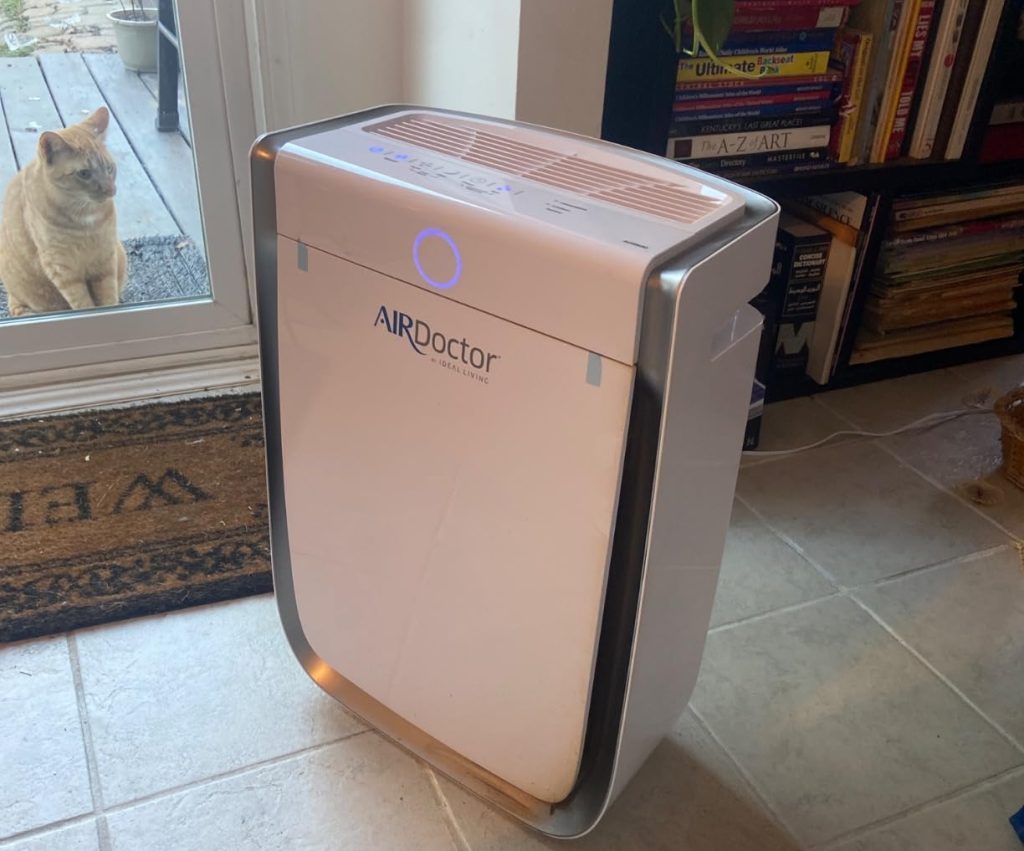
After everything I’ve said so far, you might expect me to tell you to skip air purifiers altogether. That’s not my conclusion at all.
I use them. I recommend them. I just don’t recommend buying them based on the marketing claims most people use to choose one.
The EPA is fairly direct on this point: filtration can supplement source control and ventilation and meaningfully improve indoor air quality.
It’s a piece of a larger picture, not the whole picture. There’s a useful hierarchy worth keeping in mind:
- Remove or reduce the pollution source where possible.
- Ventilate with clean outdoor air where appropriate.
- Use effective filtration as an additional layer on top of the first two.
Purifiers cannot fix active mold growth, water damage, a continuous major pollution source, or inadequate ventilation on their own.
But properly sized, well-run filtration can meaningfully reduce airborne particles in the space where you spend your time — and that’s a real, tangible benefit, not a marketing illusion.
There are two machines that illustrate what I mean by a genuinely serious home air purifier particularly well.
The first is AirDoctor. The second costs more but its construction is in another category.
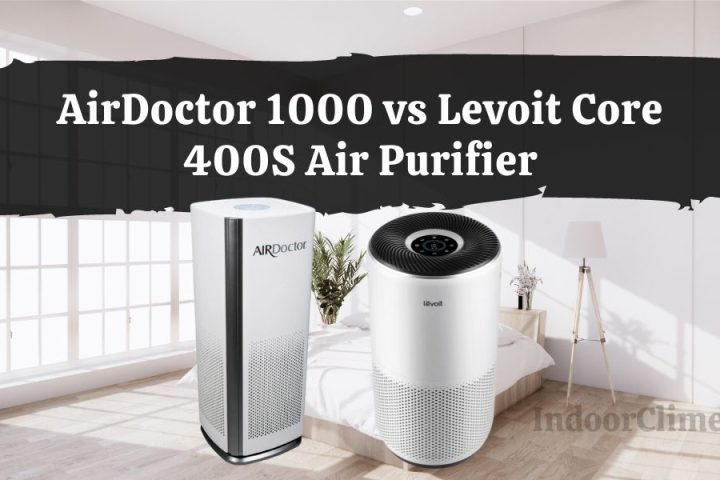
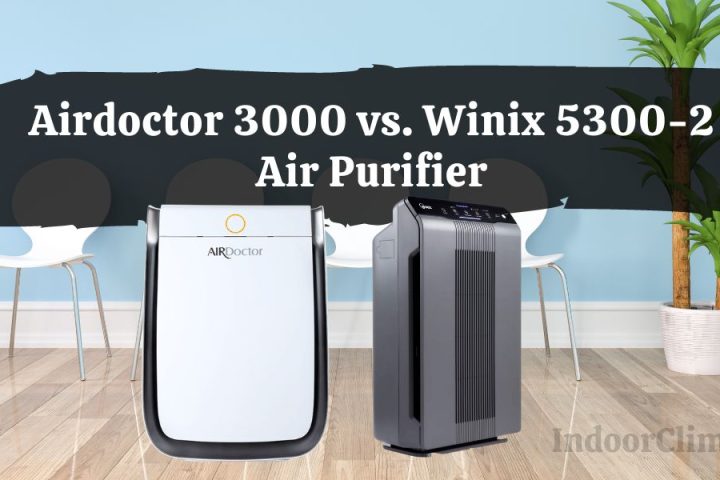
AirDoctor. The One I Would Look at First
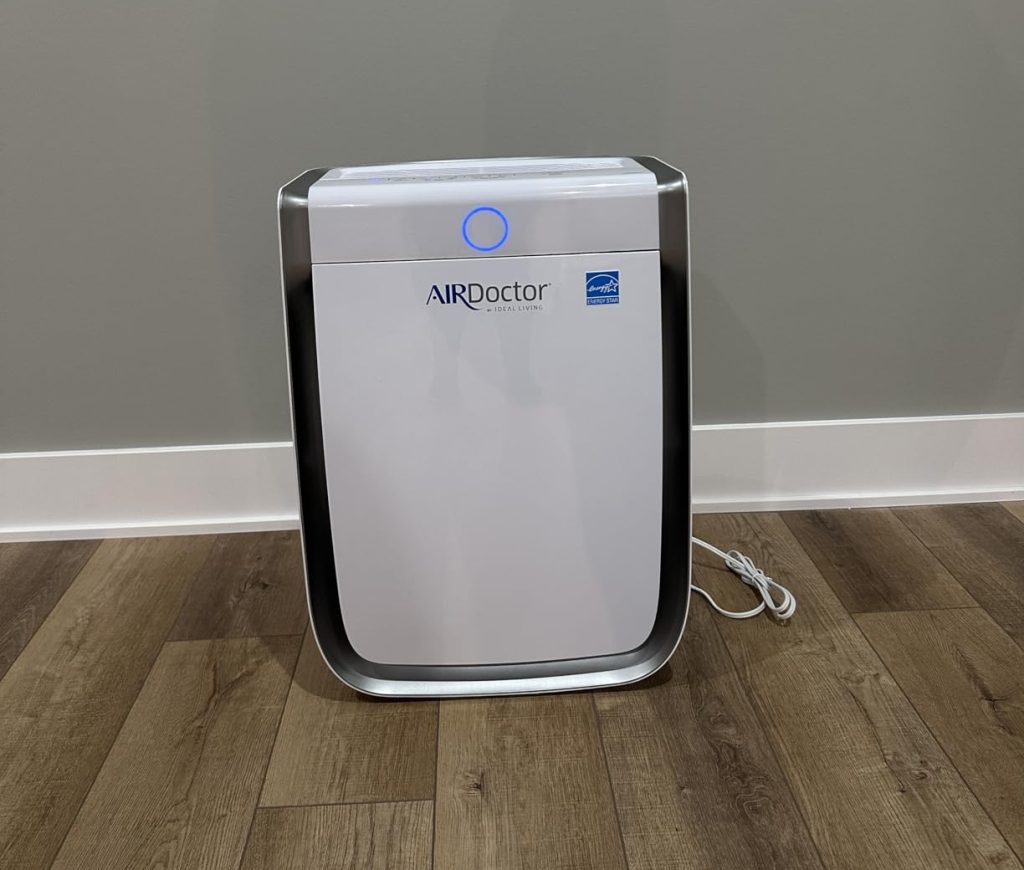
AirDoctor is where I’d point most people starting from scratch, and it’s a useful example of what “taking this seriously” looks like without jumping straight to the most expensive option available.
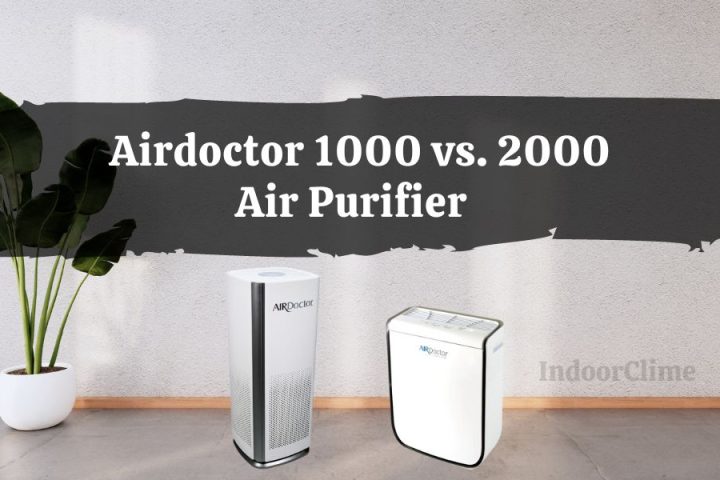
AirDoctor currently sells a range of models rather than a single one-size-fits-all unit, which is itself a point in its favor — a compact room and a large open-plan living space have genuinely different requirements:
- AD1000 for compact rooms
- AD2000 for smaller bedrooms and offices
- AD3500 for bedrooms and living spaces
- AD4000 for larger shared spaces
- AD5500 for large or open-plan spaces
Rather than leaning entirely on a single dramatic square-footage claim, AirDoctor currently frames its ratings around multiple air circulations per hour, which is a more honest way of communicating real-world performance than a single maximum coverage number.
On the filtration side, the lineup generally includes a pre-filter stage, particle filtration, and carbon/VOC filtration, with automatic air-quality sensing available depending on the model.
That automatic sensing is genuinely useful in practice, not just a checkbox feature — when particle levels rise from cooking, outdoor smoke, or some other source, the purifier can ramp up airflow on its own instead of requiring you to notice and adjust it manually.
As with any purifier, replacement-filter cost needs to be part of the buying decision rather than an afterthought discovered six months in.
I want to be balanced about something here: AirDoctor uses fairly aggressive marketing language around its UltraHEPA filtration and its capture of extremely small particles.
That’s genuinely interesting technology. But after years spent around this industry, that specific claim would not be my main reason for choosing it.
What I care about more is whether the whole system — airflow, room sizing, usable noise levels, filtration, carbon stage, and automatic response — adds up to a machine I’ll actually run continuously.
That’s what turns an impressive filter spec into real clean air in a real home.
AirDoctor is where I would start for many households. But if build quality matters as much to you as filtration performance, there’s another machine I’d put above it.
Jaspr. More Expensive, But Built Like a Different Class of Machine
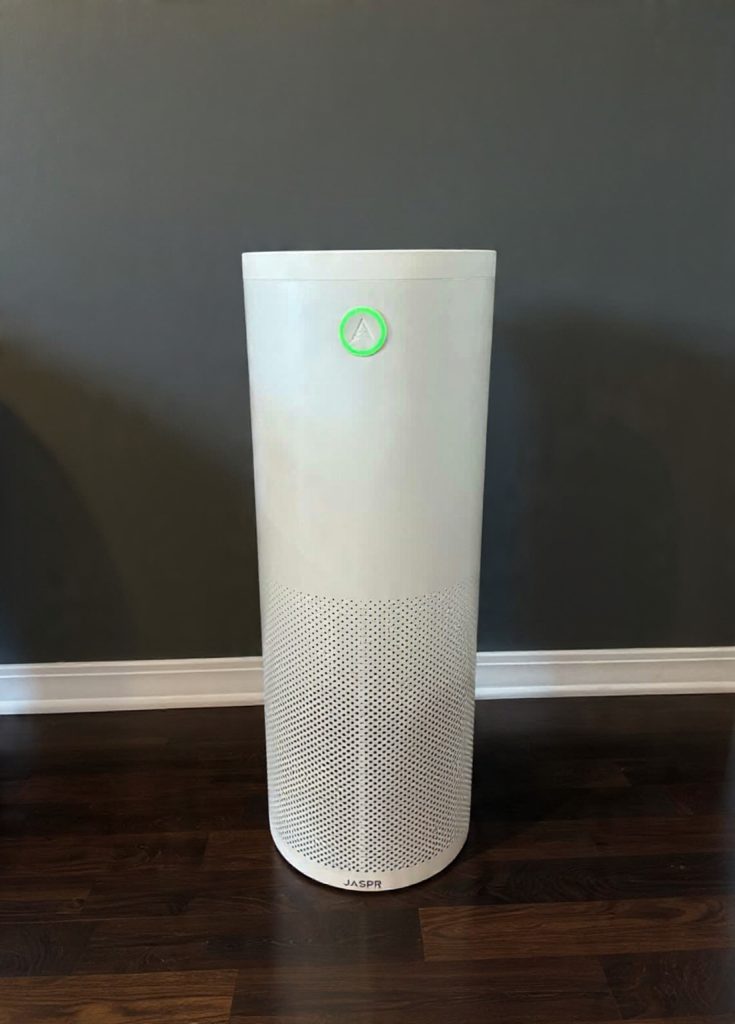
I want to introduce Jaspr with the same honesty I’ve tried to use throughout this whole article.
Jaspr is expensive. There’s no clever way around that fact, and I’m not going to pretend otherwise. But when you look at what’s actually inside it, the price starts making a lot more sense.
The build itself stands out immediately. It’s constructed with a cold-rolled steel body rather than lightweight plastic, and it’s noticeably heavy for a portable air purifier — around 25 lb (11.34 kg).
It includes onboard PM2.5 and VOC sensors, a substantial filter with roughly one pound of activated carbon inside it, and an overall design philosophy that borrows more from commercial air-scrubber construction than from typical consumer purifiers.
According to current manufacturer specifications, Jaspr’s maximum CADR figures are:
- Smoke: 340 CFM
- Dust: 356 CFM
- Pollen: 361 CFM
Those are strong numbers on their own. But what I find genuinely more useful is something most manufacturers don’t bother publishing at all: Jaspr also lists its low-speed airflow, with the lowest setting rated at approximately 114 CFM CADR.
I like seeing that number specifically because of everything discussed earlier in this article — a maximum-speed spec tells you almost nothing about what a machine does at the setting you’ll actually run overnight.
Having a real low-speed figure tells you something honest about day-to-day bedroom performance instead of only showing off the machine’s most flattering setting.
On noise, Jaspr’s stated range is approximately 33–58 dBA depending on fan speed. Its filter is a 3-in-1 design combining particulate filtration, carbon, and a pre-filter stage, with a currently listed filter life of up to roughly six months.
Cost-wise, it’s worth being direct: replacement filters for Jaspr are expensive. A filter subscription reduces the per-filter price, and currently, maintaining an active filter subscription is what activates the unit’s lifetime warranty.
That creates an interesting tradeoff — higher ongoing filter expense in exchange for stronger long-term warranty protection, rather than a simple one-time purchase with no strings attached.
Whether that tradeoff makes sense depends on how much you value that protection versus keeping ongoing costs as low as possible.
To be clear, I’m not calling Jaspr objectively “the best air purifier” — that kind of superlative rarely holds up once you factor in someone else’s room size, budget, and priorities.
What I’ll say instead is this: if I wanted a serious purifier for a bedroom or main living space and budget wasn’t the deciding factor, Jaspr is the one I’d lean toward.
AirDoctor represents better value and an easier entry point into serious filtration.
Jaspr represents premium construction — a steel housing, a substantial filter, and a more commercial-style approach to the whole problem.
But whichever machine you end up buying, there’s still a simple calculation I’d run through before spending a dollar.
How I Would Choose an Air Purifier Today
Here’s the practical framework I actually use now, after all the trial and error described above.
Step 1 — Measure the actual room. Multiply length by width, and account for unusually high ceilings, since they add real air volume the floor-area number doesn’t capture.
Step 2 — Look for CADR. Don’t rely solely on an advertised “up to X square feet” claim. Where it’s available, use smoke CADR as a conservative reference point for small-particle performance.
Step 3 — Buy slightly more capacity than you technically need. This is what allows quieter everyday operation instead of running the machine at a shouting maximum setting just to keep up.
Step 4 — Check noise across fan speeds, not just the top one. This matters especially for bedroom use, where you’ll actually be sleeping next to the thing.
Step 5 — Examine replacement-filter economics honestly. Calculate a rough three-year cost, not just the number on the price tag at checkout.
Step 6 — Look at carbon content honestly. If VOCs and odors are a real concern for you, ask how much adsorbent material is actually present, not just whether the word “carbon” appears on the box.
Step 7 — Avoid intentional ozone generation. Filtration should make your indoor air cleaner, not chemically more complicated.
Step 8 — Think room by room. One purifier does not magically clean an entire multi-room home, no matter how large the advertised coverage number is.
Step 9 — Think about whether you’ll actually use it. A theoretically incredible purifier that gets switched off because it’s too loud is worse than a slightly less powerful machine that actually runs continuously.
The best air purifier is not the machine with the most impressive filter specification. It’s the machine that delivers enough clean air, quietly enough, in the room where you actually breathe.
What Air Purifiers Cannot Do
It’s worth being upfront about the limits here, because overselling filtration is exactly the kind of marketing overreach this whole article has been pushing back against.
An air purifier cannot:
- repair water intrusion
- remove mold growing inside a wall
- stop someone from smoking indoors
- replace a functioning kitchen exhaust fan
- replace adequate ventilation
- eliminate every VOC in a space
- remove settled dust until that dust becomes airborne
- make an unhealthy building automatically healthy
Take mold as an example. A purifier may capture airborne mold spores as they circulate through the air.
It does nothing to address the moisture problem that’s actually causing the mold to grow in the first place.
The EPA specifically draws this distinction — filtration addresses symptoms in the air, not the underlying source.
This is another place where air-purifier marketing gets ahead of reality. Filtration is powerful. It isn’t magic.
So, Are Air Purifiers Worth the Money?
Let me answer this directly, category by category.
A cheap or poorly selected air purifier? Possibly not worth it.
An underpowered purifier marketed for an enormous room? Probably disappointing.
An excellent filter attached to weak airflow? Not enough on its own.
One purifier expected to clean several closed-off rooms? The wrong strategy from the start.
A properly sized, well-built purifier with good airflow, running consistently? Absolutely useful.
My opinion of air purifiers changed the moment I stopped looking at them as filters and started looking at them as complete air-moving systems.
The filter matters. But airflow matters just as much. Noise matters, because it determines whether you’ll actually keep the thing running.
Placement matters. Maintenance matters. And whether you actually leave the machine on matters more than any number on the box.
Final Verdict — The Product Isn’t the Scam. The Marketing Can Be.
So, are air purifiers scams?
No.
But I understand why people think they are.
Many consumers buy based on a handful of impressive-sounding words: 99.97%. HEPA. “Medical grade.” 2,000 square feet. Smart technology. Then they put one machine in a hallway, run it on low so it doesn’t hum too loudly, and wonder why nothing feels different a month later.
The better approach is to ignore most of the buzzwords and ask a much shorter, much more useful set of questions instead:
How much clean air does it actually deliver?
At what noise level?
Into what size room?
What does it cost to keep running?
Will I actually use it every day?
For someone who wants a strong home purifier without immediately jumping to the highest price category, AirDoctor is where I’d start.
For someone willing to pay considerably more for heavier-duty construction and a more premium, air-scrubber-style machine, Jaspr is the upgrade I’d consider.
Once you understand what actually makes an air purifier work, shopping becomes surprisingly simple.
You stop buying percentages.
You start buying clean air.
[…] what I learned about why most budget air purifiers fail to deliver meaningful results, and what actually separates effective units from expensive-looking desk […]