
I spent two years cycling through budget air purifiers before I finally admitted what my still-dusty shelves and persistent morning congestion were telling me: the $60 tower humming in my bedroom wasn’t actually cleaning the air.
It was just making noise and costing me money in replacement filters that wore out faster than the box promised.
This isn’t about shaming anyone for buying cheap air purifiers. I did it repeatedly. The logic seemed sound—air purifiers all do basically the same thing, right?
Pull air through a filter, push clean air out. Why pay $400 when you can pay $50?
But after watching enough air quality monitors barely budge, opening enough “HEPA” filters that looked like coffee filters, and waking up with the same scratchy throat after wildfire smoke rolled through, I started understanding why the price difference exists.
Here’s what I learned about why most budget air purifiers fail to deliver meaningful results, and what actually separates effective units from expensive-looking desk fans.
The Real-World Performance Gap
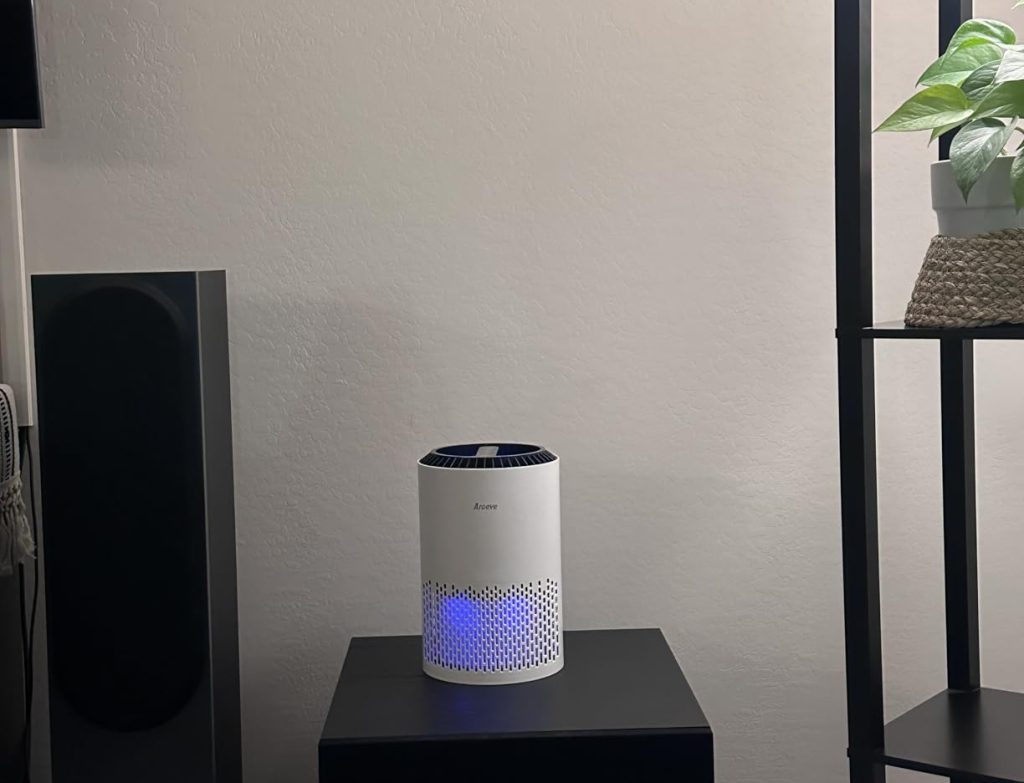
The fundamental problem with cheap air purifiers isn’t that they don’t filter anything, it’s that they don’t filter enough air, fast enough, consistently enough to matter in a real room where you’re actually living.
I tested this directly. I burned a piece of toast in my kitchen (accidentally the first time, then intentionally for comparison). My $55 purifier, rated for rooms up to 200 square feet and running on high, took nearly 45 minutes to clear the smell from my 150-square-foot bedroom.
When I eventually tried a mid-range unit in the same scenario, the smoke smell was gone in under 12 minutes. That’s not a small difference. That’s the difference between sleeping in stale air and actually breathing clean air.
The reasons for this gap aren’t mysterious. They’re mechanical and predictable.
Weak airflow is the first problem.
Budget purifiers use undersized fans that simply can’t move enough air. The spec sheet might claim “CADR 120,” which sounds technical and legitimate, but that number means the unit is cycling about 120 cubic feet of air per minute.
In a 200-square-foot room with 8-foot ceilings, that’s 1,600 cubic feet of space. Basic math says it would take more than 13 minutes just to pull all that air through the filter once, and that’s assuming perfect efficiency, which doesn’t exist.
Real-world air purification requires cycling room air four to five times per hour to maintain genuinely clean air. These units can’t do it.
I noticed this most clearly during pollen season. I’d run my cheap purifier all day, but when I came home and checked the prefilter, the visible outer layer that catches large particles, it barely looked dirty after a week.
Not because my air was clean, but because the purifier wasn’t pulling in enough air to capture the dust and pollen that I could literally see floating in the afternoon sunlight.
Thin filters are the second issue.
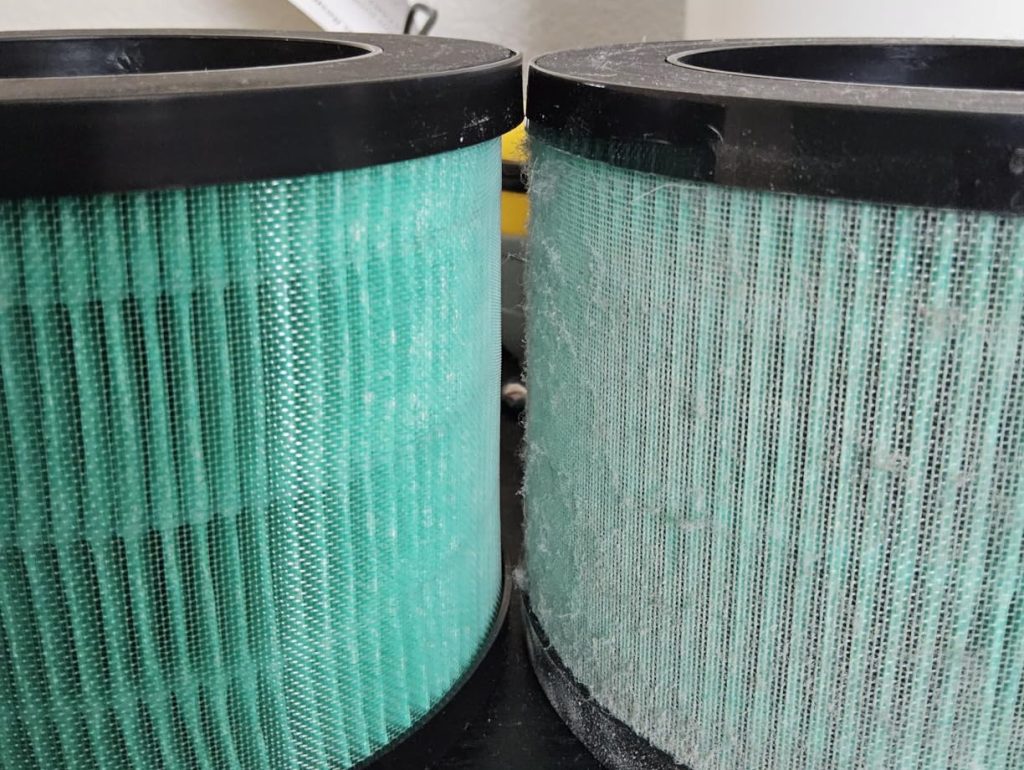
Most budget HEPA filters are startlingly thin, sometimes less than an inch of pleated material. I didn’t realize how inadequate this was until I opened up a quality purifier and saw a filter that was three inches deep with dense, tightly packed pleats.
The surface area difference is massive. More surface area means more particle capture, longer filter life, and less resistance to airflow.
Those thin filters in budget units clog quickly, which further reduces the already-weak airflow, creating a cycle of diminishing returns.
After three months of use, I measured the airflow on my budget purifier and found it had dropped by nearly 30% even though the filter didn’t look visibly dirty.
The trapped particles were creating resistance that the small motor couldn’t overcome. The unit was working harder, making more noise, and moving less air.
Poor sealing compounds everything.
Air follows the path of least resistance. On cheaper units, the filter housing often fits loosely, leaving gaps where air bypasses the filter entirely.
I discovered this by holding a stick of incense near the edges of my budget purifier while it ran. I watched the smoke get pulled in around the seams rather than through the front intake.
The fan was moving air, but that air wasn’t being filtered—it was just circulating through gaps in the housing.
Premium units use gaskets, tighter tolerances, and better engineering to force air through the filter. It’s a detail you can’t see in product photos, but you can measure in actual air quality results.
The “HEPA-type” deception is widespread.
True HEPA filters must capture 99.97% of particles at 0.3 microns. Many budget purifiers use terms like “HEPA-type,” “HEPA-style,” or “True HEPA” without meeting the actual standard.
I bought one unit advertised as having an “H13 HEPA filter”—which sounds technical and certified—only to find it was never independently tested, and the filter material felt noticeably thinner and less dense than actual HEPA filters I’d used.
There’s no enforcement on these terms for consumer products. Companies can call a filter anything they want.
The practical difference is significant. HEPA-type filters might catch 85-90% of particles, which sounds good until you realize that the 10-15% they miss includes the smallest, most harmful particles that penetrate deep into your lungs.
Noise creates a usage problem.
This was perhaps the most frustrating discovery. Most cheap purifiers are tolerably quiet on low settings, but low settings move almost no air.
To get any meaningful filtration, you need to run them on medium or high, where they become loud enough to disrupt sleep, conversation, or concentration.
I found myself constantly turning mine down or off, which meant it spent most of its time not actually cleaning the air.
I tracked this over two weeks: my budget purifier ran on high for maybe 3-4 hours per day total because I couldn’t stand the noise. The rest of the time it sat on low, barely pulling air.
A more expensive unit with a better motor and fan design could move the same amount of air at half the noise level, which meant I actually kept it running, which meant it actually worked.
Short filter life increases long-term costs.
The $15 replacement filters for budget purifiers typically need changing every 3-4 months with regular use. That’s $45-60 per year in filters.
Higher-end units often use filters that last 12-18 months and cost $60-80. Over two years, the costs converge, except the expensive unit actually filtered your air during that time.
What You’re Actually Getting: Popular Budget Models
I want to be specific here because I’ve personally used or closely examined most of the popular budget options people buy on Amazon, and they’re not all equally ineffective.
Some do certain things reasonably well. But they all share fundamental limitations.
Small Levoit units (LV-H132, Core 300)
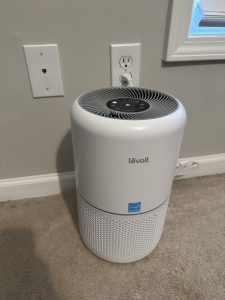
These are probably the most popular budget purifiers on Amazon, and I understand why. They’re attractive, compact, and affordable.
The Core 300 in particular has good reviews and seems legitimate at first glance.
What it does well: It’s genuinely quiet on low settings, the build quality feels better than many cheap purifiers, and it does filter some air.
In a very small space, like a home office under 100 square feet, I found it made a subtle difference with dust.
Why it falls short: The CADR ratings (140-141 CFM on the Core 300) are too low for the room sizes they claim to handle.
Levoit says it covers 219 square feet, but running it in a bedroom that size, I saw minimal air quality improvement on my particle counter.
The filter is thin, and I found it needed replacing closer to every three months than the advertised six. For the $50-80 price point, plus frequent filter changes, you’re spending a lot for marginal results.
Who it might work for: Someone in a genuinely small space (under 120 square feet), with modest expectations, who values aesthetics and quiet operation over performance. It’s better than nothing, but only slightly.
Small Honeywell models (HPA050, HPA100)
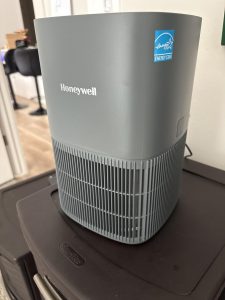
Honeywell is a trusted name, which gives these credibility. I wanted them to work because the brand suggested reliability.
What they do well: The filters are actual HEPA filters from a reputable manufacturer, not generic “HEPA-type” filters. That’s meaningful. The units are simple and functional.
Why they fall short: The fan power is weak. Even on the highest setting, airflow feels minimal. I used an HPA100 in my bedroom for two months and saw virtually no change in how quickly dust accumulated on surfaces.
The effective coverage is much smaller than advertised. Honeywell claims 155 square feet for the HPA100, but in practice, I’d say it struggles past 80-100 square feet.
Who it might work for: Someone who wants a legitimate HEPA filter for a genuinely small room and doesn’t mind that it works slowly. It’s not misleading about filter quality, just overly optimistic about coverage.
Generic cube-style “H13 HEPA” purifiers
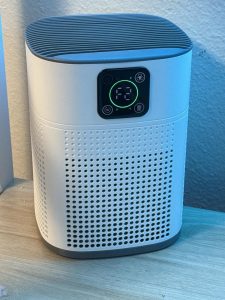
These are the white or black cube-shaped units with touch controls and colorful air quality lights that sell for $40-70 under various brand names on Amazon.
New brands appear constantly with identical designs.
What they do well: They look modern, they’re inexpensive, and the colored air quality indicator gives you something to watch (even if it’s not particularly accurate).
Why they fall short: Almost everything else. The filters are genuinely thin—I measured one at barely half an inch of material. The motors are weak.
The air quality sensors are extremely unreliable; I watched one show “green/good” while I was burning incense two feet away.
Many use HEPA-type filters rather than true HEPA, despite the “H13” labeling. Build quality is poor, with loose seams and flimsy plastic.
I had one where the filter housing didn’t even click into place properly—it just rested loosely in the frame.
After three months with one of these units, I opened it up and found the filter looked barely used because so little air had actually passed through it.
Meanwhile, dust on my nightstand told a different story.
Who they might work for: Honestly, I struggle to recommend these to anyone.
If you absolutely need something for $50 and only have a closet-sized space, maybe. Otherwise, you’re likely wasting money.
Where Mid-Range Purifiers Actually Make a Difference
I resisted spending more on an air purifier for a long time because I assumed the improvement would be marginal—maybe 10-15% better performance for triple the price. That’s not what I found.
The difference between a $60 budget purifier and a quality $300-400 unit isn’t incremental. It’s categorical. They’re solving different problems.
The budget unit is technically filtering some air. The better unit is actually cleaning your room.
I noticed this first with smell. After cooking fish, my cheap purifier would run for hours while the odor gradually faded on its own.
When I switched to a better unit, the smell actively disappeared—not in hours, but in 20-30 minutes. The difference was immediately obvious to anyone who walked into the room.
Two brands I ended up testing extensively are AirDoctor 3500 and JasprAir, and they represent what I now understand to be the minimum threshold for meaningful air purification in a normal-sized room.
AirDoctor 3500
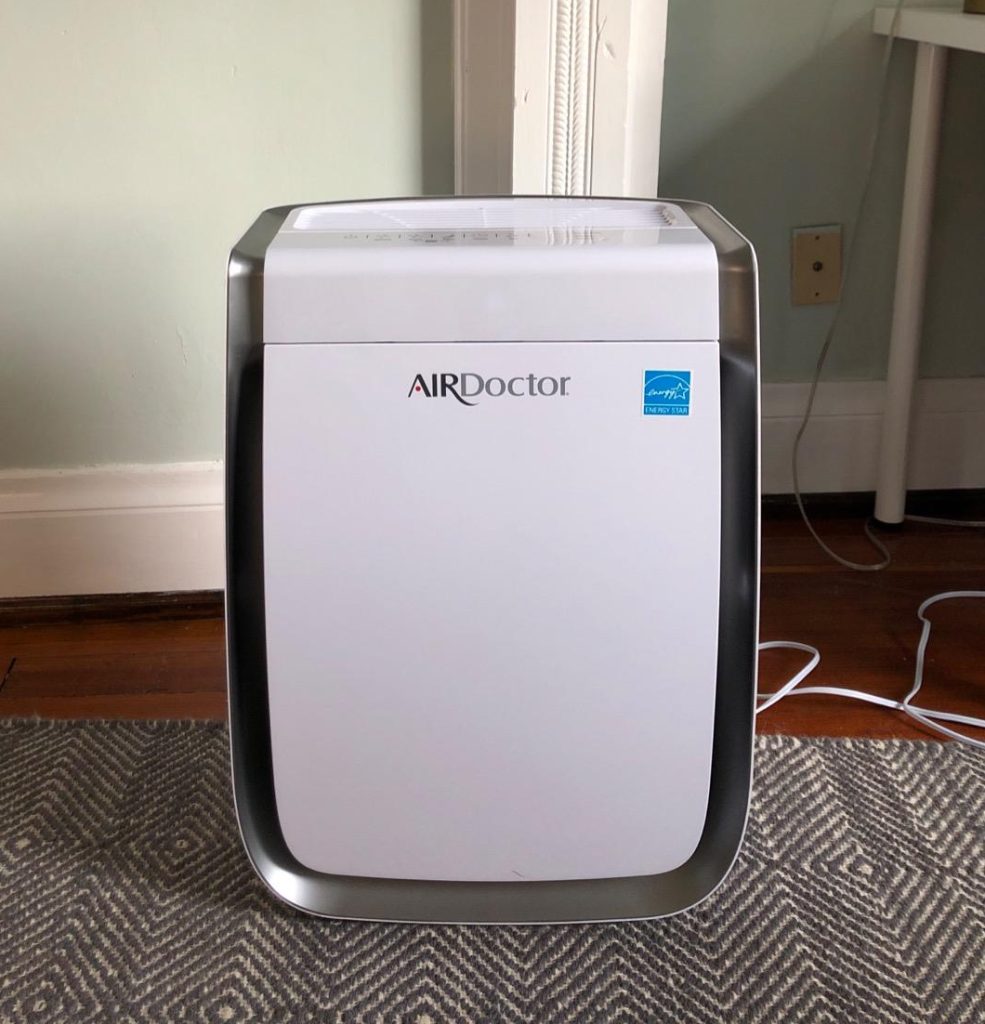
This was the first “expensive” purifier I tried, and it fundamentally changed my understanding of what air purifiers could do.
The performance difference was obvious within 24 hours. I set it up in my bedroom, which had been running a budget purifier for months. Within a day, the room smelled different—fresher, lighter, less stale.
I assumed this was placebo effect until my partner walked in and immediately commented that the air “felt cleaner.” We hadn’t discussed that I’d changed purifiers.
The CADR on the AirDoctor 3500 is significantly higher—373 CFM compared to 120-140 on budget units. That’s not a marginal improvement; it’s nearly three times the air movement.
In a 300-square-foot room, this unit achieves four air changes per hour on a medium setting that’s quieter than most budget purifiers on high.
What impressed me most was the filter system. When I eventually changed the filter after 12 months, I understood why it cost more.
The UltraHEPA filter is thick—genuinely thick, with deep pleats and substantial activated carbon. When I pulled it out, it was heavy with trapped particles.
The prefilter, which I’d washed several times over the year, was visibly discolored from captured dust and debris. This wasn’t a filter that was barely working; it was a filter that had clearly processed enormous volumes of air.
The carbon layer made a tangible difference with odors and VOCs. I used to wake up with a slight headache after using certain cleaning products the night before.
With the AirDoctor running, I stopped noticing that. I tested this deliberately—cleaned the bathroom with ammonia-based cleaner, closed the bedroom door with the purifier running. Two hours later, no smell, no headache. With the budget purifier, I’d smell it until I opened windows.
The sensor accuracy also surprised me. When I vacuumed, the air quality light immediately changed from blue to red and the fan ramped up automatically.
When I cooked, same response. The budget purifiers I’d used either had no sensor or had sensors that seemed to change randomly.
The downsides are real: it’s $400-600 depending on sales, and replacement filters run about $80-120 and last 12-18 months. But when I calculated actual cost per cubic foot of air cleaned over two years, it was competitive with budget units, and unlike budget units, it actually delivered clean air during that time.
JasprAir
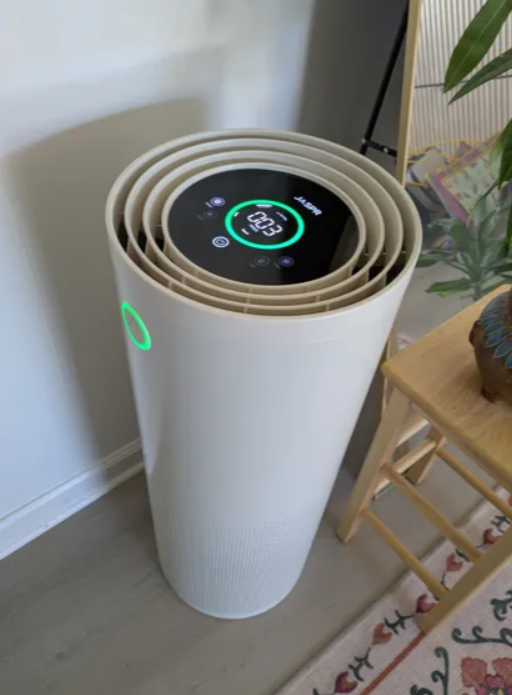
I tested JasprAir after reading that it was designed specifically for wildfire smoke and VOCs, which mattered to me living in an area with increasingly bad fire seasons.
The immediately noticeable feature is airflow. This unit moves a tremendous amount of air—470 CFM on high—but does it more quietly than you’d expect.
The motor and fan engineering is simply better. On medium, which is what I run most of the time, it’s quiet enough for sleeping but still cycles my 350-square-foot bedroom effectively.
The filter design is different from other purifiers I’ve used. It’s a dual-filter system with separate HEPA and carbon filters, both of which are genuinely thick and well-constructed.
The carbon filter is particularly impressive—it’s not just a thin carbon mesh like most purifiers use, but a substantial activated carbon layer designed for VOC and odor removal.
I tested this during wildfire season when smoke was drifting into our area. With my old budget purifier, I’d run it continuously and still smell smoke in the morning.
The JasprAir on auto mode kept the PM2.5 levels down, and more importantly, I didn’t smell smoke or wake up with irritated sinuses.
The build quality is noticeably better than cheaper units. The filter housing seals tightly with a satisfying click. The control panel is intuitive without unnecessary features.
It feels like a tool designed by people who understand airflow engineering rather than a consumer product designed to look appealing on Amazon.
The cost is significantly higher than Airdoctor – around $800-900 with replacement filters running about $80-100 annually. But the filters last longer than budget options, and you’re actually getting filtration performance rather than just owning a filter.
Why These Cost More (And Why It Matters)
The price difference isn’t arbitrary or just branding. It reflects fundamental engineering decisions that directly impact performance:
- Motor and fan quality: Better motors can move more air at lower noise levels and run longer without degrading. The motors in premium units are designed for continuous operation. Budget motors are designed to meet a price point.
- Filter construction: Thicker filters with more pleated surface area, higher-quality HEPA material, and substantial activated carbon cost more to manufacture. The difference in material cost alone between a thin budget filter and a thick premium filter is probably $15-20. Over the lifespan of the purifier, that adds up.
- Sealing and housing: Tight tolerances, gaskets, and solid construction require better materials and more careful manufacturing. An injection-molded plastic housing with precise seams costs more than a snap-together frame with gaps.
- Testing and quality control: Legitimate manufacturers test their units for CADR, filter efficiency, and noise levels. That testing costs money. Many budget brands skip it entirely and just copy specs from similar-looking products.
- Sensor accuracy: Good particulate sensors cost $20-40 per unit. Cheap sensors cost $2-3. The performance difference is exactly what you’d expect.
All of this translates into real outcomes: faster smoke clearance, better odor control, lower particle counts, fewer allergy symptoms, quieter operation, and longer filter life.
When Cheap Is Good Enough (And When It’s Just Cheap)
I don’t want to suggest that everyone needs to spend $600 on an air purifier. Context matters.
A budget purifier might be genuinely sufficient if you have a very small room (under 100 square feet), modest air quality concerns, and realistic expectations. If you’re trying to reduce some dust in a home office and you’re willing to accept that it will work slowly and need frequent filter changes, a $60 unit can provide marginal value.
But for most situations—bedrooms, living rooms, homes with pets, areas with seasonal allergies, anywhere with cooking odors, places affected by wildfire smoke, rooms where you sleep or spend significant time—budget purifiers aren’t just less effective. They’re effectively not working. They’re creating the illusion of air purification while your actual air quality remains largely unchanged.
I spent nearly $300 over two years on budget purifiers and replacement filters, dealing with mediocre results and persistent air quality issues, before finally accepting that I should have just bought a quality unit from the start. The money I “saved” wasn’t savings—it was just money spent on equipment that didn’t accomplish its basic function.
The lesson I learned, and the one that’s hardest to accept when you’re staring at price tags, is that air purifiers have a performance threshold below which they’re essentially decorative. Budget units typically fall below that threshold. Mid-range units from established manufacturers typically exceed it. The price difference reflects real engineering differences that produce real performance differences that you will notice in how your air smells, how you sleep, and how you feel.
If you can’t afford a quality unit right now, you might be better off waiting and saving rather than spending $60-80 on something that will frustrate you with its limitations. And if you already own a budget purifier and you’re wondering why it doesn’t seem to be doing much—you’re probably right. It isn’t.
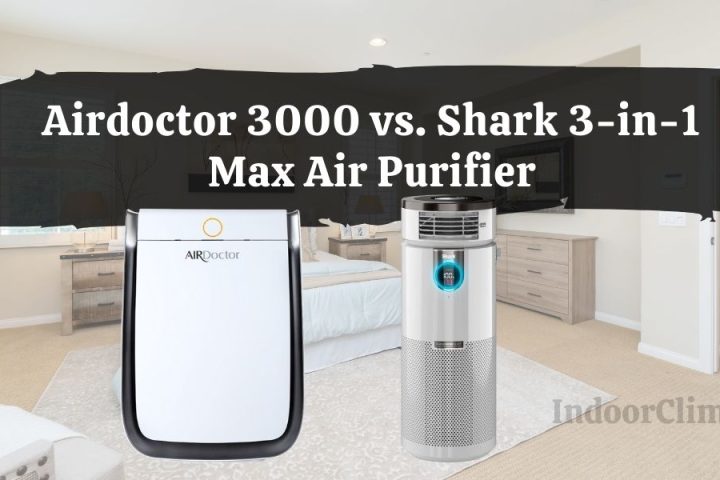

[…] AirDoctor 3500 is bulky and heavy. The plastic feels, and semi-slanting contours of the side of the air purifier make it appear cheap and challenging to store in the closet whenever you are not using […]
[…] First and foremost, the design of the Airdoctor is minimalistic and easy to operate. However, the surface of the air purifier has a plastic vibe that makes it appear cheap. […]